Start Here ✦ A Field Guide to This Place
What is Atomic Daydream?
A museum of tomorrow, the way people used to picture it. Here is how it began, what is inside, and where to start your visit.
✦ ✧ ✦
New York ✦ Summer 1939
The day five million people saw the future
Picture the line. It wraps around the General Motors pavilion at the New York World’s Fair, thousands of people deep. At the front, visitors settle into moving chairs, each with its own speaker, and a conveyor carries them off over the edge of the world.
What they see below them is the year 1960. A model of an entire country covers about an acre: more than half a million tiny buildings, a million trees, some fifty thousand little cars, ten thousand of them gliding along a fourteen-lane highway at different speeds. The industrial designer Norman Bel Geddes built it and called it the Futurama. The ride lasts eighteen minutes. When it ends, every visitor is handed a pin that reads “I have seen the future.”
People wore those pins home with pride. Bel Geddes later wrote that five million people saw the show. At busy times the line ran fifteen thousand people long!
552
Riders gliding through at once
1,000,000
Model trees in the world of 1960
18 min
From 1939 to tomorrow and back
Now Playing ✦ General Motors, 1940
Take the ride yourself
GM filmed the Futurama for a promotional short called To New Horizons. It is in the public domain now, so you can take a seat and drift over the highways of 1960 right here. Turn the sound up for the narrator.
To New Horizons ✦ General Motors, 1940 ✦ Prelinger Archives, via the Internet Archive
The Idea
That pin is why we are here
Most of what the Futurama promised never showed up the way it was drawn. The highways came, and so did the traffic, but not the tidy towers or the cars that kept their own distance. And yet the pin was not wrong. Those people really had seen a future. It just happened to be the one their own decade was dreaming about.
Atomic Daydream collects those futures. The rocket cities on pulp magazine covers. The concept cars with bubble canopies and tailfins. The kitchens that baked a cake at the push of a button, the houses that perched on a single column, the robots that were supposed to do the dishes. Some people call the genre retrofuturism: the future as it was imagined in the past. We just call it the good stuff.
Every object in this collection was somebody’s honest guess at tomorrow.
We do not laugh at the guesses. A flying car tells you exactly what a family in 1958 wanted out of life: more freedom, less traffic, a little glamour on the way to work. Read enough of them and you start to see each era’s hopes and worries in the shapes it chose. That is why every image here is dated, credited and explained, and why we keep going back to the archives for more.
A Short History of Tomorrow
The future, as it was drawn
A walk through a century of predictions, one picture at a time. Each one opens onto a full story in the archive.
1880s
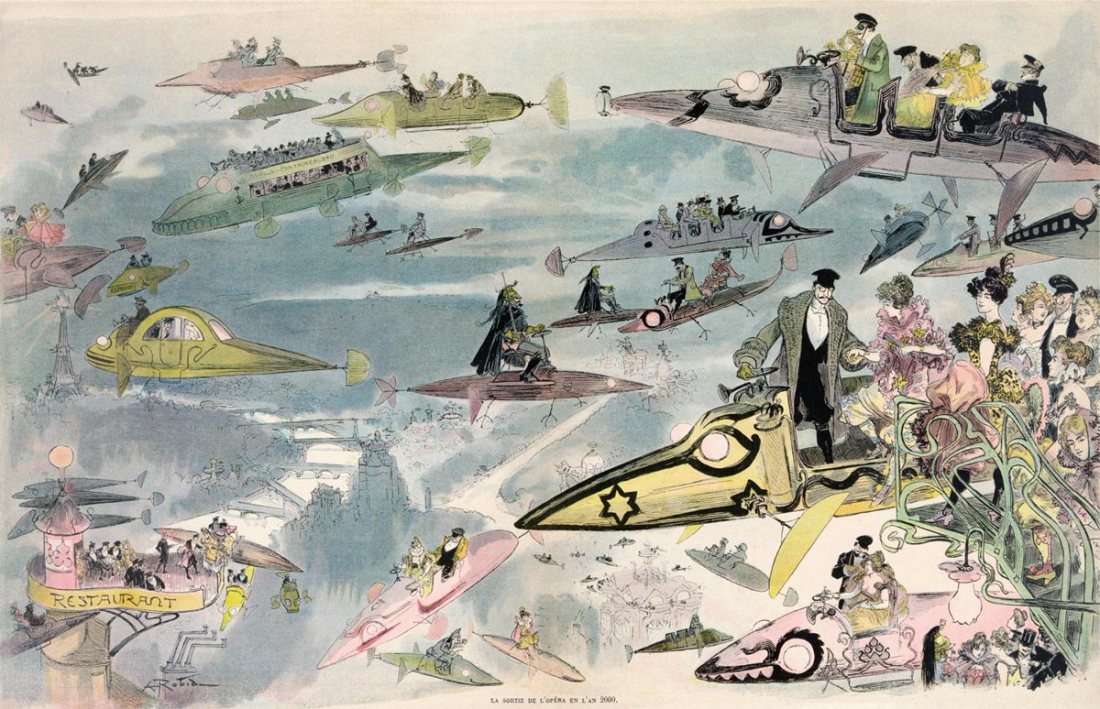
Paris takes to the air
Long before rockets, the French illustrator Albert Robida filled the skies over Paris with airships, flying cabs and even a floating restaurant. He drew the twentieth century as a traffic jam in the clouds, and he was funny about it, too.
1927
The man who drew it first
Frank R. Paul painted the covers of the very first science fiction magazines, and in doing so he decided what the future looked like for everyone who came after. Here are his Martian war machines striding across a burning valley for Amazing Stories, August 1927.

1939
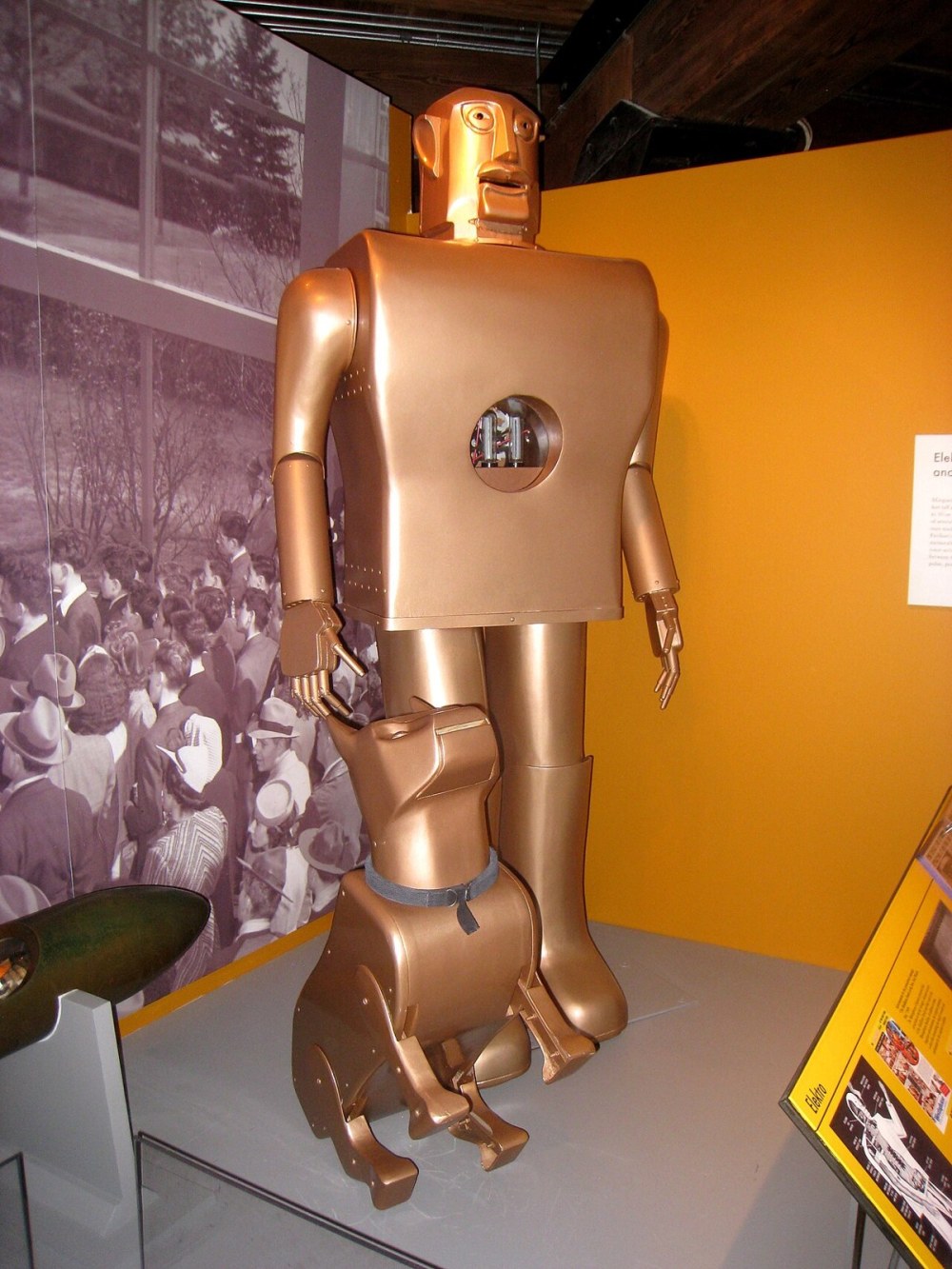
Meanwhile, down the midway
The same fair that built the Futurama also put Elektro on stage, Westinghouse’s seven-foot gold robot. Futures came in every shape that summer, and the robot is one of our favorites.
1956
A dream with a cake in the oven
GM toured its concept cars from city to city in a traveling show called the Motorama, and in 1956 it made a musical to go with it. In Design for Dreaming, a woman dreams a masked man whisks her through the show, into Frigidaire’s Kitchen of the Future to bake a cake, and out onto the road of tomorrow in a turbine-powered Firebird II. It is pure, glittering optimism from start to finish.
Design for Dreaming ✦ MPO Productions for General Motors, 1956 ✦ Internet Archive
1958
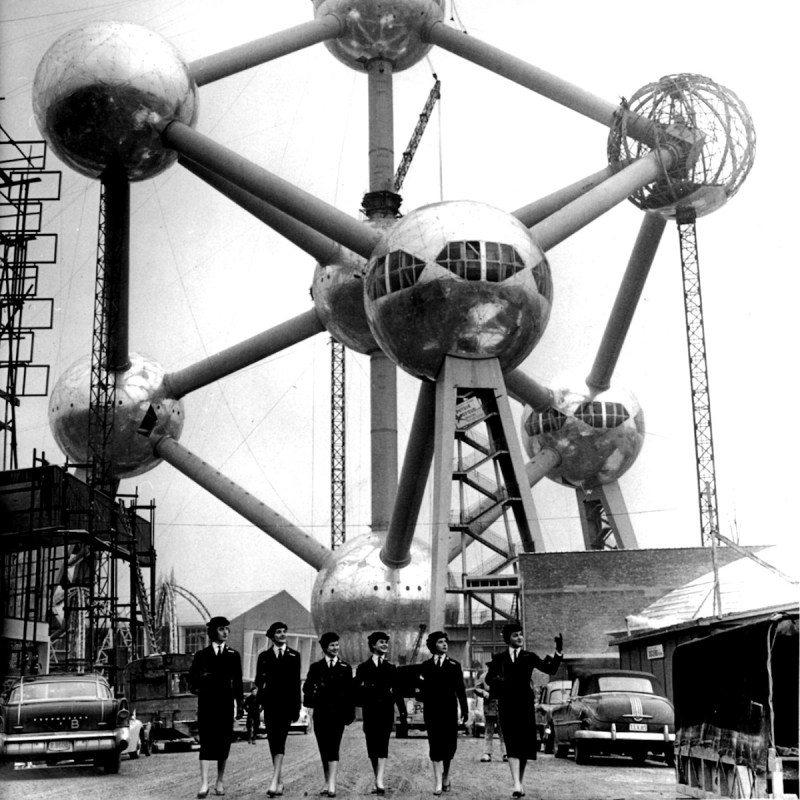
The year of the atom and the fin
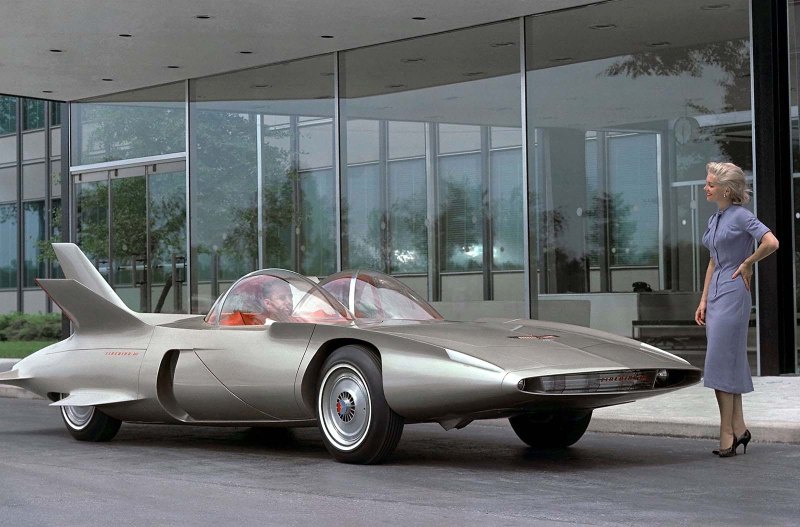
In Brussels, nine shining spheres rose 335 feet over the World’s Fair grounds as the Atomium, a crystal of iron blown up to the size of a skyscraper. In Detroit, GM built the Firebird III, a jet fighter for the highway with twin bubble canopies, a gas turbine engine and a joystick where the steering wheel should be. Peak whizbang, both of them!
1960s
Living rooms of tomorrow
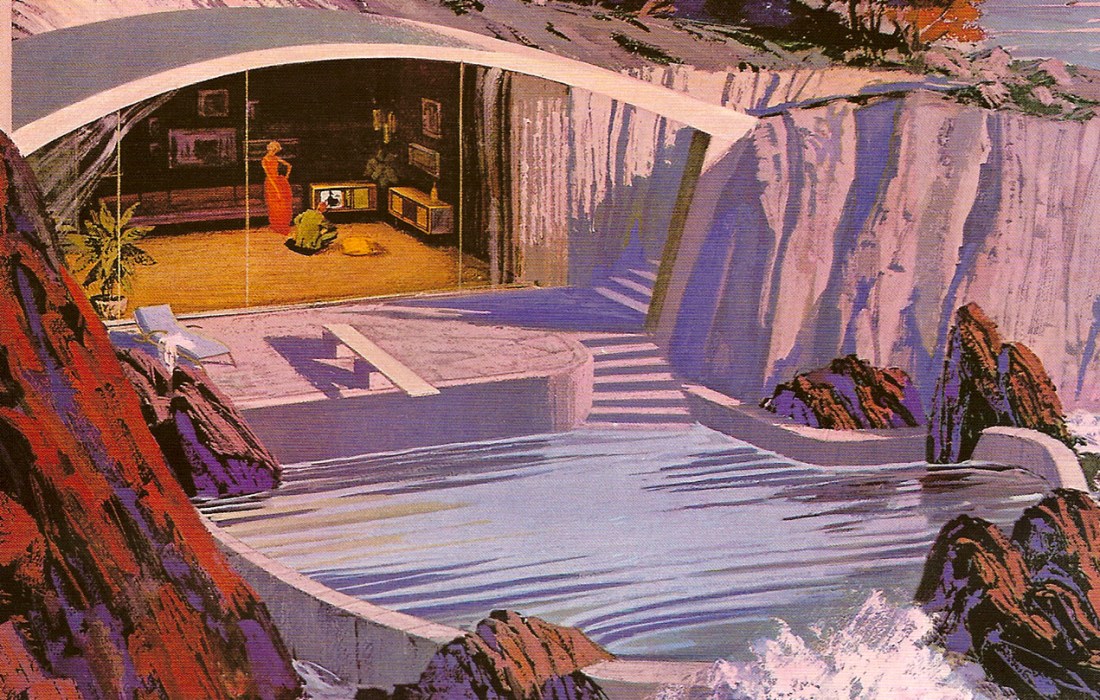
Charles Schridde painted dream houses for Motorola’s magazine ads, all glass walls and low roofs in impossible landscapes. The ads were selling a television set. What they really sold was the life around it.

1969
Tokyo at full tilt
Nobody drew tomorrow like postwar Japan. Magazines filled their pages with stacked highways, domed cities and monorails threading between towers, all drawn as if the ribbon cutting were next spring.
1970s
Suburbs in orbit
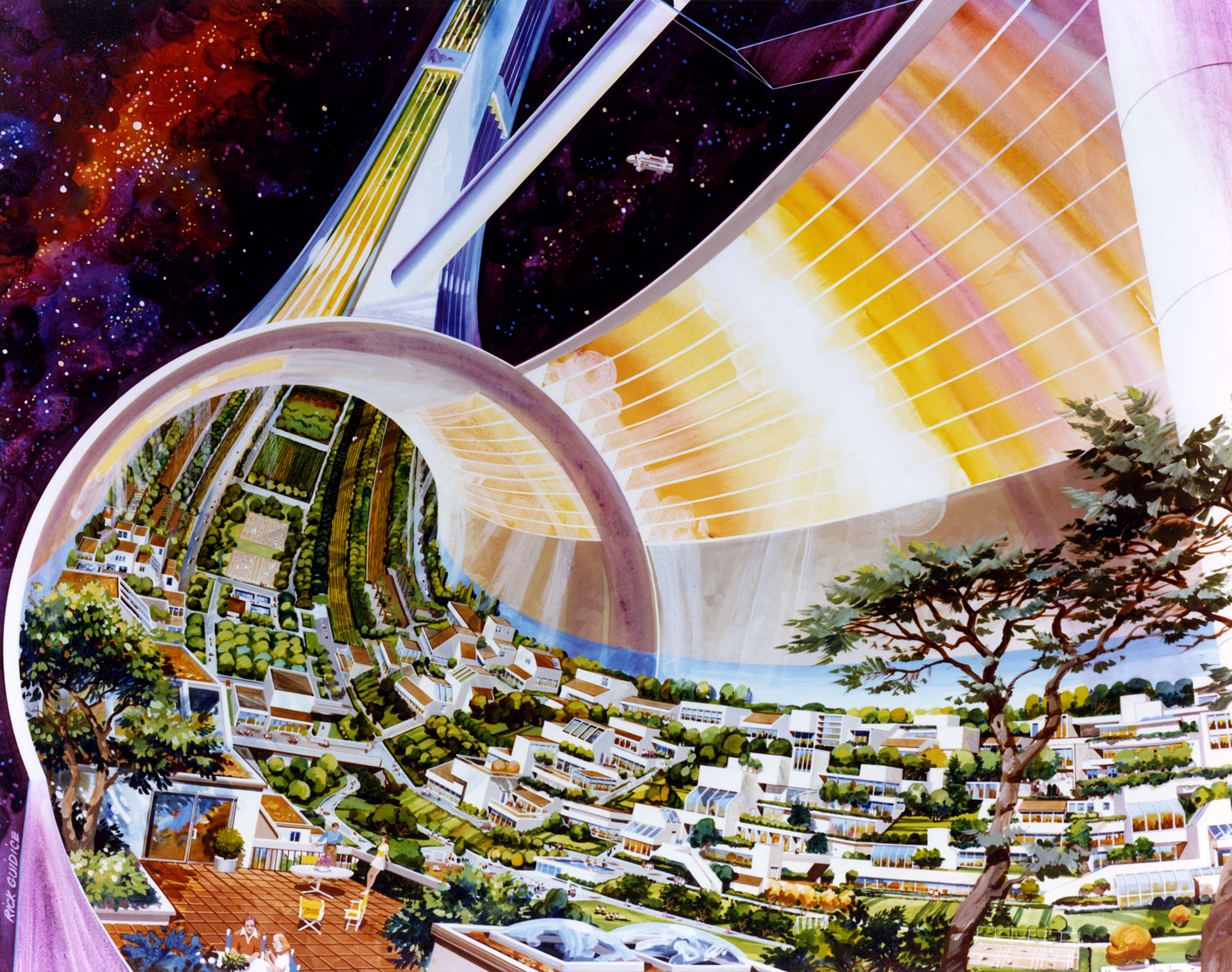
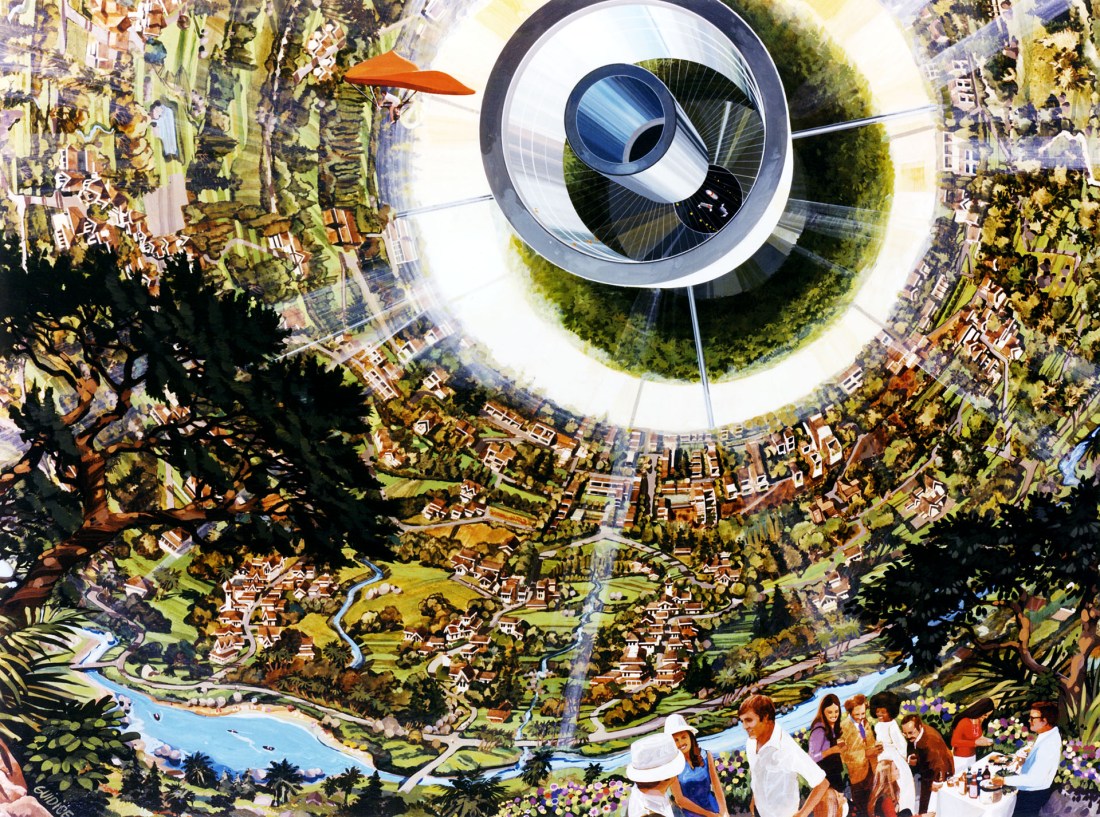
At NASA’s Ames Research Center, scientists spent summers working out how ten thousand people might live inside giant spinning wheels and cylinders in space. Then artists painted what it might look like inside: neighborhoods, farms and rivers curving up and over your head.
What’s Inside ✦ The Bestiary
Every creature gets a title sequence
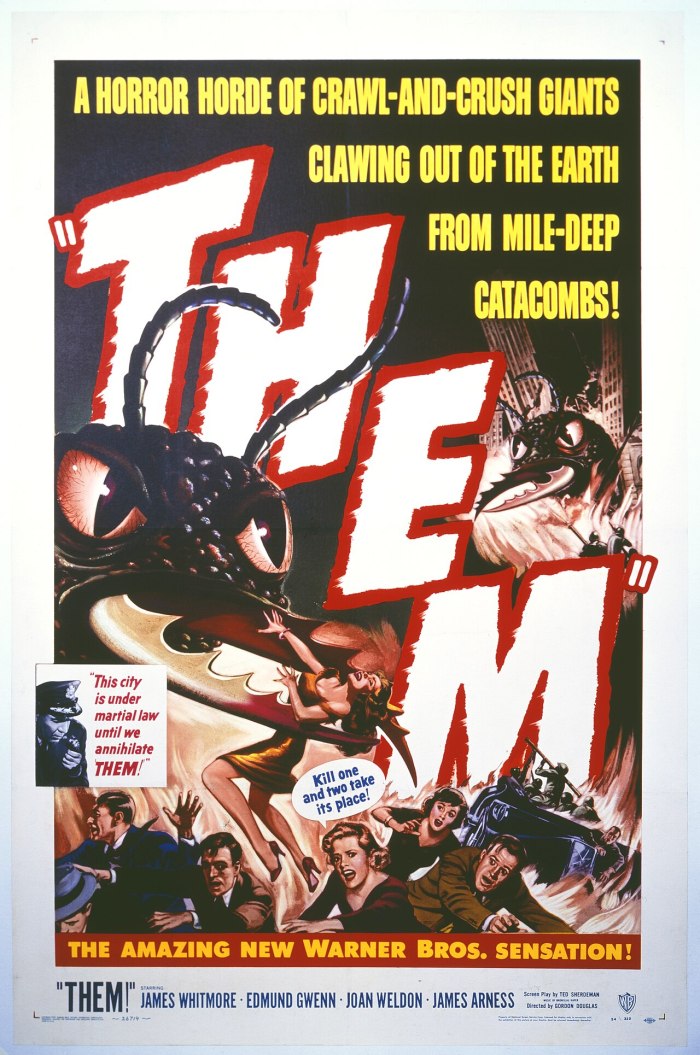
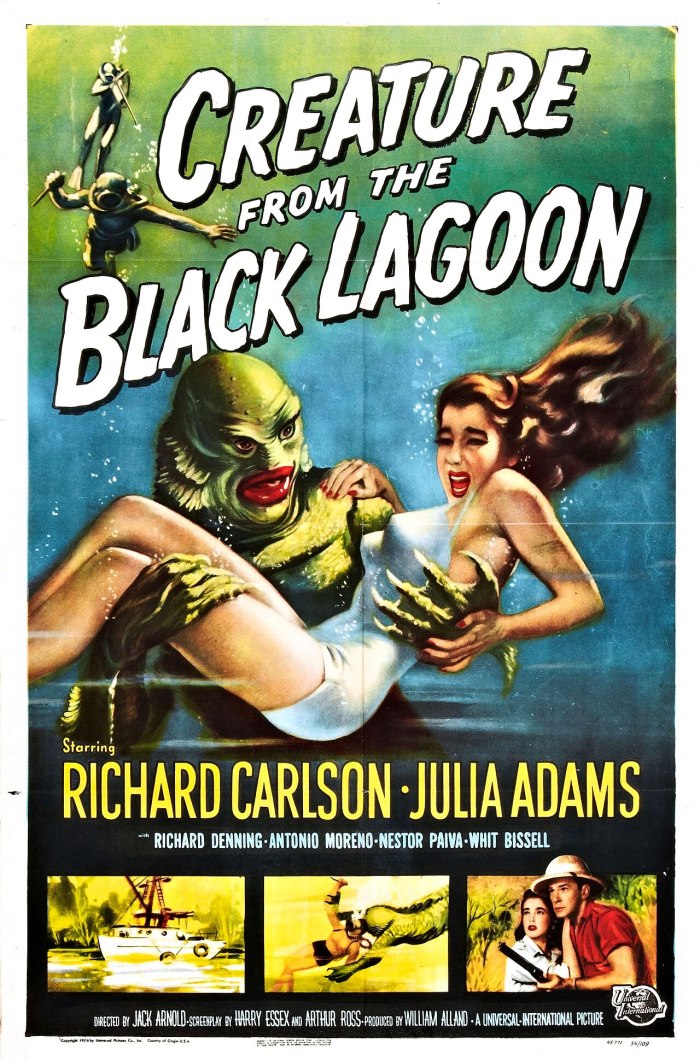
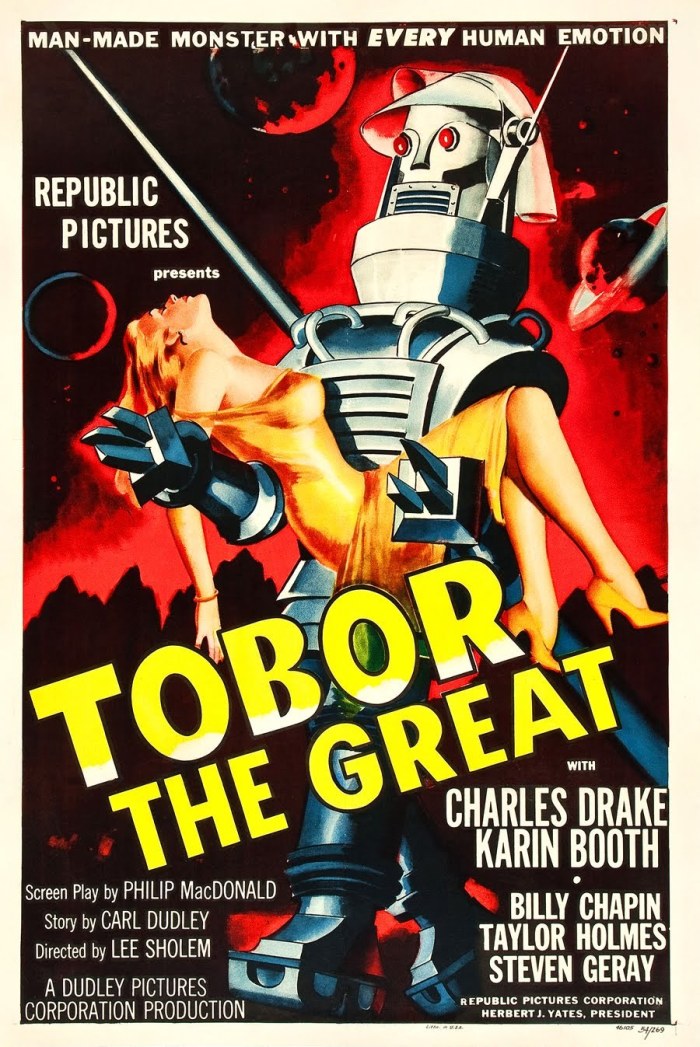
The future had monsters, too. Our Bestiary series digs into the creatures each era dreamed up, from the giant ants of the atomic age to the tin robots of the toy shop. Each entry opens with its own title sequence, built from archive art and set to an original score. Sound on!

What’s Inside ✦ Shapes of the Future
Where the shapes came from
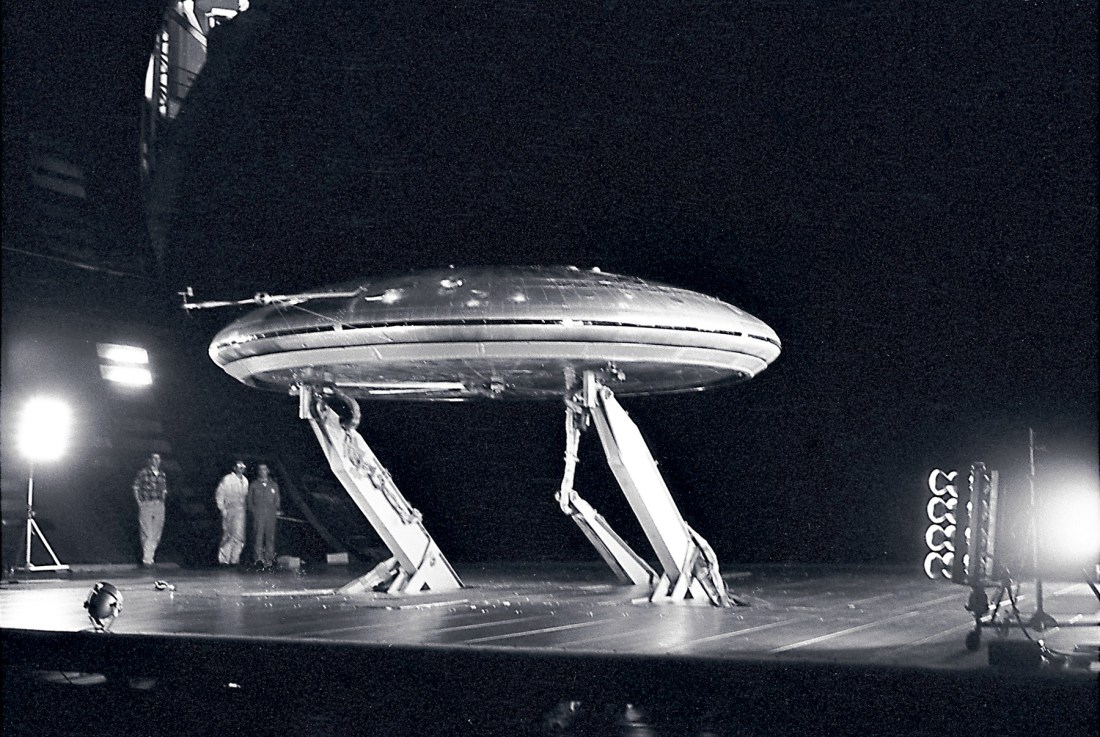
Why does every spaceship from another world look like a disc with a dome on top? Our Shapes of the Future series follows one shape at a time from the first sketch to the real thing. The flying saucer starts on a 1929 magazine cover and ends up in a government wind tunnel, and then as a house you could live in!
Your Visit
Pick a door
The archive holds more than eighty stories in six wings. If you are not sure where to begin, start with whatever you would stop for on the street.
If you love cars
Tomorrow’s Cars, Yesterday
Bubble canopies, tailfins and titanium wedges, from Detroit’s Motorama to Turin’s design studios.
If you love art
The Illustrators
The hands that painted tomorrow, from Robida’s Paris to the pulp covers and the space colonies.
If you love buildings
The Atomic Age & Googie
Boomerang roofs, starburst signs and an atom the size of a skyscraper.
If you love monsters
The Bestiary
Giant ants, swamp things, ghosts and robots, each with its own title sequence.
How We Work
Dated, credited and explained
Every picture in a story gets a date, a source and a maker wherever the record allows, along with a few lines on why it matters. Most of what we show is in the public domain: pulp covers whose copyrights were never renewed, government photographs, films from the Prelinger Archives. When a photograph is licensed, we credit it the way its license asks.
History is messier than a poster, so our longer stories end with a section called “Where the record is uncertain,” where we tell you exactly what we could not pin down. If you know more than we do, or grew up near one of these places, please tell us. This archive is meant to be corrected.
Atomic Daydream is made in Portland, Oregon, by the people behind Moss & Fog, which has been sharing beautiful things since 2009. If you want the long view of the genre, start with our Definitive Guide to Retrofuturism.
Free ✦ No Noise
Get your own pin
We cannot hand you one at the exit, but we can send you every new story, title sequence and archive find the day it lands. Consider yourself someone who has seen the future.
Sources and rights
Futurama figures come from the exhibit’s reference entry and the Museum of the City of New York’s history of the show, which cites Bel Geddes’s own count of five million visitors. To New Horizons and Design for Dreaming are public-domain films from the Prelinger Archives, hosted by the Internet Archive. Every other image links to the story where it first ran, with its credits.

