The Bestiary · 03
Every other creature in this Bestiary wants to eat you. The ghost wants something stranger. It wants to be seen. For three hundred years people have tried to show it to each other: in ink on silk, in woodblock prints, on a sheet of glass in a London theater, and finally on a photographic plate, where it learned to stand very still just behind your shoulder.
The atomic monster was made by the bomb and the swamp creature by the mud. The ghost is made of people, and it has changed its shape with every new way of making pictures. Give the dead a paintbrush and they float. Give them a stage and they walk through walls. Give them a camera and they sit for portraits.
This is a field guide to how the dead have been pictured, from an eighteenth-century Kyoto scroll to the pulp newsstand of the 1920s, with a long stop in a Boston studio where a jeweler’s engraver discovered that grief was very good business.
Why this page is different
Ghost pictures travel the internet stripped of their dates and makers, which suits them a little too well. We did the slow version. Every image below is dated, credited wherever the record allows, and in the public domain, with the reason given at the bottom of the page. Several of the photographs are fakes. We say which ones, and how they were made.
The first portraits of the dead
Long before anyone tried to photograph a ghost, Japanese painters had worked out exactly what one looks like. By the late Edo period the yūrei had a uniform: long loose hair, a white burial kimono, limp hands held at the wrists, and no feet at all. The template has proved so durable that you can still see it in horror films today.
The Ghost of Oyuki
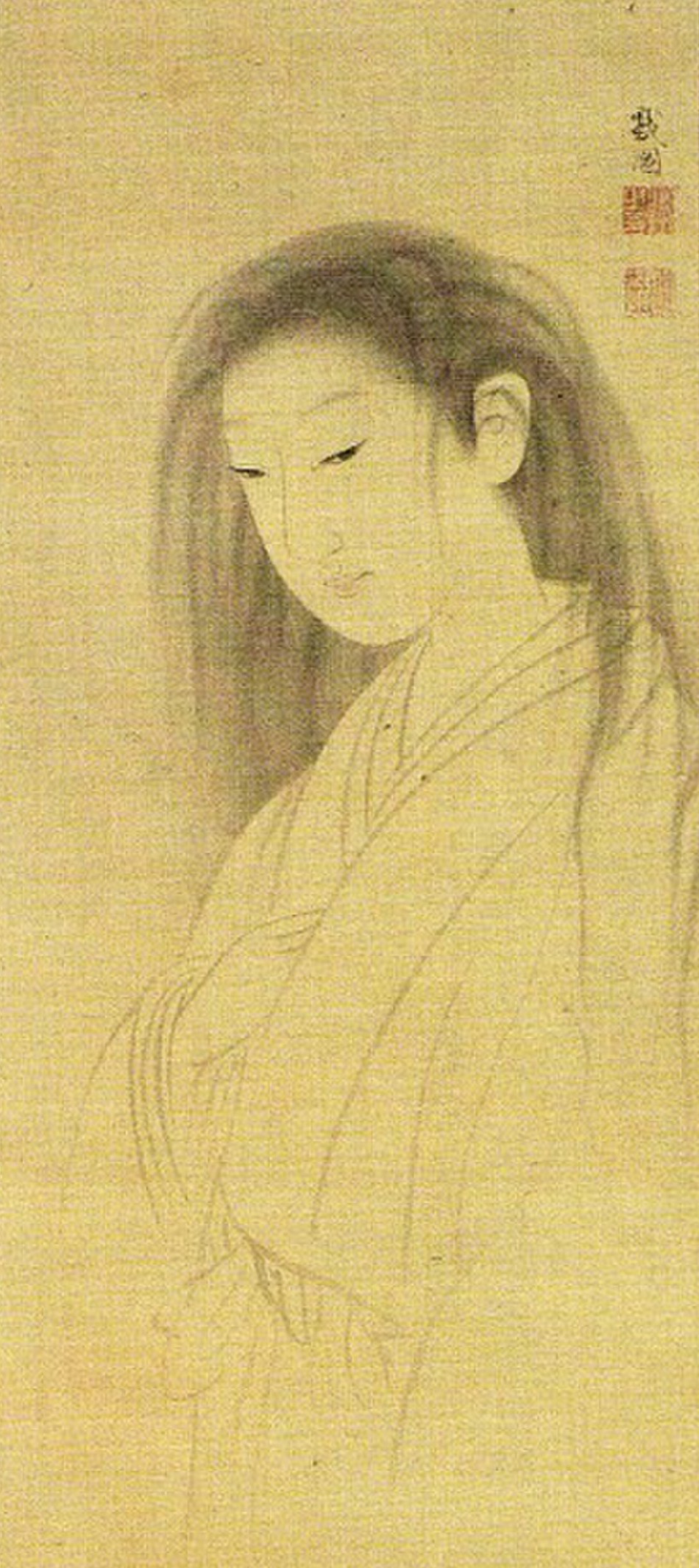
One of the earliest paintings of a yūrei with all the features that would become standard, and the gentlest picture on this page. An inscription tells the story that Ōkyo painted it after his young mistress, Oyuki, died and came back to him in a dream. Look at how her robe simply stops being drawn. She does not fade out so much as run out of ink.
The Lantern Ghost, Oiwa
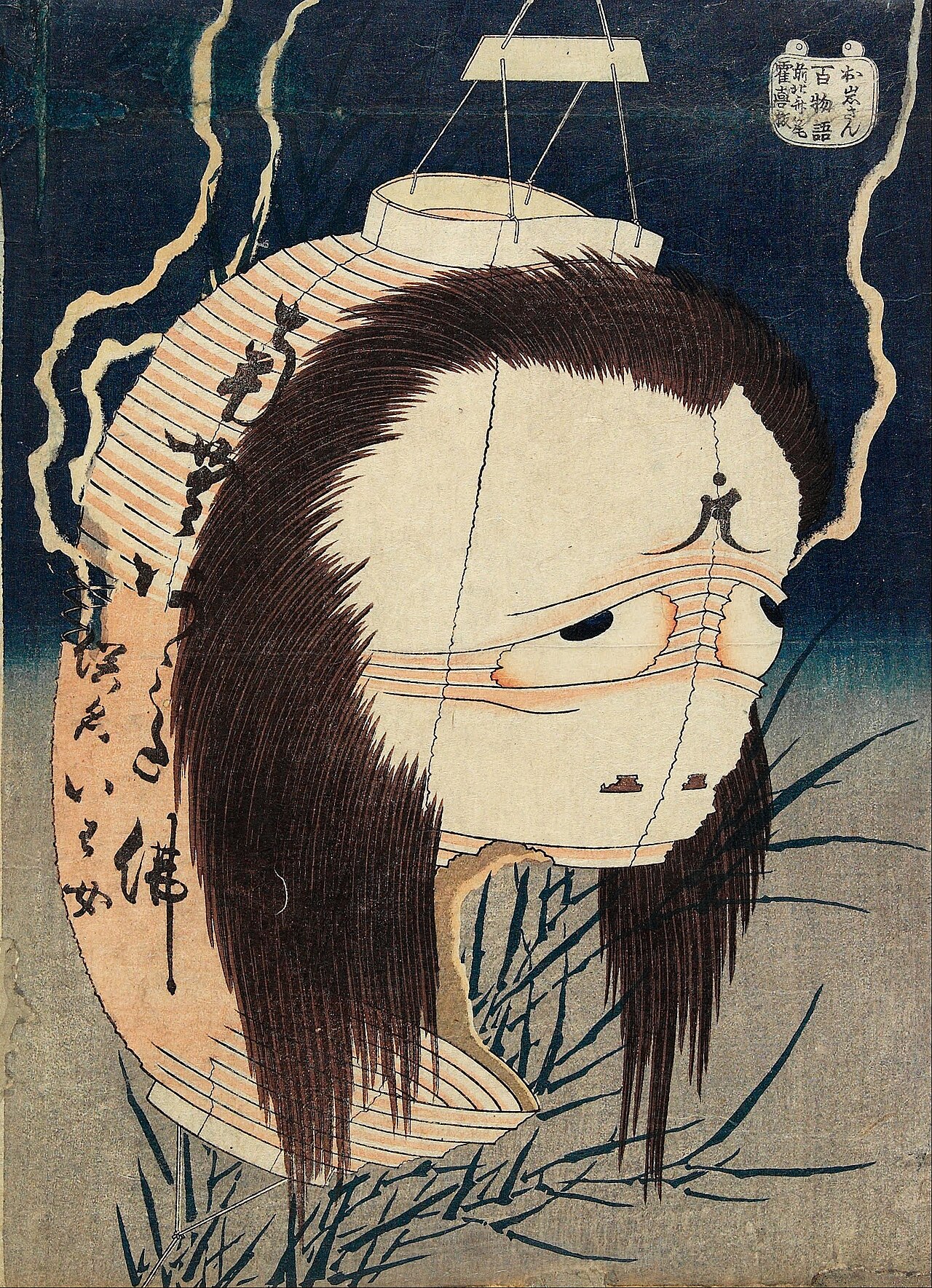
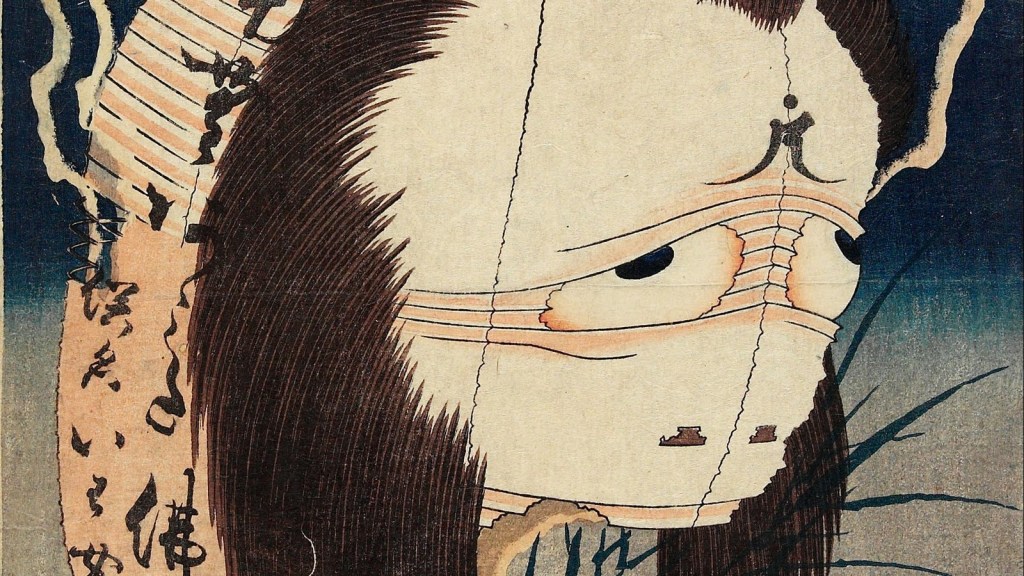
Oiwa comes from Yotsuya Kaidan, the 1825 kabuki play in which a woman is poisoned and disfigured so her husband can remarry. She returns, and in one of the play’s great effects her face bursts out of a paper lantern. Hokusai makes the lantern into the face itself, ribs for wrinkles and a tear in the paper for a mouth. This is one of only five designs known from the series. He apparently planned a hundred!
The Ghost of Kohada Koheiji
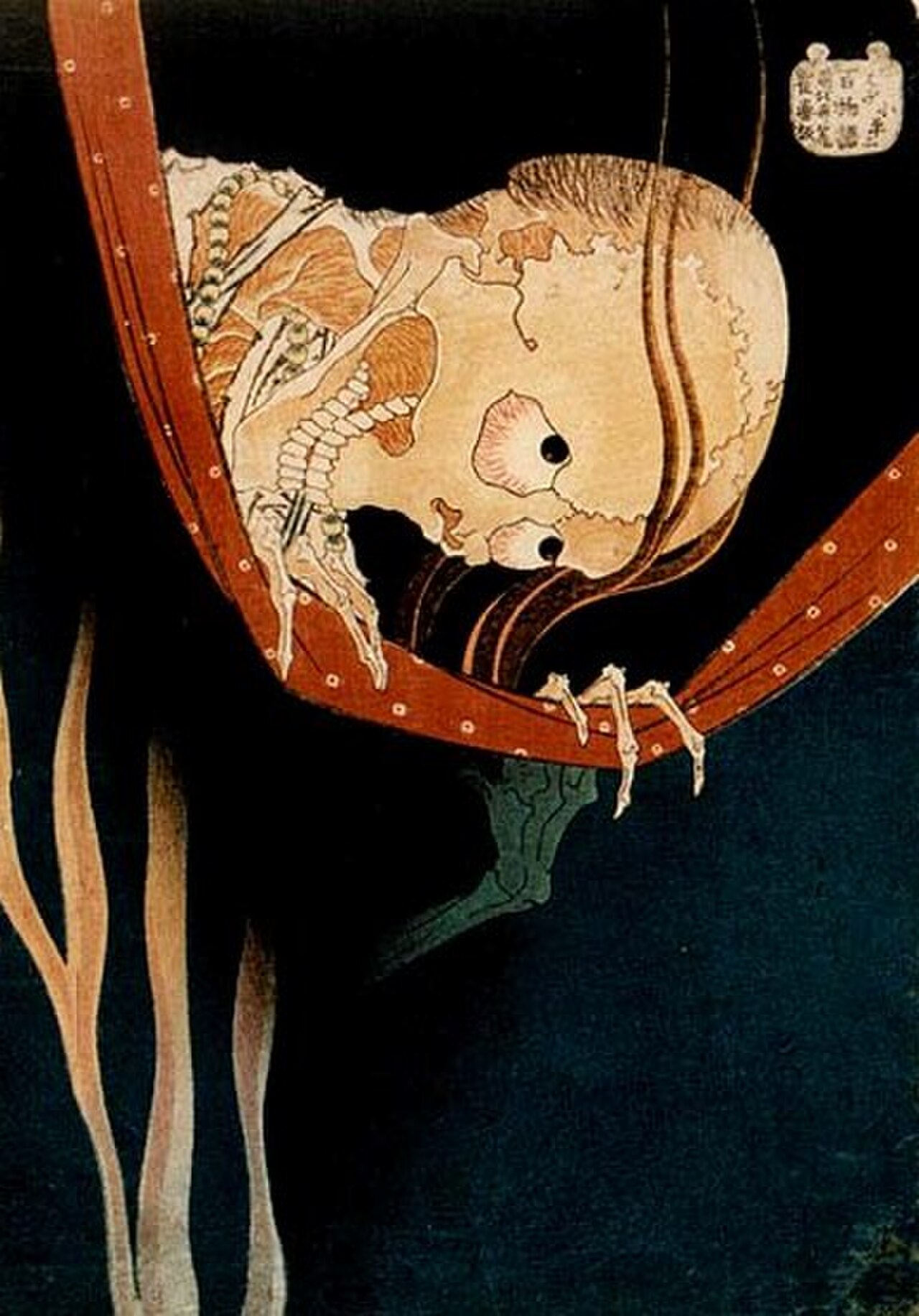
Koheiji was an actor murdered by his wife and her lover, who comes back to look in on them. Hokusai lets you be the one in the bed. The skeleton gripping the top of the mosquito net, its eyes dark and patient, may be the most frightening single image of the Edo period.
Marley’s Ghost
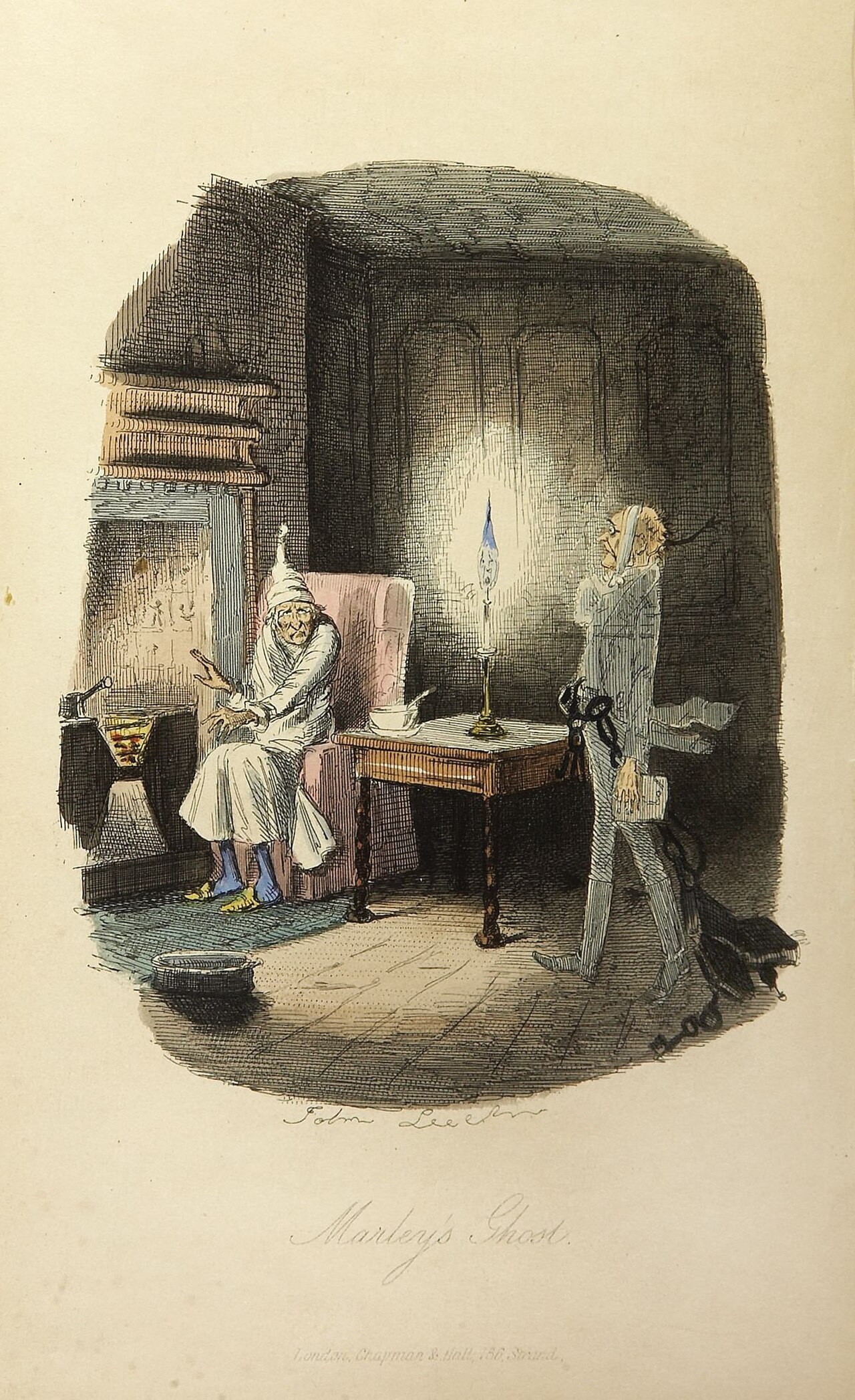
Dickens’s book came out in December 1843 with four hand-colored etchings by Leech, and this is the one that fixed the English ghost for a century: see-through, chained, and with a point to make. The chain is made of cash boxes, keys and padlocks. Marley is not haunting Scrooge so much as auditing him.
The ghost on stage
In 1790s Paris, the showman Étienne-Gaspard Robertson ran what he called the Fantasmagorie, a magic lantern show in an abandoned convent where skeletons and the faces of the dead were projected onto smoke and gauze and made to rush at the audience. People reportedly fainted. Sixty years later London went one better, and put the ghost on stage beside a living actor.
Pepper’s Ghost
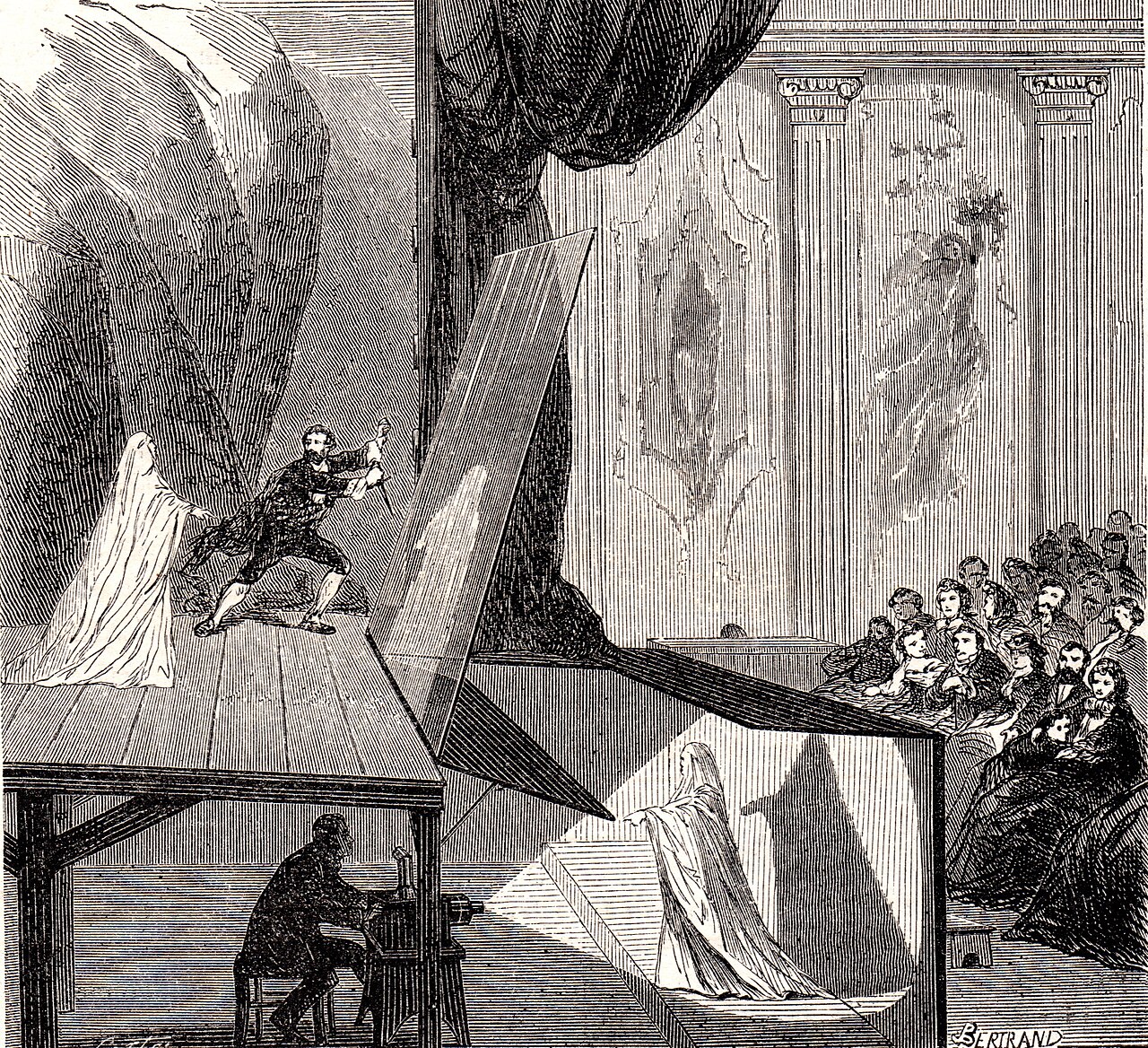
The trick was invented by an engineer, Henry Dircks, and made famous by John Henry Pepper at London’s Royal Polytechnic Institution, who first used it at Christmas 1862 in a scene from, of all things, a Dickens story. A brightly lit actor hidden below the stage is reflected in a huge sheet of angled glass the audience cannot see. The French engraver has drawn the secret for you, cutaway and all. The same illusion still runs the ghosts in Disney’s Haunted Mansion.
The spirit photographers
Then came the camera, and the ghost found its true medium. In Boston in the early 1860s, William H. Mumler, a jewelry engraver with an amateur interest in photography, developed a self-portrait and found a second, fainter figure beside him, which he said was the spirit of a dead cousin. America was in the middle of the Civil War and the Spiritualist movement, and grieving families lined up. Mumler became a professional spirit photographer, and the double exposure became a business.
Barnum and the ghost of Lincoln
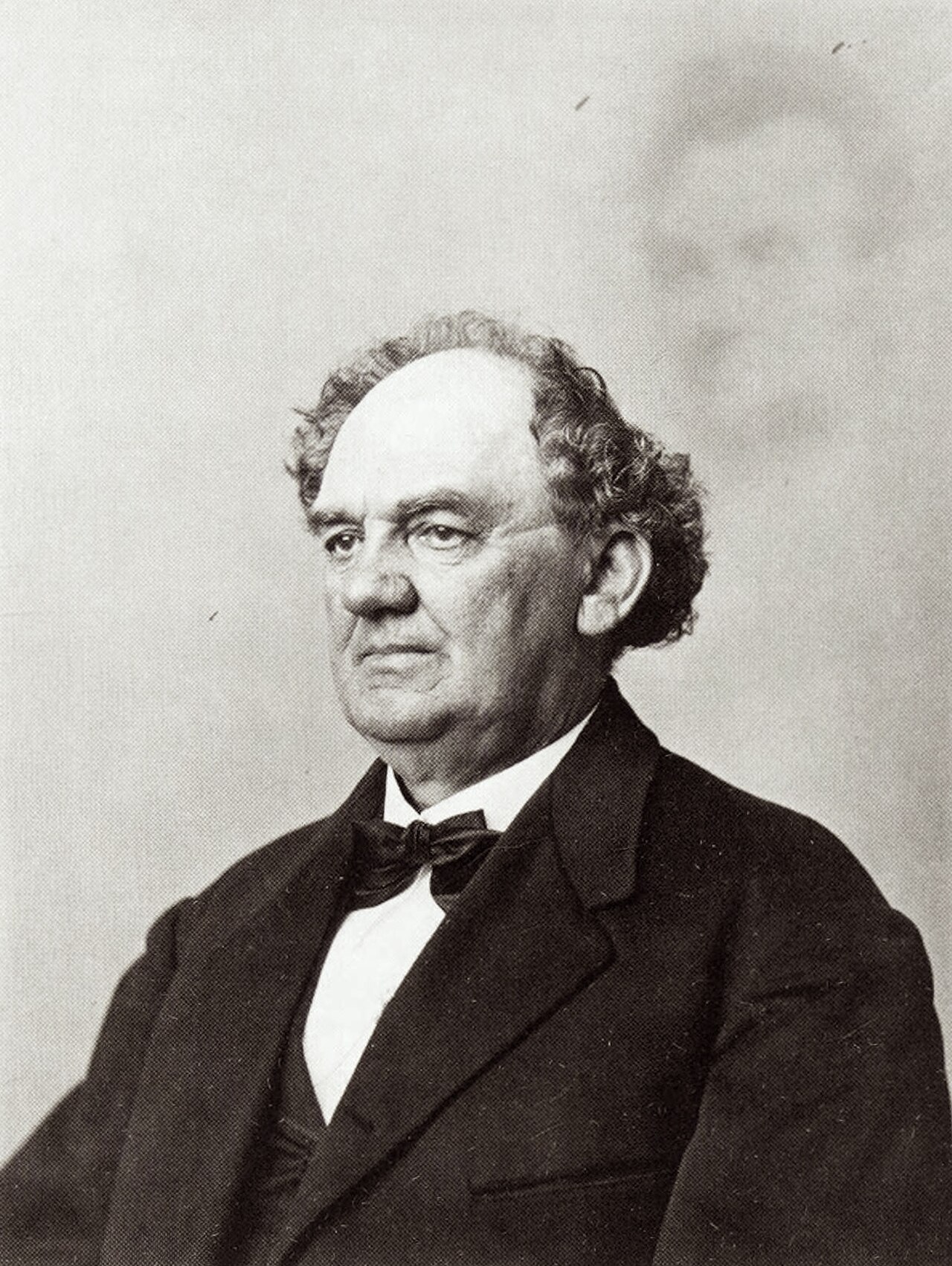
Here is the twist: this one is a fake made to prove the others were fakes. In April 1869 Mumler was tried for fraud in New York. P. T. Barnum, who knew a humbug when he saw one, testified for the prosecution and had the photographer Abraham Bogardus make this portrait of him with Lincoln’s ghost, to show how easily it could be done. Mumler was acquitted anyway, because no one could prove exactly how he did it.
Moses A. Dow and the spirit of Mabel Warren
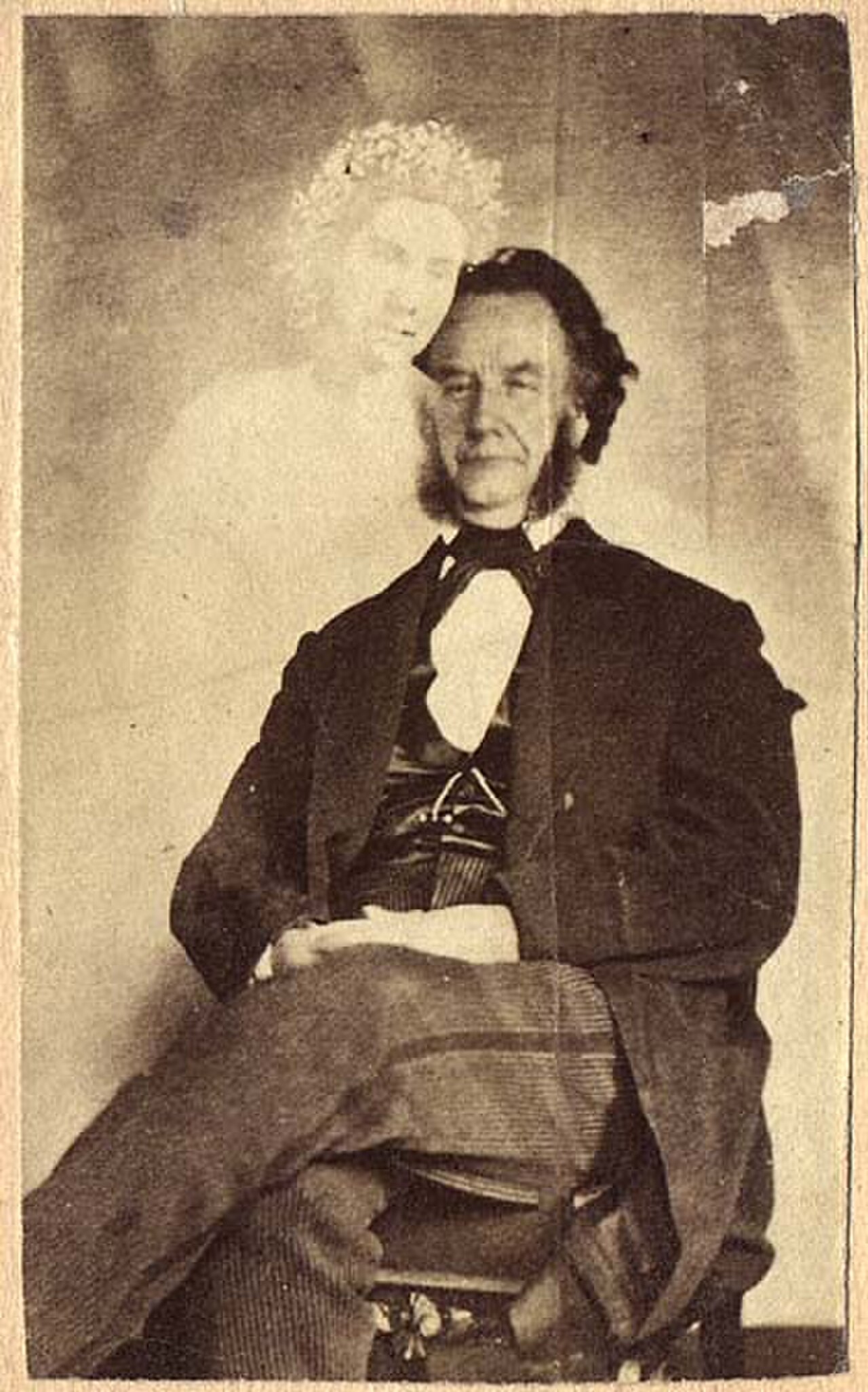
Moses Dow edited Waverley Magazine, and Mabel Warren had been his young assistant until she died after a short illness in 1870. Dow turned to Spiritualism, and said it was Mabel’s spirit that sent him to Mumler’s studio. She appears here with a wreath of lilies in her hair, laying a hand on his chest. It is easy to laugh at spirit photography until you look at a picture like this one and think about who paid for it.
Mary Todd Lincoln and the spirit of her husband
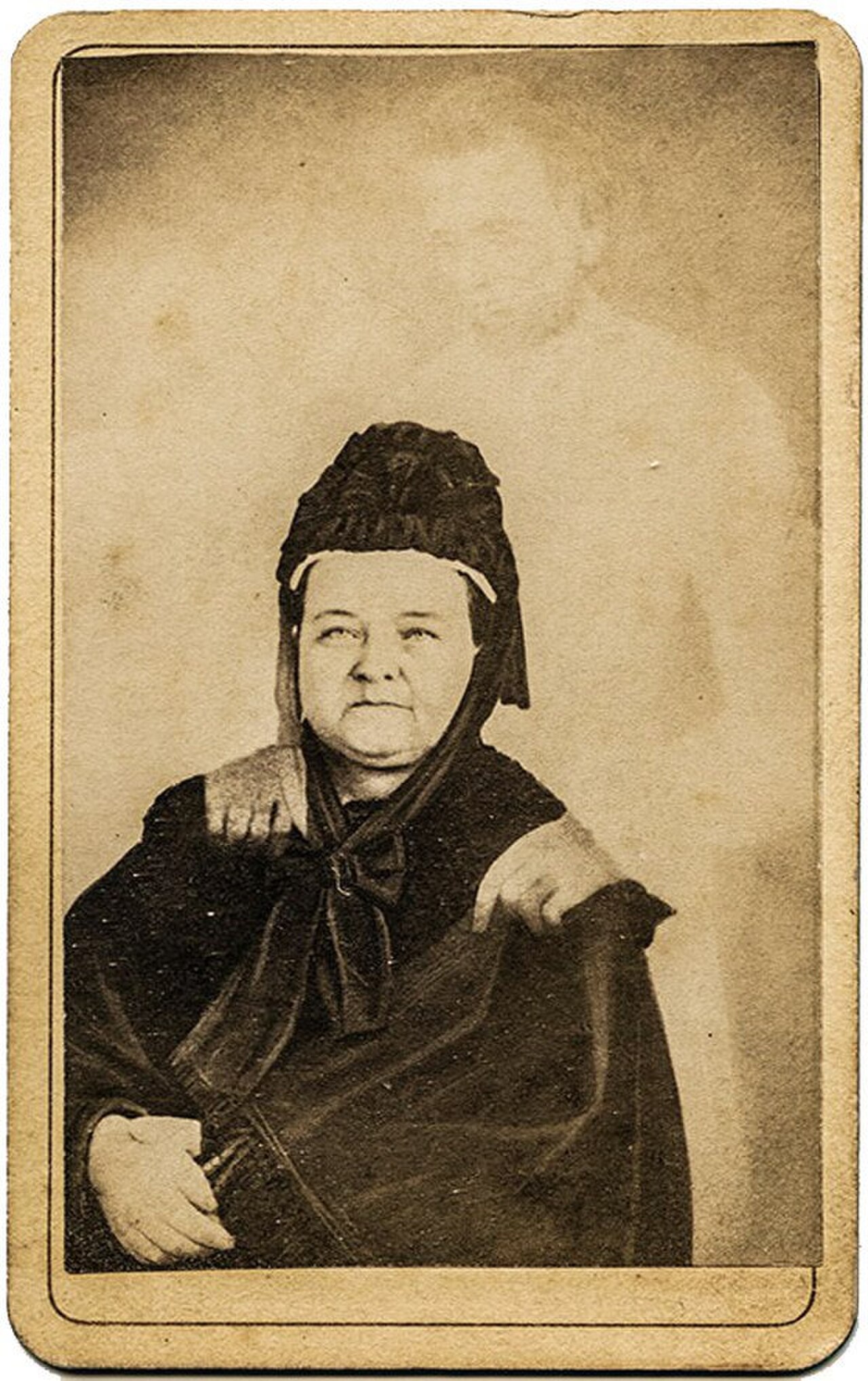
The most famous spirit photograph ever made. Mary Lincoln had lost her husband and, by the early 1870s, three of her four sons, and she reportedly came to Mumler’s studio under an assumed name. Whether he recognized her is still argued over. The ghost behind her rests his hands on her shoulders, and she looks straight through the camera, like someone who has already decided what she is going to believe.
Spirit photography crossed the Atlantic soon after. Frederick Hudson was producing spirit portraits in London by 1872. In Paris, Édouard Buguet was convicted of fraud in 1875, after police found his stock of dolls and cutout heads. And in England in the 1920s, William Hope and his Crewe Circle kept the business going until the investigator Harry Price caught Hope switching photographic plates in 1922. Arthur Conan Doyle, a devout Spiritualist, defended Hope anyway, and wrote a book in his support. The man who invented Sherlock Holmes believed the photographs.
The ghost buster
If Conan Doyle was spirit photography’s most famous believer, his friend Harry Houdini became its most famous enemy. After his mother died in 1913, Houdini went looking for a medium who could really reach her, and found only tricks he already knew how to do. He spent his last years exposing them, on stage, in print and before Congress, and the friendship with Doyle did not survive it.
Do Spirits Return?
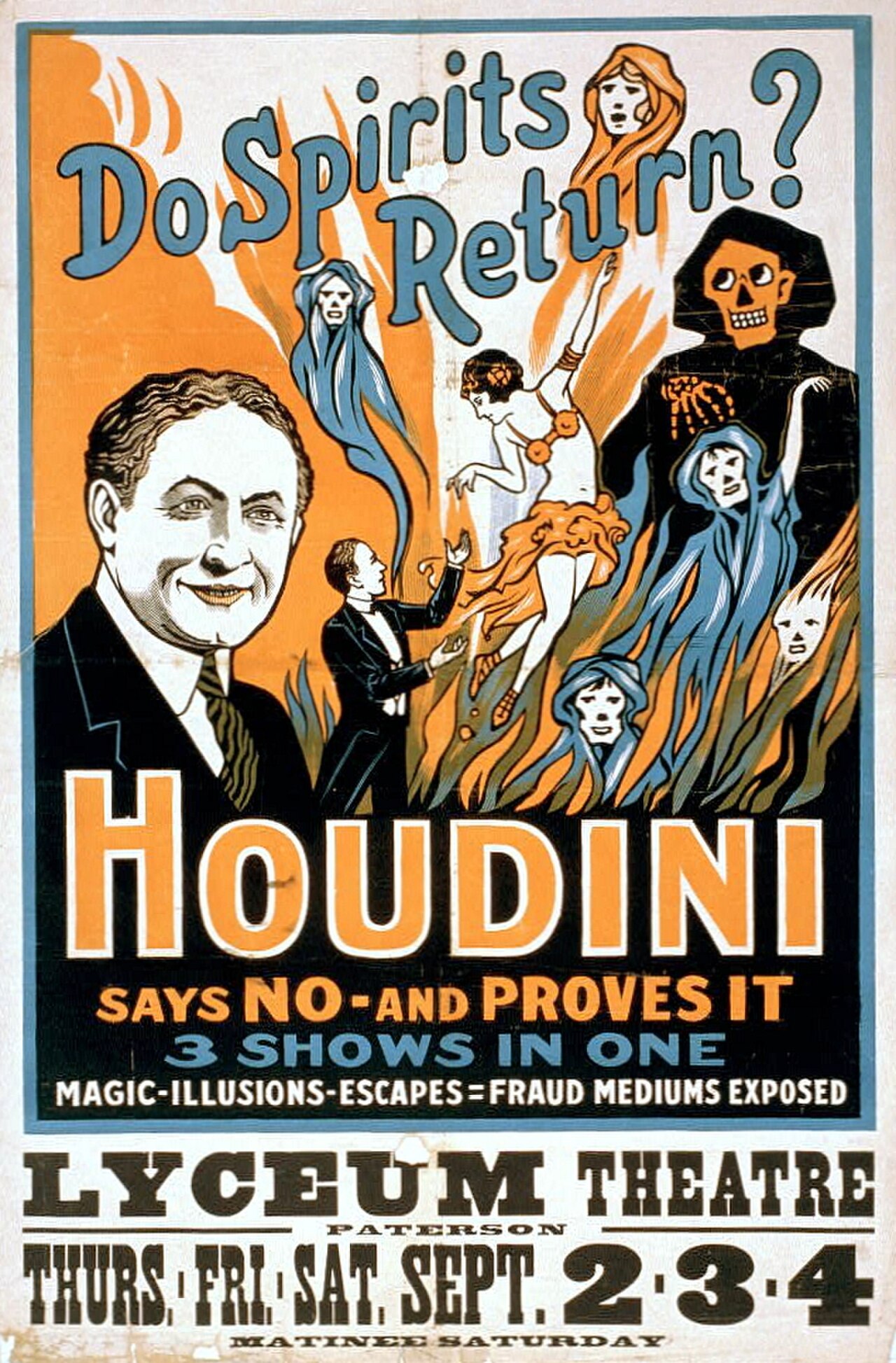
“HOUDINI SAYS NO and PROVES IT!” Three shows in one: magic, escapes, and fraud mediums exposed, with the spirits rising out of the flames behind him like a carnival sideshow. The orange and blue are pure circus. Houdini never stopped being an entertainer, even while he was taking an entire religion apart.
Houdini with the ghost of Lincoln
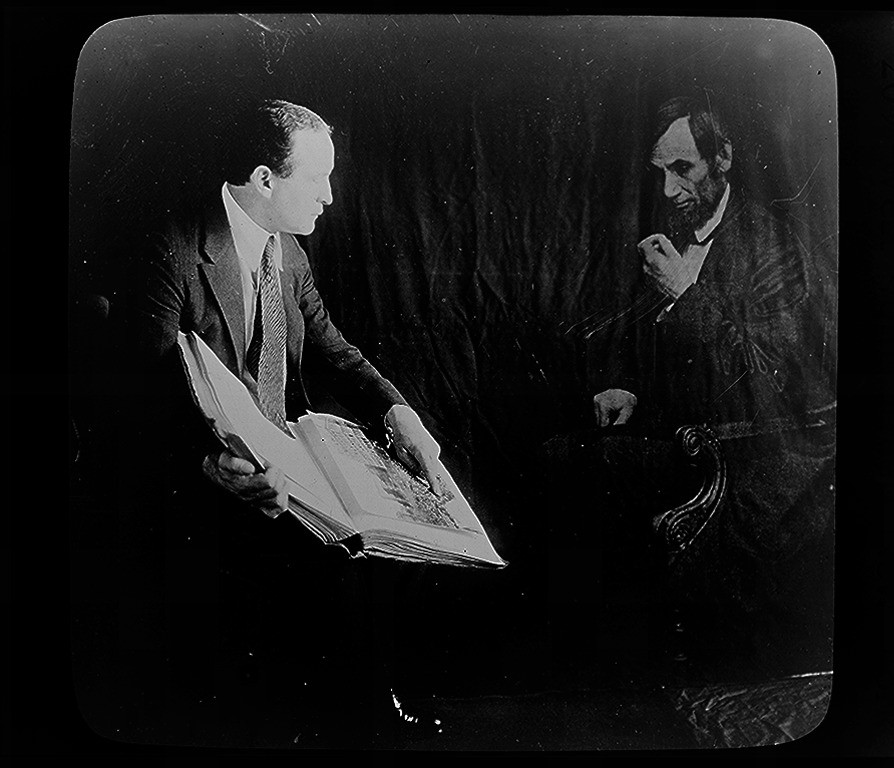
Houdini made his own spirit photograph, and the ghost he chose was the same one Mumler had sold to Mary Lincoln. It was a demonstration, not a séance: proof that a double exposure could seat anyone across from anyone. Houdini died on Halloween, 31 October 1926. His widow, Bess, held a séance on the anniversary every year for ten years, and he never came.
The haunted newsstand
By the time Houdini died, the ghost had found a new home on the pulp newsstand. In July 1926 the physical culture publisher Bernarr Macfadden launched Ghost Stories, a magazine of hauntings presented as true first-person confessions. Most were written by staff writers under made-up names, and the early issues were illustrated with staged, faked photographs to make them more convincing. It was spirit photography for the price of a quarter, and it ran until early 1932.
Pawn of the Unseen
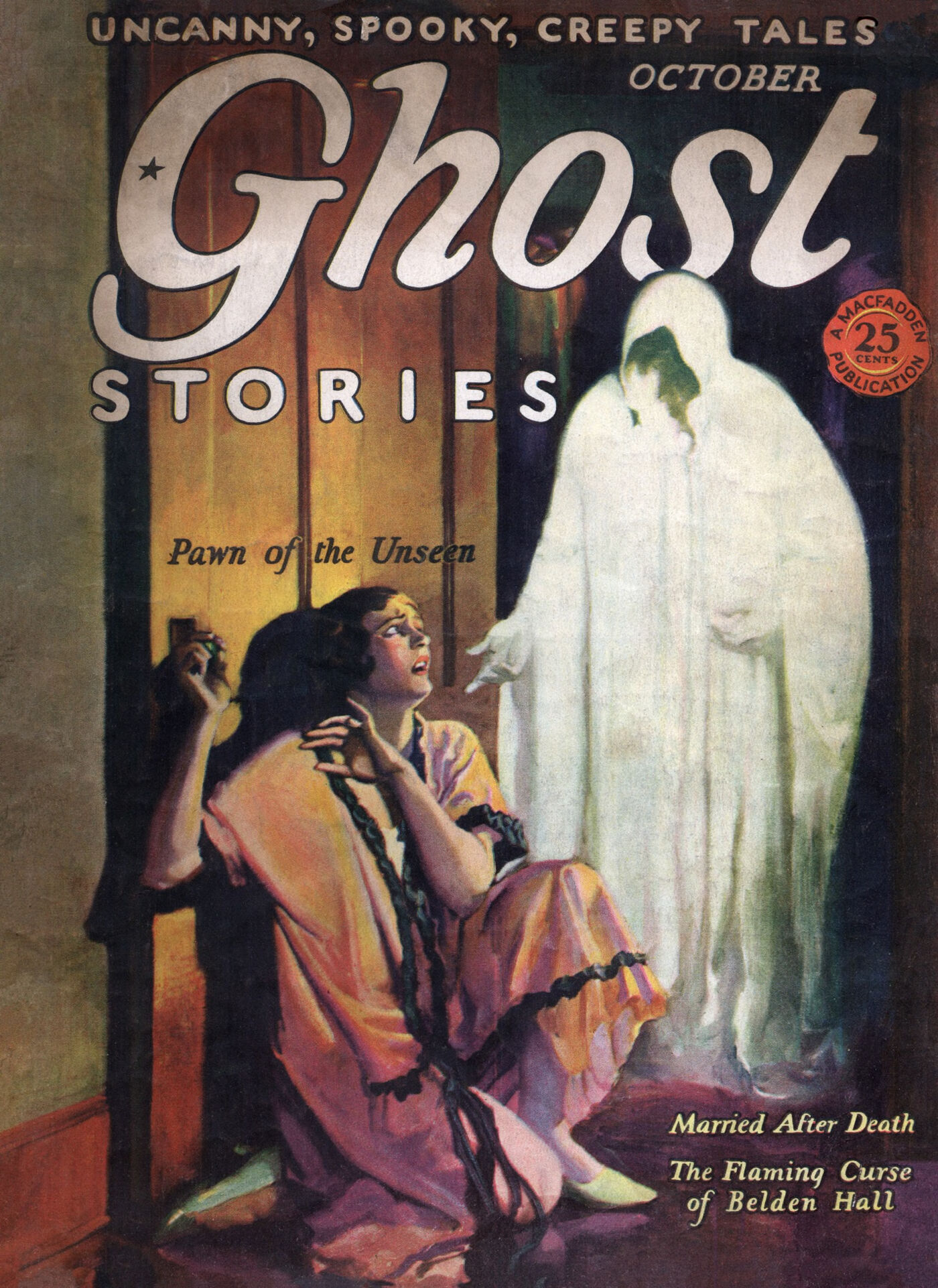
From the magazine’s fourth issue, and already perfectly on brand: a woman in a doorway, a ghost in a sheet, and the promise that it all really happened. The shroud is the oldest costume in the book, and the illustrator lights it like a stage spot.
The Picture That Came to Life
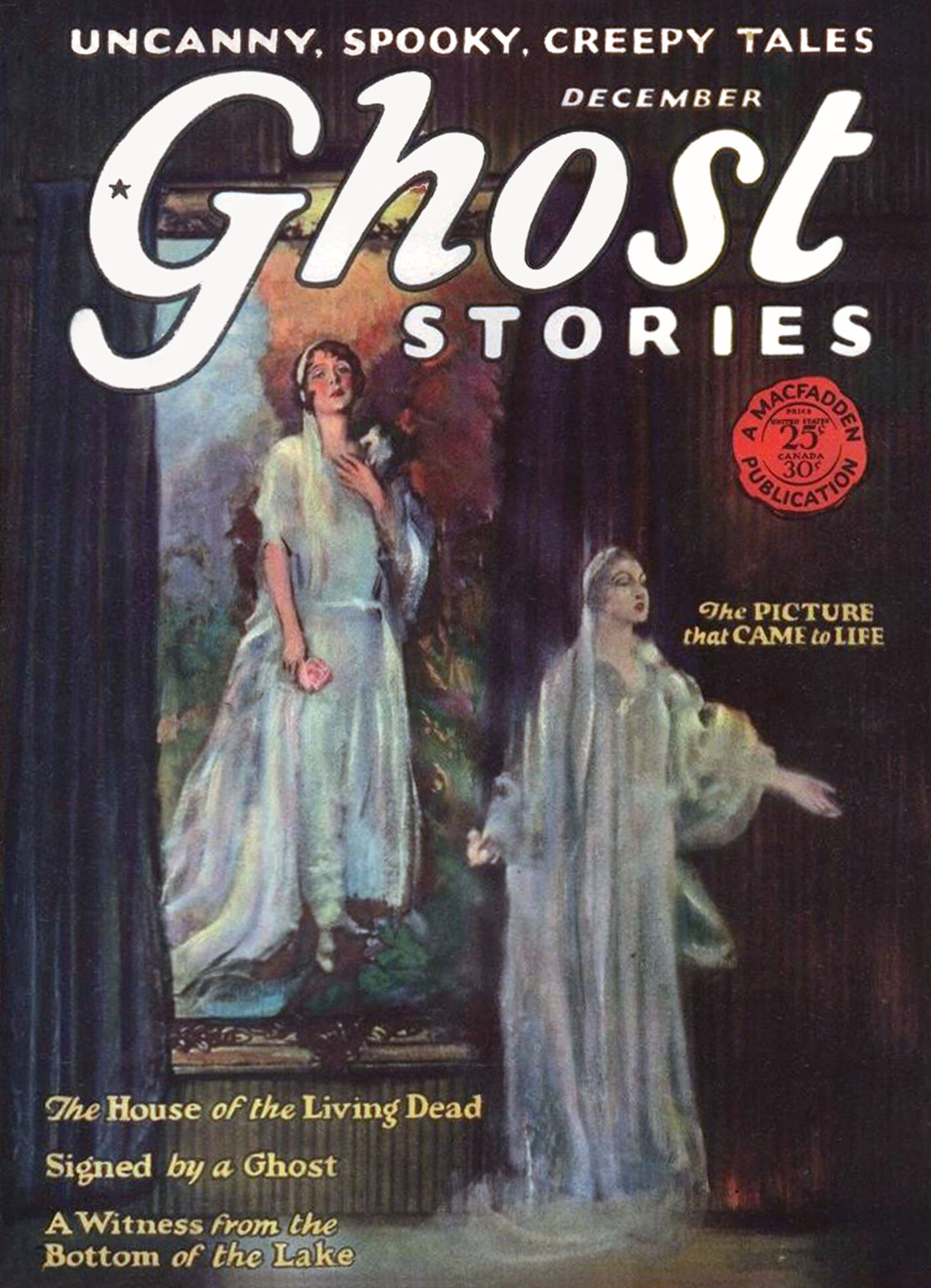
A portrait steps out of its frame to meet the woman who was looking at it. Of all the covers we found, this is the one that best understands what spirit photographs were selling. The ghost is a picture, and the picture wants to come home.
The Phantom of the Sawdust Ring
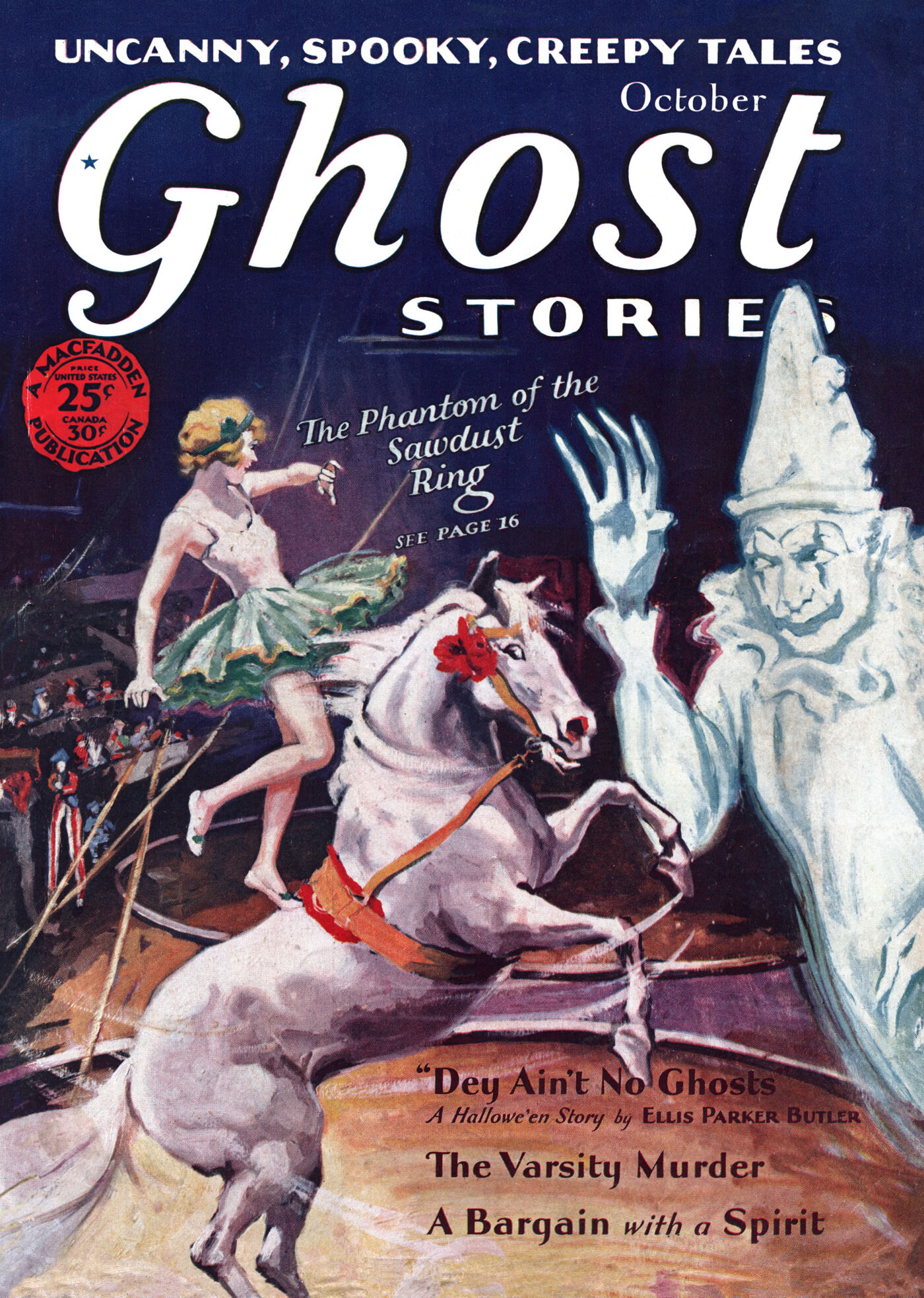
A ghost clown at the circus, on newsstands in the season of the stock market crash. The Halloween issue also promised a story by Ellis Parker Butler called “Dey Ain’t No Ghosts,” which the cover is doing its very best to disprove. If you have ever been afraid of clowns, this one may not help!
Where the record is uncertain
Ghosts are slippery, and so are some of the facts about their pictures.
- The Ghost of Oyuki. The painting is generally attributed to Maruyama Ōkyo and dated around 1750. The story of Oyuki comes from the scroll’s inscription, and like most ghost stories it cannot be checked.
- Mary Lincoln’s sitting. Accounts disagree on when she visited Mumler, from 1869 to the early 1870s, on the name she used, and on whether he knew who she was. We have used the most common date, about 1872.
- The Houdini poster. The Library of Congress dates it to about 1909, but the billing of fraud mediums exposed matches the full evening show Houdini toured in the mid-1920s. Thursday fell on 2 September in 1909, 1915, 1920 and 1926, so the calendar does not settle it.
- The Ghost Stories covers. We have not found a reliable credit for any of the three covers, so we have not named an artist. If you know who painted them, tell us.
- Robertson’s Fantasmagorie. We describe it but do not show it, because the surviving engravings of the show we could find were too small to reproduce well.
Rights, and where these images came from
The Ōkyo scroll, the Hokusai prints and John Leech’s etching are long out of copyright, and the reproductions come from Wikimedia Commons, the Hokusai lantern ghost by way of the Minneapolis Institute of Art. The Pepper’s Ghost engraving was published in Paris in 1865. The spirit photographs by Mumler and Bogardus were made in the 1860s and 1870s. The Houdini poster and photograph are from the Library of Congress, which reports no known restrictions on publication. The Ghost Stories covers were published in the United States before 1931 and are in the public domain by date; the scans come from the Internet Archive’s Pulp Magazine Archive.
Maruyama Ōkyo, Katsushika Hokusai, John Leech, William Mumler and Abraham Bogardus made these ghosts. The cover painters of Ghost Stories deserve to be named too, and we hope someone can help us find them.
Sources
- The Ghost of Oyuki and Yūrei
- Minneapolis Institute of Art: Hokusai, The Lantern Ghost, Iwa and Yotsuya Kaidan
- A Christmas Carol and John Leech
- Pepper’s ghost and Phantasmagoria
- William H. Mumler, Abraham Bogardus and Spirit photography
- American Museum of Photography: Moses A. Dow and Mabel Warren
- Harry Houdini and Library of Congress Prints and Photographs
- Ghost Stories (magazine) and the Internet Archive Pulp Magazine Archive
- Image records and rights tags on Wikimedia Commons
Previously in The Bestiary: the atomic monster and the swamp creature. Spotted an error, or have an old family photograph with someone standing in it who should not be there? Tell us. This is meant to be corrected.


Leave a Reply