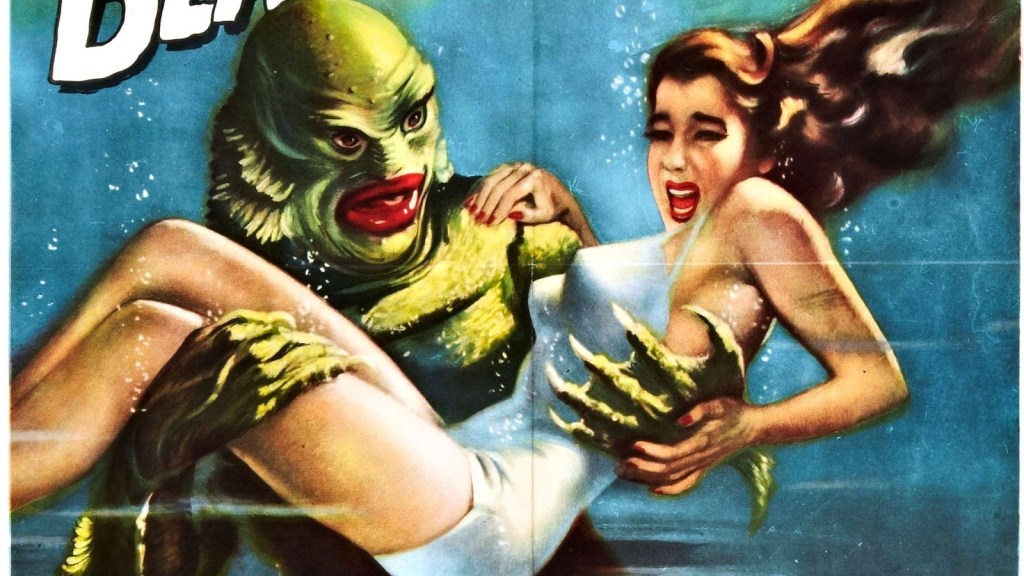
The Bestiary · 02
Every place with a wetland has a monster living in it. A swamp is water that will not commit to being a lake and land that will not hold your weight. Lights move across it with nobody carrying them. Things go into it and do not come back out. For as long as people have lived beside one, the swamp has been where they put whatever they could not explain.
The atomic monster needed a bomb. The swamp creature never needed anything. It was already there, under the moss, and in the twentieth century it simply got famous: first in the pulps, then in the comics, then, in 1954, as the most beautifully designed monster Universal ever made.
This is its family album, from nineteenth-century bog spirits to the Gill-man, with a stop in the Alabama mud for a creature most people have never heard of.
Why this page is different
Swamp monster imagery is mostly scattered across fan sites and auction listings, uncredited and undated. We did it the slow way. Every image below is dated, credited wherever the record allows, and in the public domain, with the reason given at the bottom of the page. Where the record is thin, we say so.
The old swamp
Before anyone drew a creature in it, the swamp itself was the monster. Nineteenth-century artists and photographers kept returning to the same scene: drowned trees, standing water, moss hanging like wet laundry, and the feeling that the frame goes on past its edges.
Cypress swamp, Louisiana
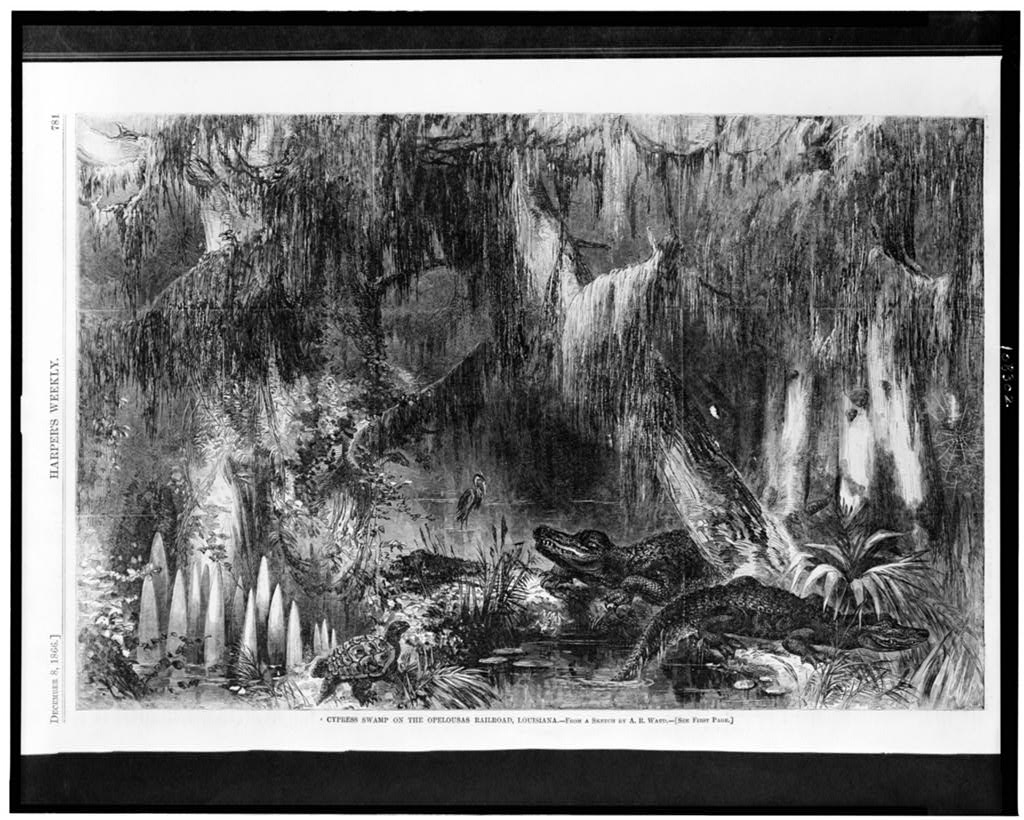
Alfred Waud was a Civil War sketch artist who knew how to fill a block. There is no monster in this picture and it does not need one. The alligators on the bank are doing the work, and every patch of shade looks occupied.
Scene in the Dismal Swamp
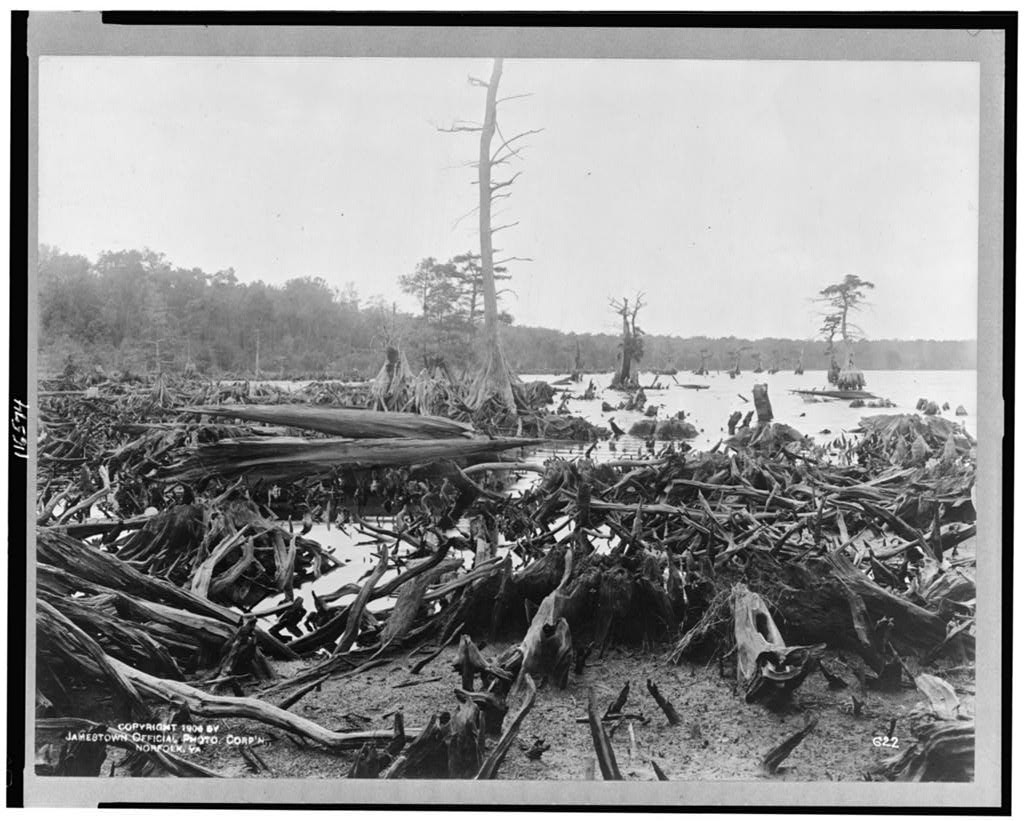
The Great Dismal Swamp, which straddles Virginia and North Carolina, has the best name in American geography and looks exactly like it. Bleached stumps, dead snags, water the color of tea: this is the stage set every later swamp-creature story would borrow.
The will-o’-the-wisp
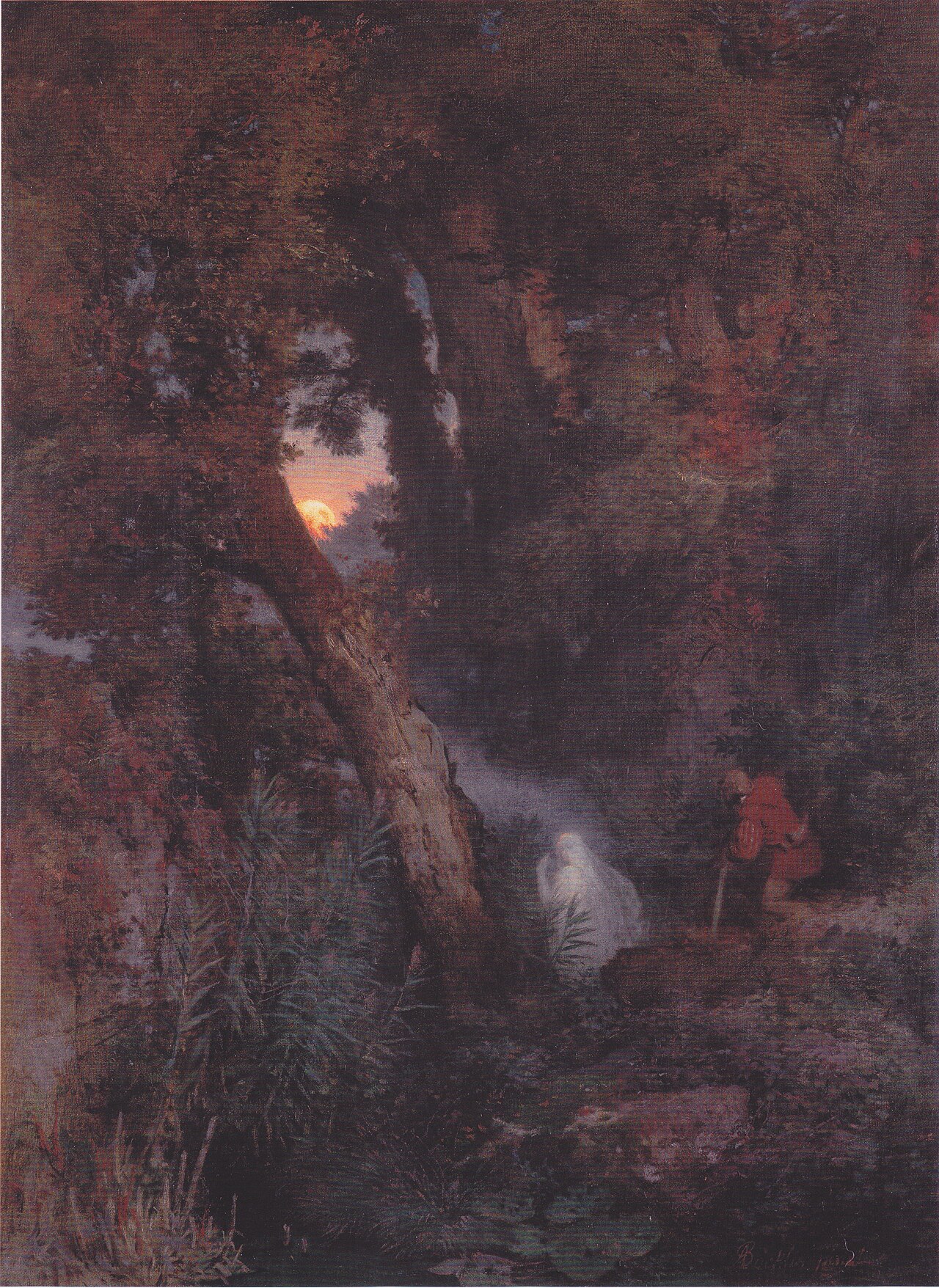
The oldest swamp monster of all is not a creature but a light. The will-o’-the-wisp, the ignis fatuus, the corpse candle: a glow over marshland that leads travelers off the path and into the water. Science later blamed burning marsh gas. Böcklin, the Swiss painter of Isle of the Dead, painted it as a veiled figure walking a man toward the dark.
The bunyip
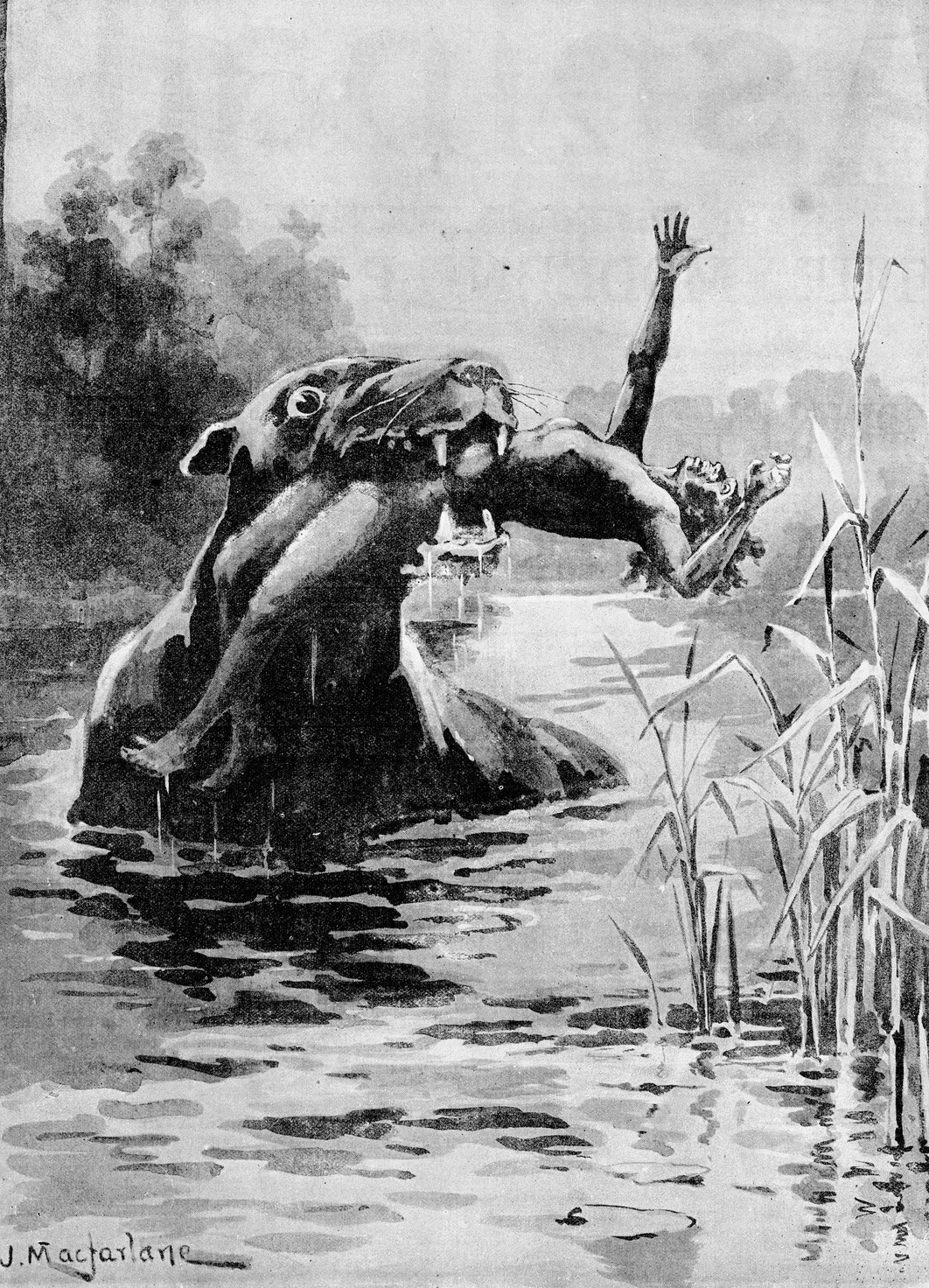
Australia’s swamp monster, from Aboriginal tradition, said to live in billabongs, creeks and swamps and to take anyone who comes too near. Colonial newspapers loved it and nobody agreed on what it looked like. Macfarlane went for something between a seal and a nightmare, and gave it a victim.
The pulp swamp
The pulp magazines gave the swamp a body. Some of the earliest monsters to come out of it were not mud men at all but something stranger and older.
Ooze
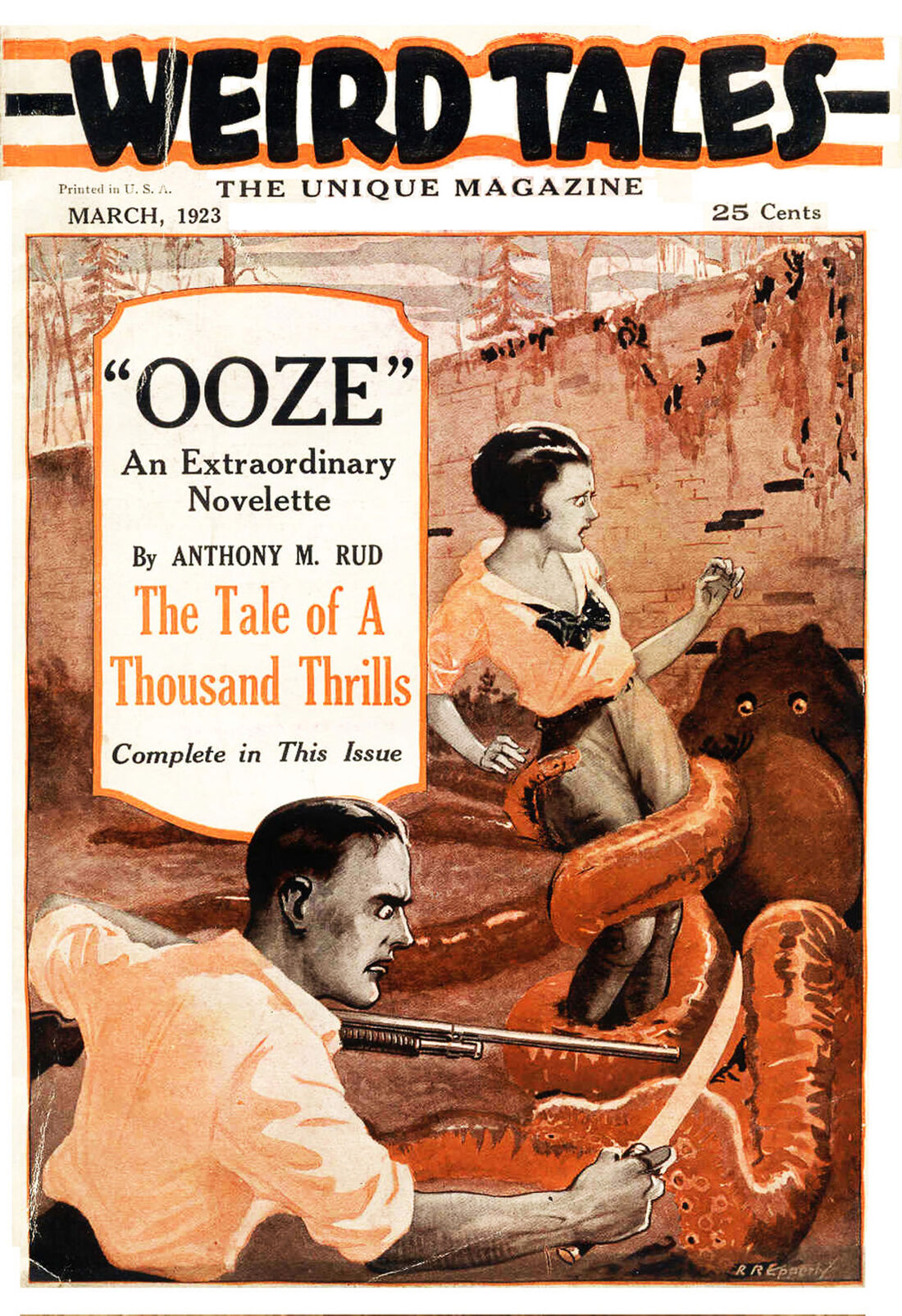
The very first cover of Weird Tales, and the swamp monster is on it! Rud’s story is set beside Moccasin Swamp in southern Alabama, where something in the water turns out to be a giant amoeba. It is a blob from the bog, thirty-five years before The Blob, on the cover of the magazine that would go on to publish Lovecraft and Robert E. Howard.
The Scourge of B’Moth
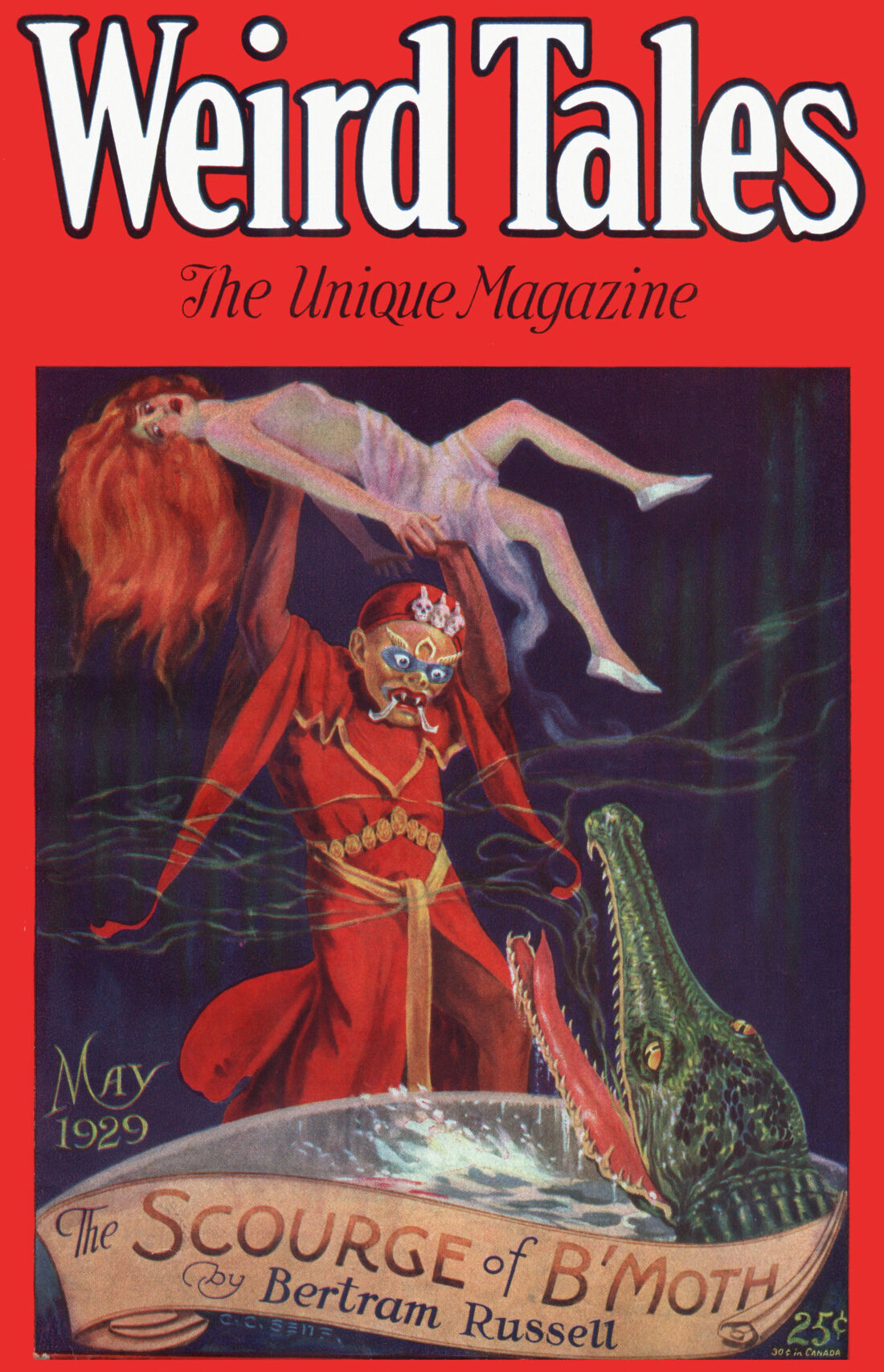
Senf painted dozens of Weird Tales covers and rarely got the credit. This one has everything the swamp creature would carry into the movies: the dark water, the huge reptile head breaking the surface, and a woman held just out of its reach.
The Drums of Tapajos
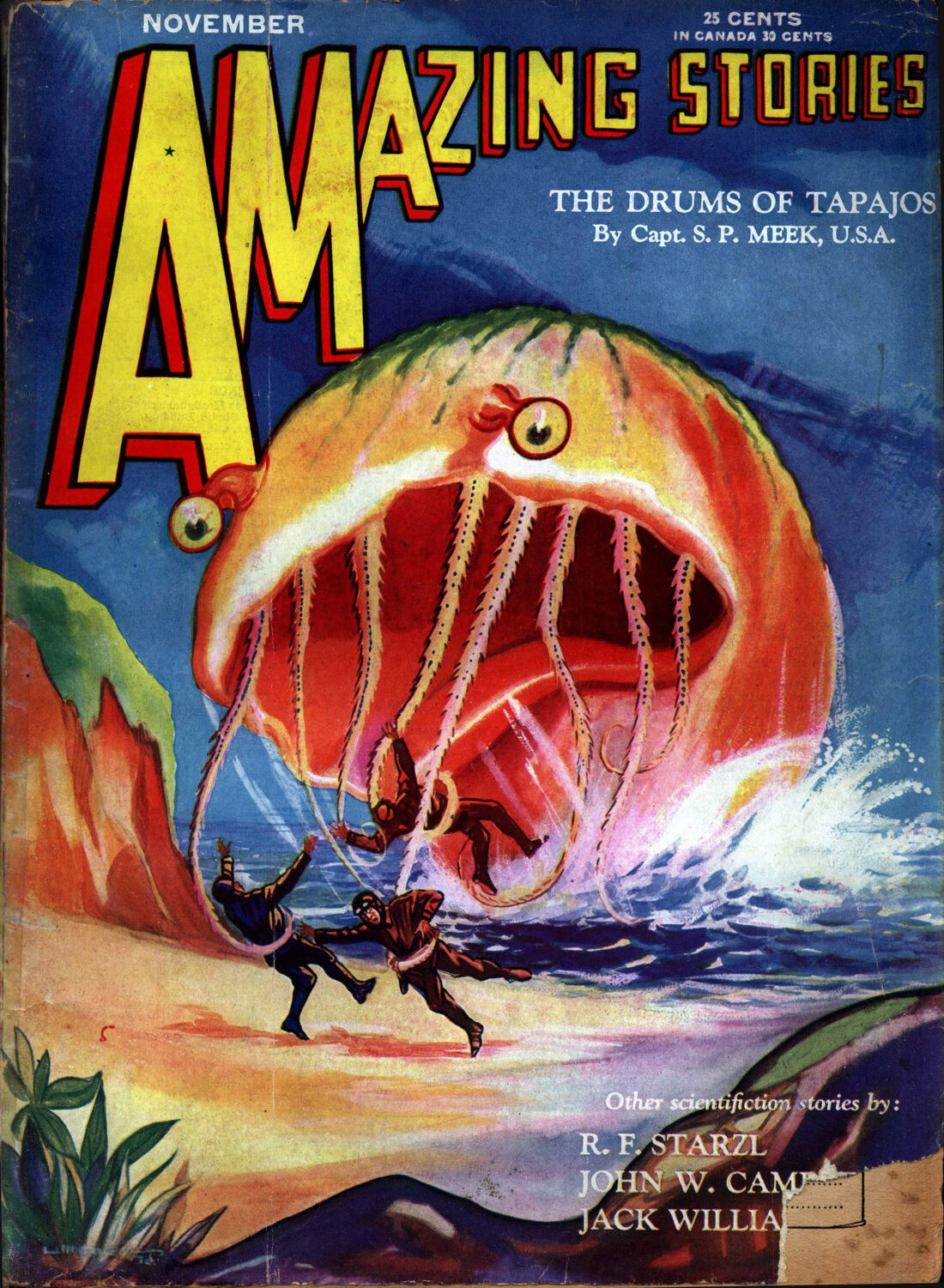
The Tapajós is a tributary of the Amazon, and this is a river monster that looks like it was assembled out of a jellyfish, a catfish and a bad dream. Keep the Amazon in mind. Twenty-four years later, Universal would go back there for its own creature.
Ten years after that, in August 1940, the magazine Unknown printed Theodore Sturgeon’s “It!”, a story about a thing that rises out of the forest muck, built from rot and leaves around a human skeleton. That issue’s cover was type only, so we cannot show it to you, but nearly every walking swamp man that followed owes something to Sturgeon. The first one arrived two years later.
The Heap
In December 1942 a small publisher called Hillman Periodicals ran a story in Air Fighters Comics No. 3 called “Wanted By the Nazis,” written by Harry Stein and drawn by Mort Leav. Two pages in, it introduced what is generally recognized as the first swamp monster in American comics.
The origin
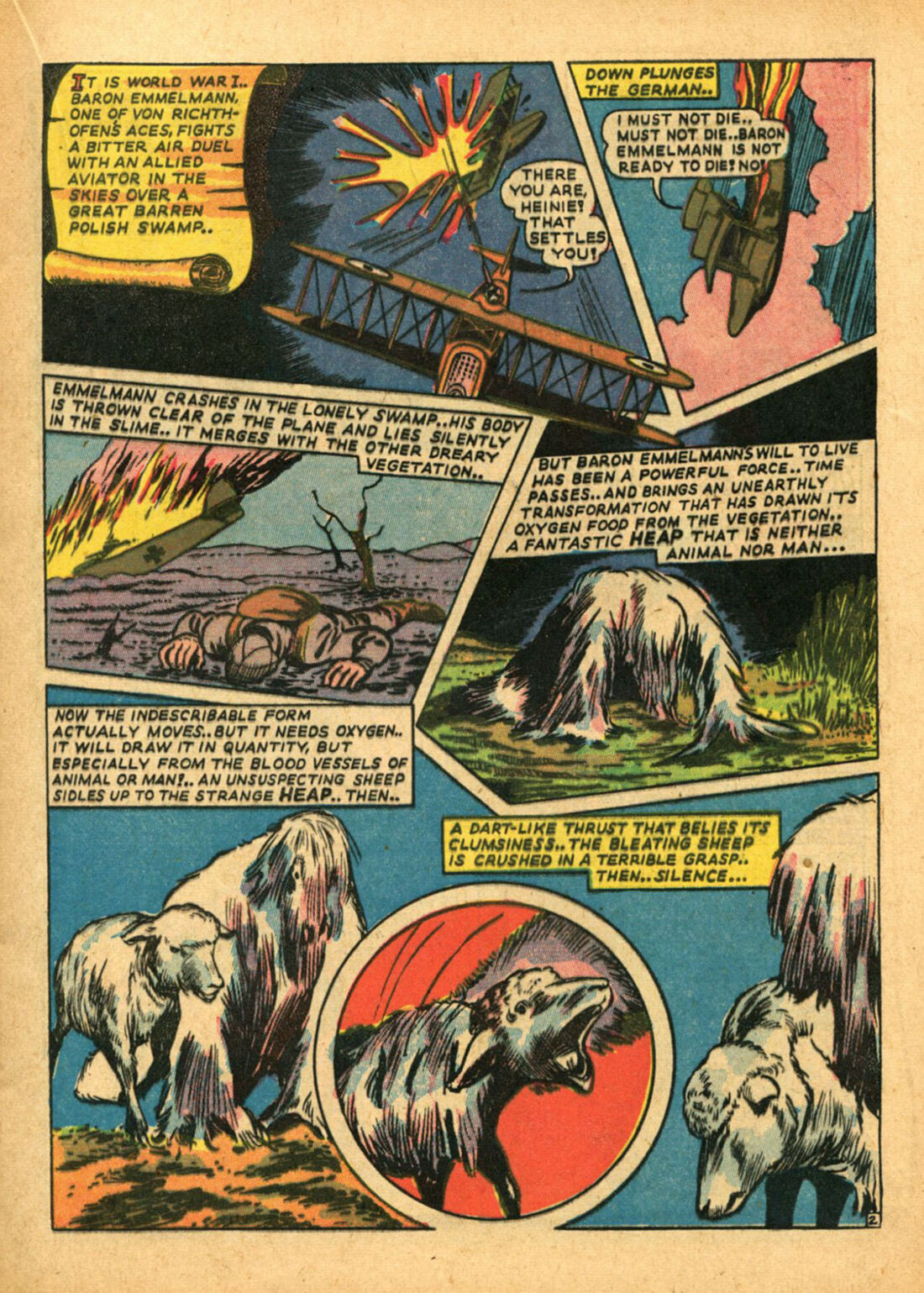
…a fantastic HEAP that is neither animal nor man.
Air Fighters Comics No. 3, December 1942
A German flying ace, Baron Emmelmann, is shot down over a vast Polish swamp in the First World War. His body sinks into the muck and merges with it, and years later something rises. It is Sturgeon’s idea in four-color, and it is drawn with a confidence that makes the bold reds and purples glow even through eighty years of yellowing paper.
Under the moon
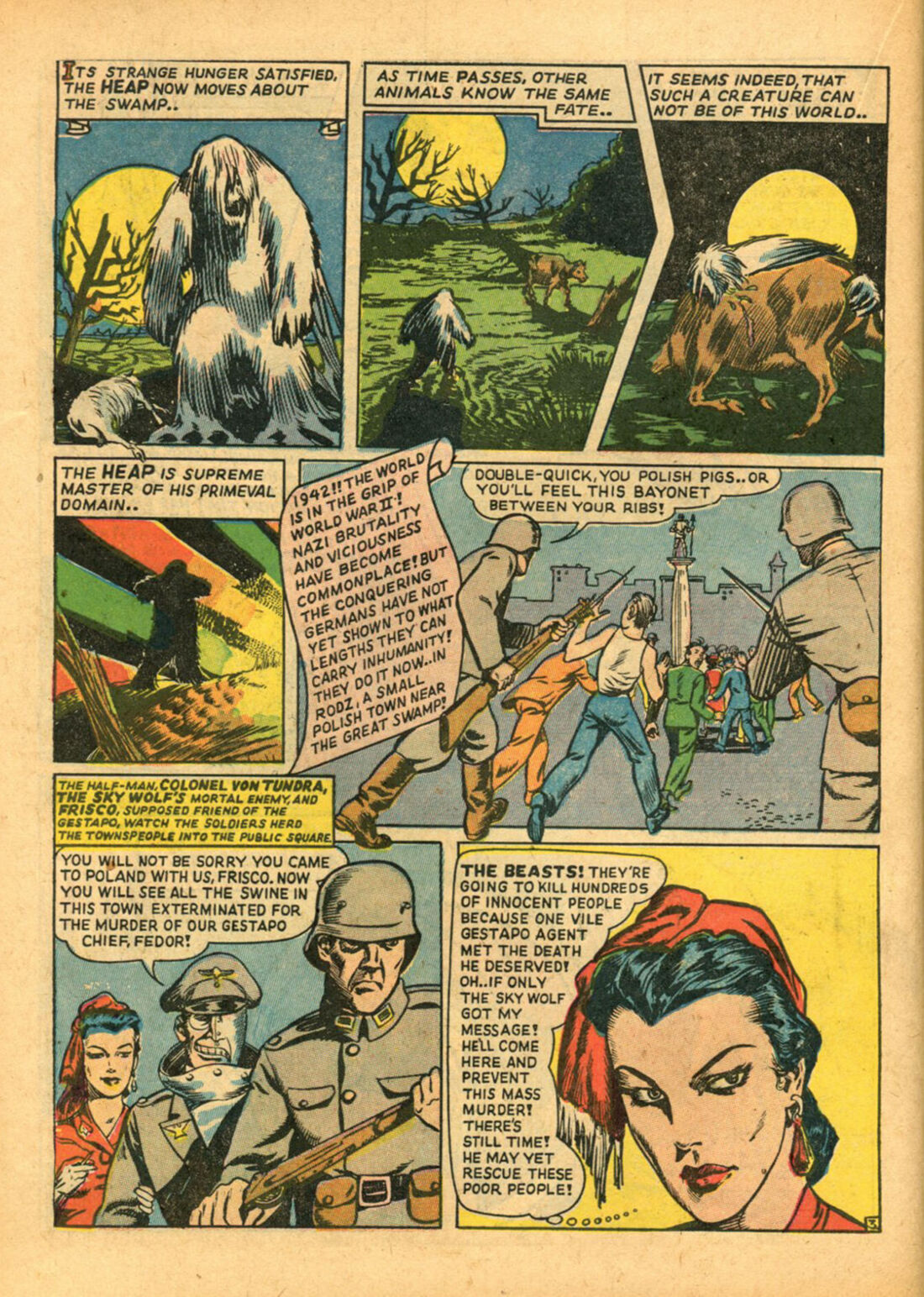
Look at that first panel: the creature, the bare trees, the enormous yellow moon. This is a 1942 comic book page and it is staged like an Expressionist film still. The Heap would go on to share pages with Skywolf and later Airboy, and in this first story the swamp it rules is in Nazi-occupied Poland. Wartime readers wanted their monsters on the right side.
The Heap, mossy and green
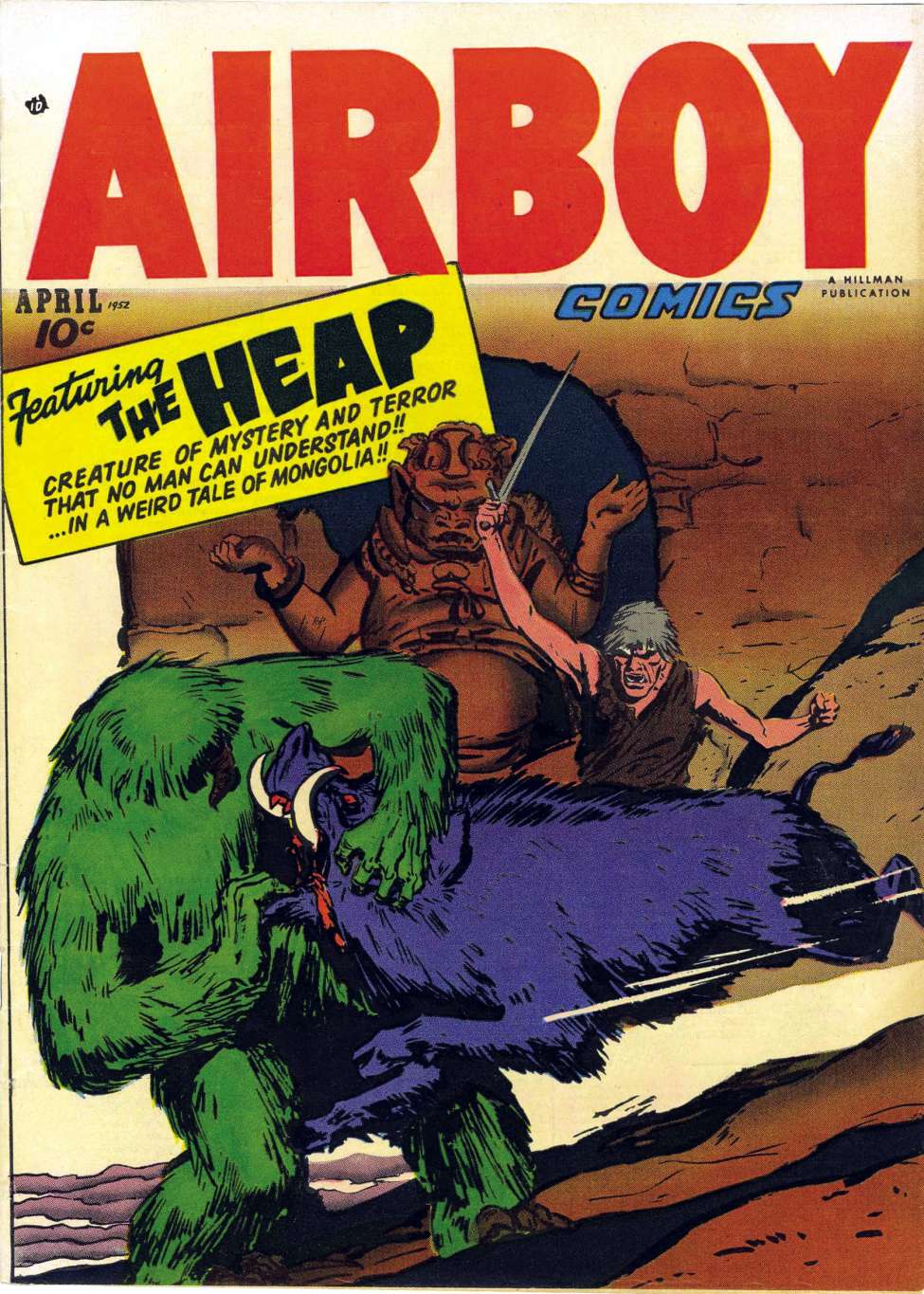
Featuring THE HEAP, creature of mystery and terror that no man can understand!!
Airboy Comics, April 1952
By the fifties the Heap had turned from shaggy white to mossy green, and had a regular slot in Airboy. Schroeder drew him as a walking compost pile with arms like tree trunks, which is roughly the template most swamp creatures since have followed.
The Man of Moonlight
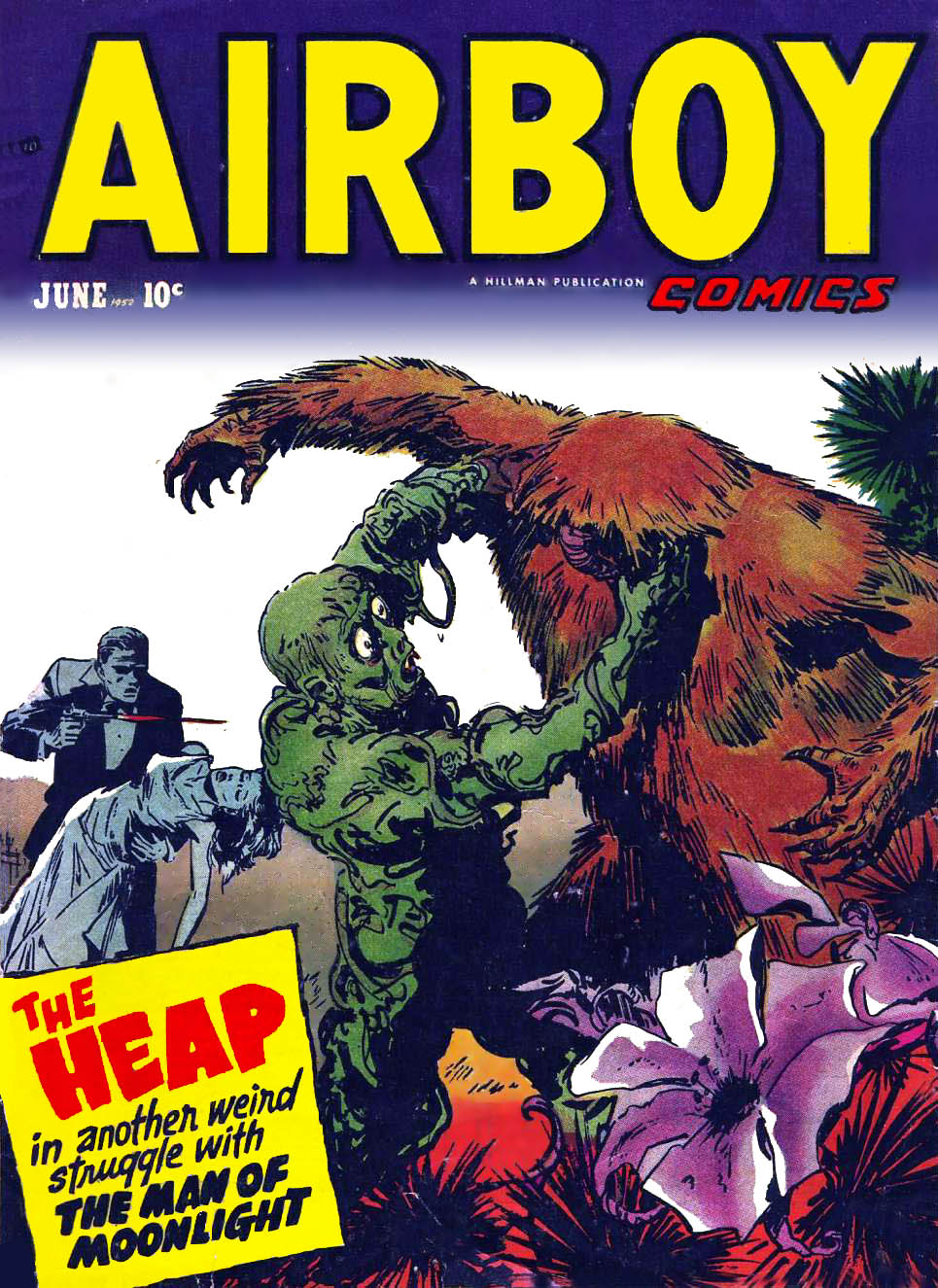
Purple, lavender, rust and swamp green: Hillman’s colorists were having a wonderful time. Notice who the hero is here. The Heap is the one fighting the monster. In the comics, the swamp creature was turning into something sadder and more interesting than a villain.
The Gill-man
Then came 1954. Strictly speaking, the Black Lagoon is a lagoon on an Amazon tributary and its creature is closer to a fish than to a heap of moss. But no single design has shaped what the world pictures when it hears “swamp creature” more than this one.
Creature from the Black Lagoon
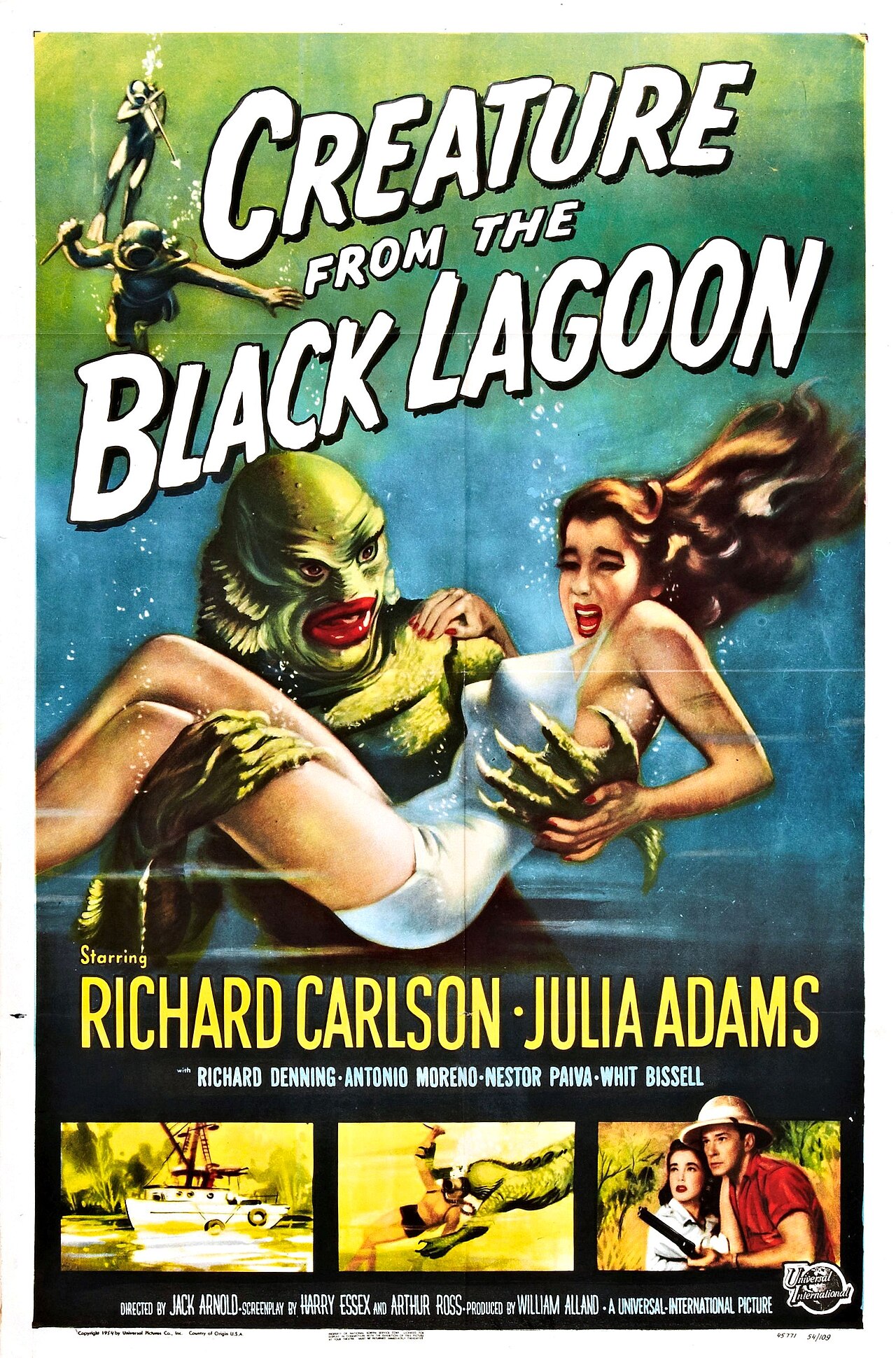
Shot in 3D and premiered in Detroit, though as the 3D fad faded many audiences saw it flat. Two men played the creature: Ben Chapman on land, and Ricou Browning underwater, filmed by the second unit in the clear water of Wakulla Springs, Florida, where Browning could reportedly hold his breath for up to four minutes. The creature itself was designed by Milicent Patrick, one of the very few women working in Hollywood monster effects at the time. Universal let her go, by most accounts because the head of its makeup department, Bud Westmore, resented her being associated with it. Her name did not get its due for more than sixty years. Brown’s poster gives her design the glamour it deserves.
Revenge of the Creature
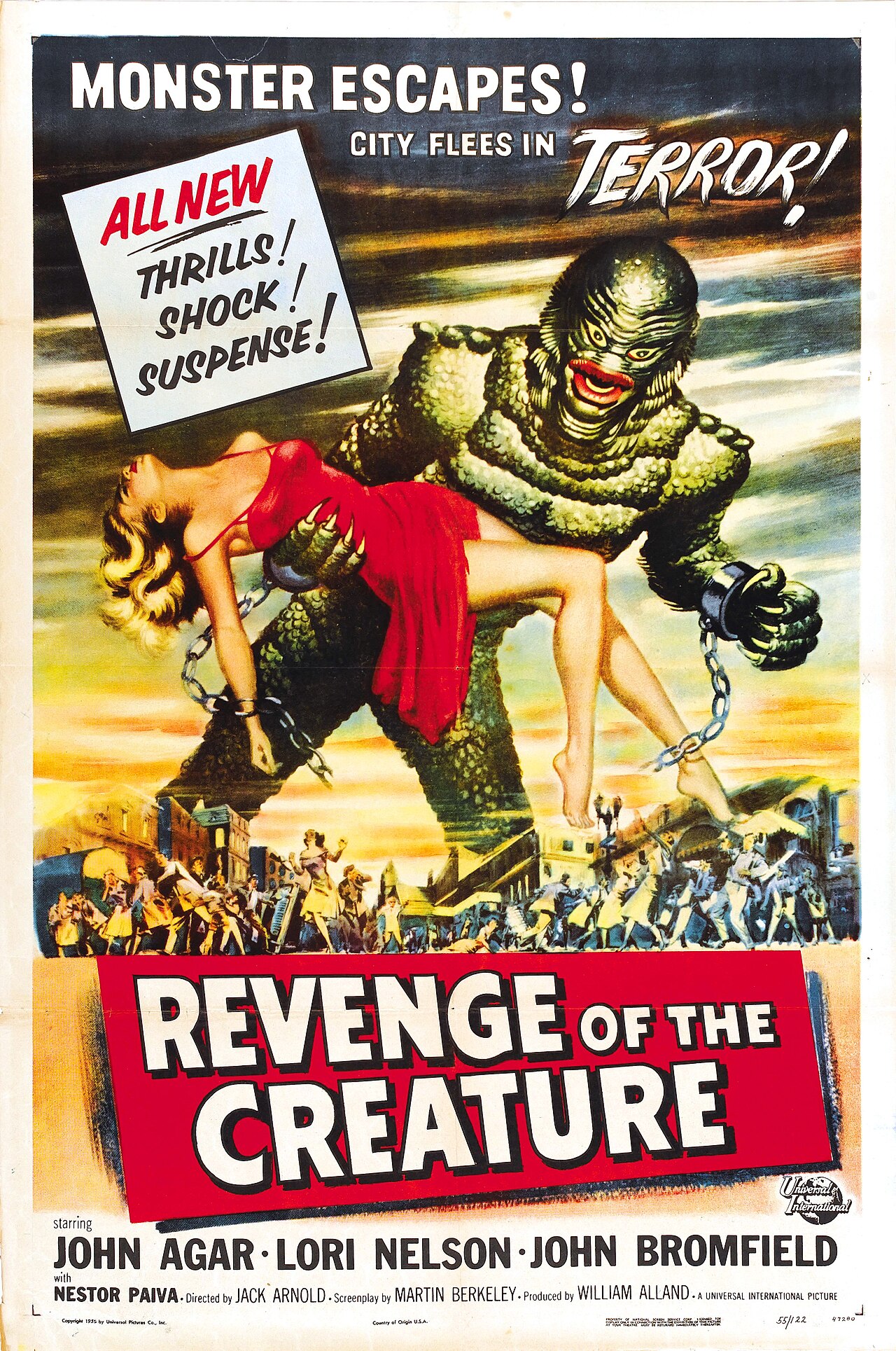
Monster escapes! City flees in terror!
From the Revenge of the Creature one-sheet, 1955
The sequel captures the creature and takes him to a Florida oceanarium, where things go about as well as you would expect. Browning swims again; Tom Hennesy wears the suit on land. It was the only 3D film released in 1955, and it features the screen debut of Clint Eastwood as a lab technician, which means Eastwood turned up in two Jack Arnold monster pictures in a single year. Brown’s version of the creature is noticeably bigger than the film’s. Posters were always allowed to exaggerate.
The Gill-man at Silver Springs
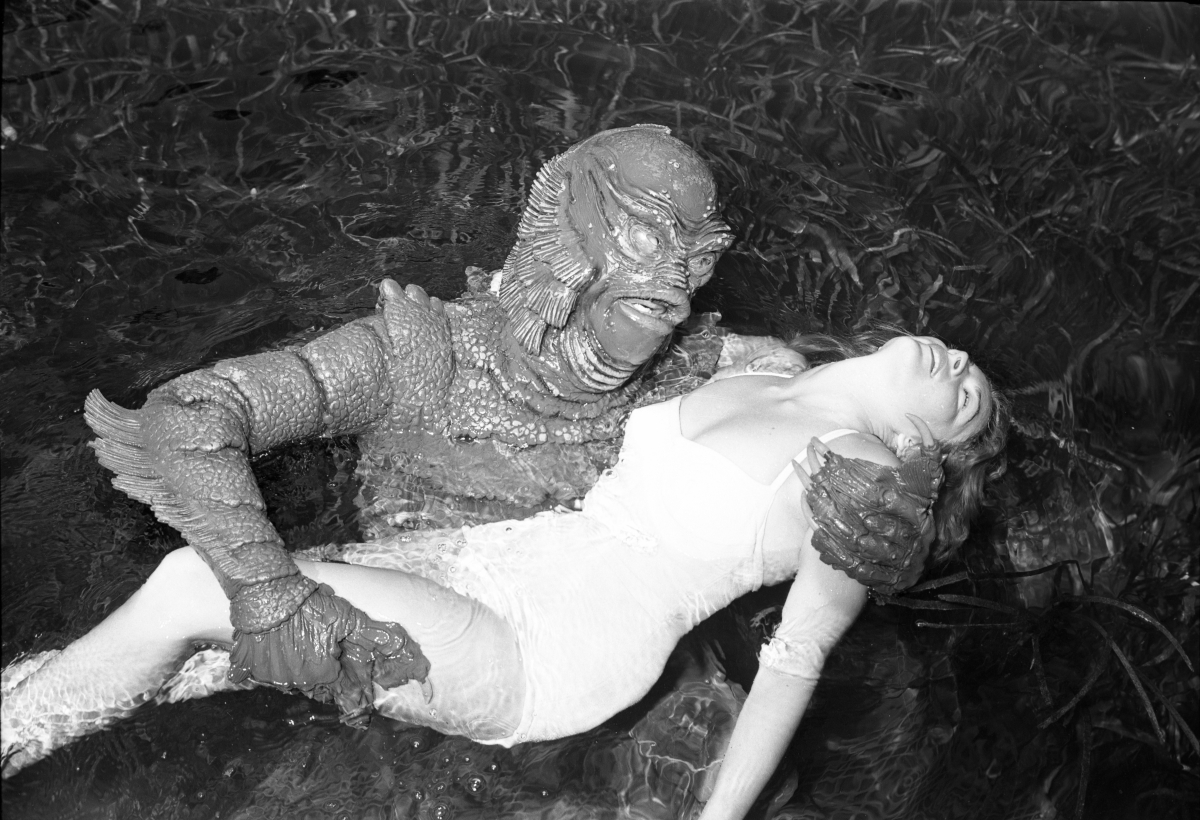
Florida’s freshwater springs were the creature’s real home. This one comes from the collection of Bruce Mozert, the photographer who made Silver Springs famous with his underwater pictures, and shows the swimmer Ginger Stanley in the Gill-man’s grip in 1955. The archive does not say which film it promoted, so we will not guess. It is one of the loveliest monster photographs ever taken.
The real bayou
After the movies, the swamp creature came home. The Depression-era photographers of the Farm Security Administration had already documented the bayous of Louisiana in loving detail, and the South’s wetlands are where the twentieth century’s swamp monster sightings would be reported.
A fisherman’s home on the bayou
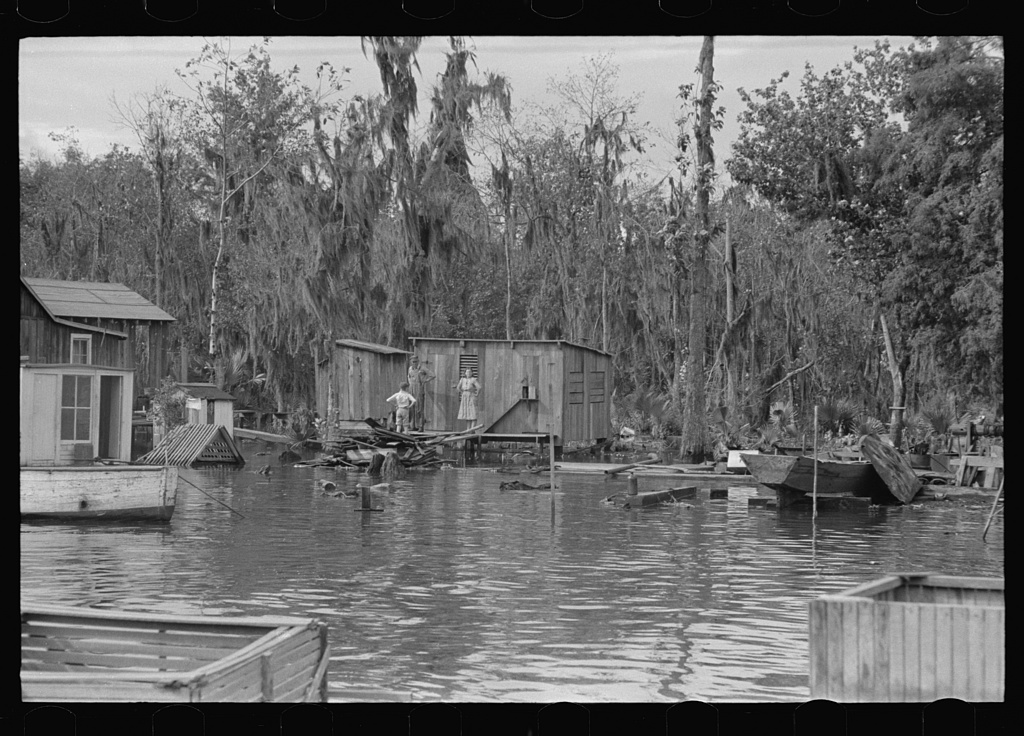
Russell Lee photographed ordinary life with enormous patience. Nothing is wrong in this picture. People live here, fish here, tie their boats up here. Which is exactly why, once you have read the stories, the still water under the houses starts to look like it is keeping a secret.
Delacroix Island
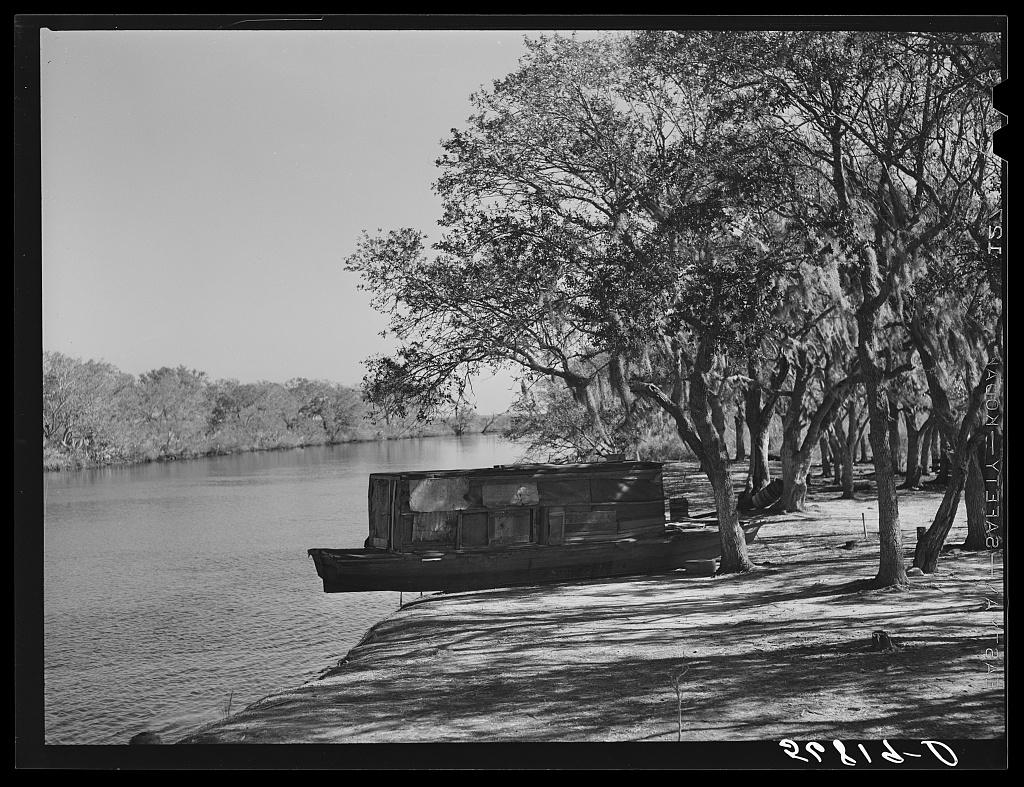
Wolcott’s bayou, a few years later and a few parishes over. The Honey Island Swamp, home of Louisiana’s own legend, lies to the northeast along the Pearl River.
And the legends did come. In 1963 Harlan Ford, a retired air traffic controller, said he had seen a creature in Louisiana’s Honey Island Swamp, and after his death in 1980 a reel of Super 8 film reportedly turned up among his belongings. In Fouke, Arkansas, reports of a creature in the bottomlands from 1971 became The Legend of Boggy Creek, which Charles B. Pierce made for around $160,000 in 1972 and which, by the Encyclopedia of Arkansas’s count, went on to earn more than $20 million. In March 1972 a police officer in Loveland, Ohio reported a strange creature on Riverside Drive, the start of the Loveland Frog, though a second officer later said the animal he had shot was a tailless iguana. And in July 1988, near Bishopville, South Carolina, a seventeen-year-old described a seven-foot green creature with red eyes and three fingers coming out of Scape Ore Swamp, and the Lizard Man was born.
Meanwhile the comics’ swamp man had a second birth, and almost a twin one: Marvel’s Man-Thing appeared in May 1971 and DC’s Swamp Thing in July 1971, just weeks apart. Both are still under copyright, so they are not pictured here. Both owe a debt to the Heap, and to Sturgeon before it.
Where the record is uncertain
Here is what we could not pin down.
- Böcklin’s date. Records for Das Irrlicht give both 1862 and 1882. We have left the year off until we can confirm it with the museum.
- The Silver Springs photograph. The State Archives of Florida dates it to 1955 but does not say which film it promoted.
- The Heap’s baron. The 1942 caption spells him Emmelmann. Later sources often write von Emmelman. We follow the original page.
- The Drums of Tapajos. The November 1930 Amazing Stories cover is unsigned in the scan we used, so we have not credited an artist.
- Box office. Figures for The Legend of Boggy Creek vary widely between sources. All agree it made many times its budget.
- Who is missing. We could not verify a public-domain poster for The Alligator People, Curse of the Swamp Creature or The Legend of Boggy Creek, so they are mentioned but not shown.
Rights, and where these images came from
The pulp covers were published in the United States before 1931 and are in the public domain by date; the scans come from the Internet Archive’s Pulp Magazine Archive. The Hillman comics come from the Internet Archive, where they are marked public domain, and from Wikimedia Commons, which records the Airboy covers as never renewed. The Universal posters carry 1954 and 1955 copyright notices that were never renewed, as recorded on Commons. The Silver Springs photograph was released by the State Archives of Florida. The Library of Congress engraving and photographs carry no known restrictions, and the Böcklin painting and the bunyip engraving are long out of copyright.
Reynold Brown, Ernest Schroeder, Mort Leav, C. C. Senf and Milicent Patrick made these monsters, and their names belong right next to them.
Sources
- Internet Archive Pulp Magazine Archive, including the contents and story text of Weird Tales, March 1923 and May 1929
- Air Fighters Comics No. 3, December 1942, at the Internet Archive
- The Heap and It! by Theodore Sturgeon
- Anthony M. Rud
- Creature from the Black Lagoon, Revenge of the Creature, Milicent Patrick
- Florida Memory, State Library and Archives of Florida
- Library of Congress: Cypress swamp on the Opelousas Railroad, Scene in the Dismal Swamp, Russell Lee, Akers, Marion Post Wolcott, Delacroix Island
- Honey Island Swamp monster, Fouke Monster, The Legend of Boggy Creek, Loveland frog, Lizard Man of Scape Ore Swamp
- Man-Thing and Swamp Thing
- Image records and rights tags on Wikimedia Commons
Next in The Bestiary: the ghost. Previously: the atomic monster. Spotted an error, or seen something moving in the reeds that belongs in this guide? Tell us. This is meant to be corrected.


Leave a Reply