The Bestiary · 01
On the morning of 1 March 1954 the United States set off a hydrogen bomb called Castle Bravo at Bikini Atoll. The engineers expected six megatons. They got fifteen. Downwind, a Japanese tuna boat called the Lucky Dragon No. 5 was dusted with white radioactive ash, and that September its chief radioman, Aikichi Kuboyama, died. Five weeks later a film premiered in Nagoya about an ancient creature woken by exactly that kind of test.
America had already got there. In June 1953 a dinosaur thawed out of the Arctic by an atomic blast came ashore in New York. In June 1954 Warner Bros. sent giant ants into the storm drains of Los Angeles. For the rest of the decade, a ticket to the movies on a Saturday afternoon was very likely to buy you something enormous that the bomb had made, or woken, or made furious.
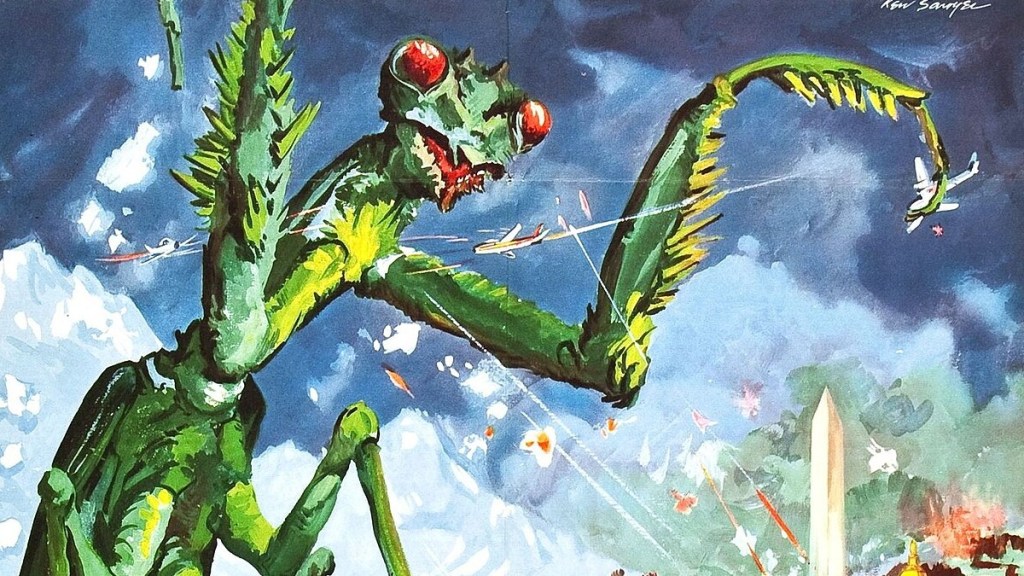
It is a gloriously ridiculous genre. It is also one of the most honest records we have of how ordinary people felt about living next to the most frightening invention in history. Nobody in the audience could stop the tests. They could watch a mantis the size of a jetliner climb over Washington, and then watch the Air Force deal with it.
Why this page is different
Monster-movie posters are some of the most reposted images on the internet and some of the least credited. Two of the posters below were painted by Reynold Brown, one of the great illustrators of the American century, and a third by Ken Sawyer, and you would rarely know any of it from where they turn up.
So we did the slow version. Every image here is dated, credited wherever the record allows, and in the public domain, with the reason for each spelled out at the bottom of the page. We have also put the monsters next to their parents: the pulp covers that invented the giant creature a generation before the bomb, and the government photographs that gave it a reason to exist.
Before the bomb
The giant monster is older than the atom bomb by decades. Hugo Gernsback’s Amazing Stories was throwing outsized animals at the modern world from its first year, usually painted by Frank R. Paul, whom we wrote about here. What the pulps lacked was a cause. Their monsters came from lost continents, mad laboratories and tropical lakes. They were waiting for a reason.
The giant fly
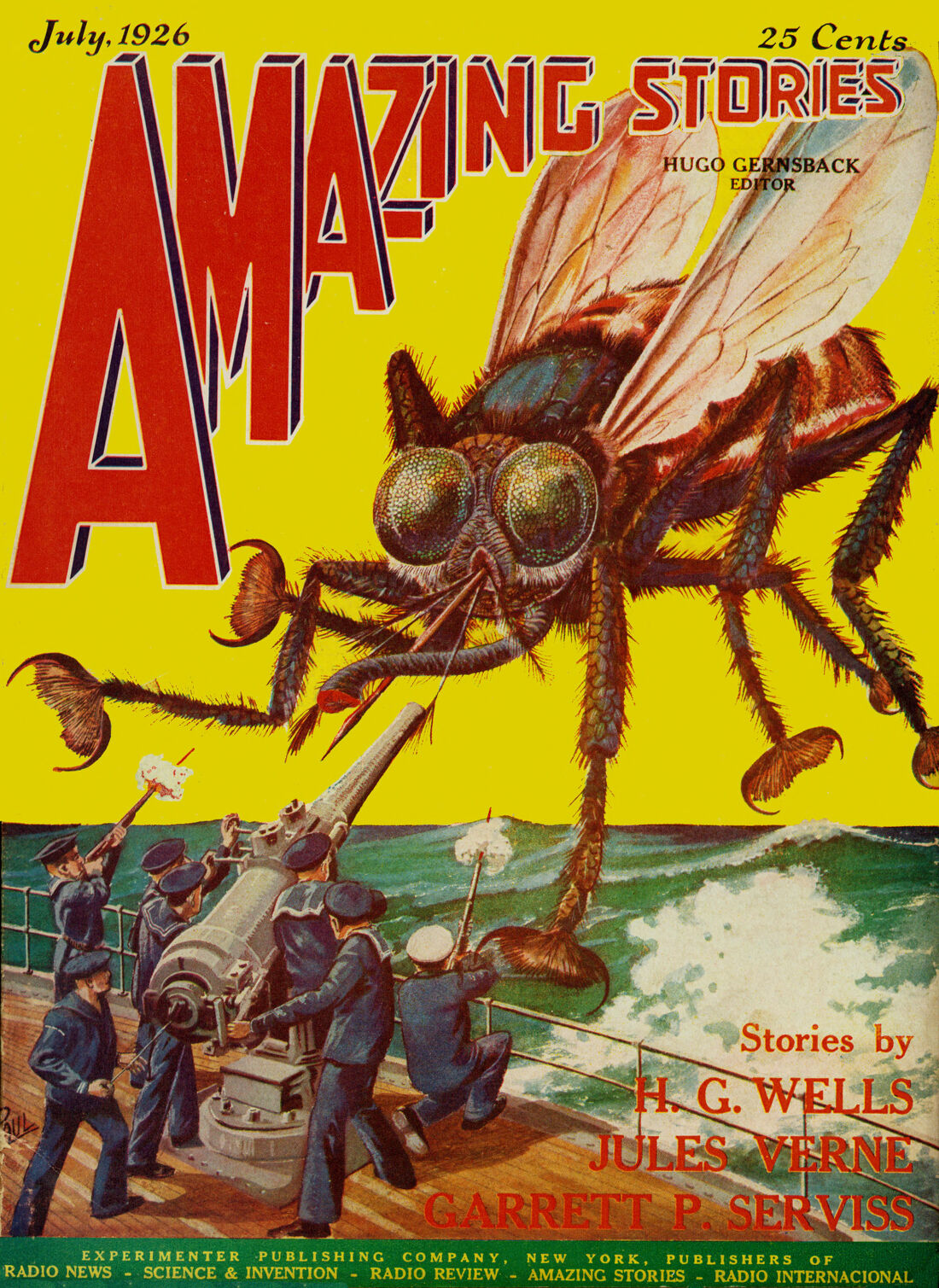
The only giant flies in this issue belong to “The Eggs from Lake Tanganyika” by Curt Siodmak, in which an entomologist’s tsetse flies grow monstrous and the military goes after them with machine guns. Siodmak went on to Hollywood, wrote The Wolf Man for Universal, and in 1955 wrote Creature with the Atom Brain. He was writing atomic-age monster panic thirty years early, with flies.
The Land That Time Forgot
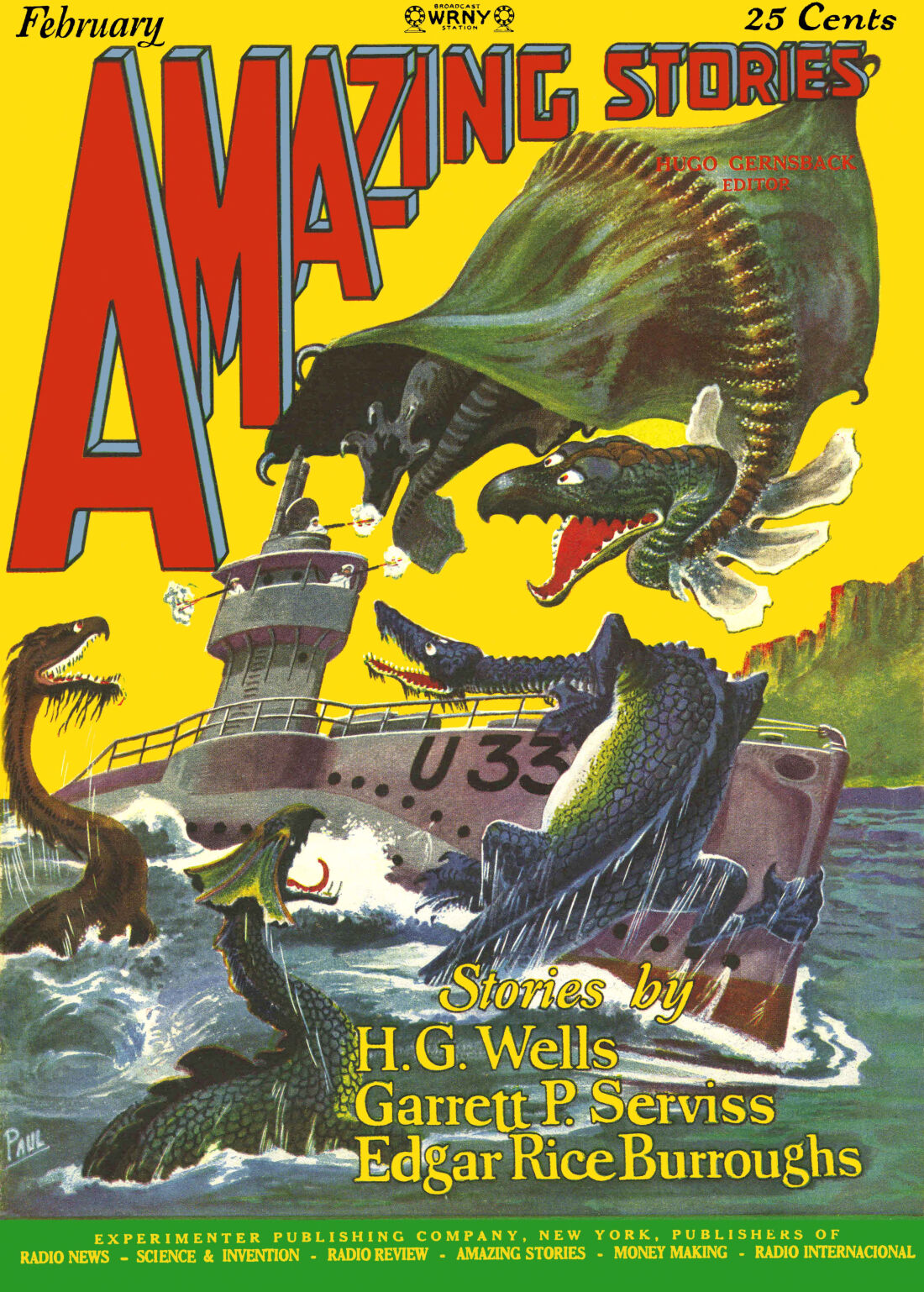
Burroughs sends a German U-boat, the U-33, to a lost continent still full of prehistoric life, and Paul gives the crew serpents in the water and a dragon diving from the sky. Prehistoric monster, modern warship, one frame. Hollywood would build a whole decade on that composition.
The Tragedy of Spider Island
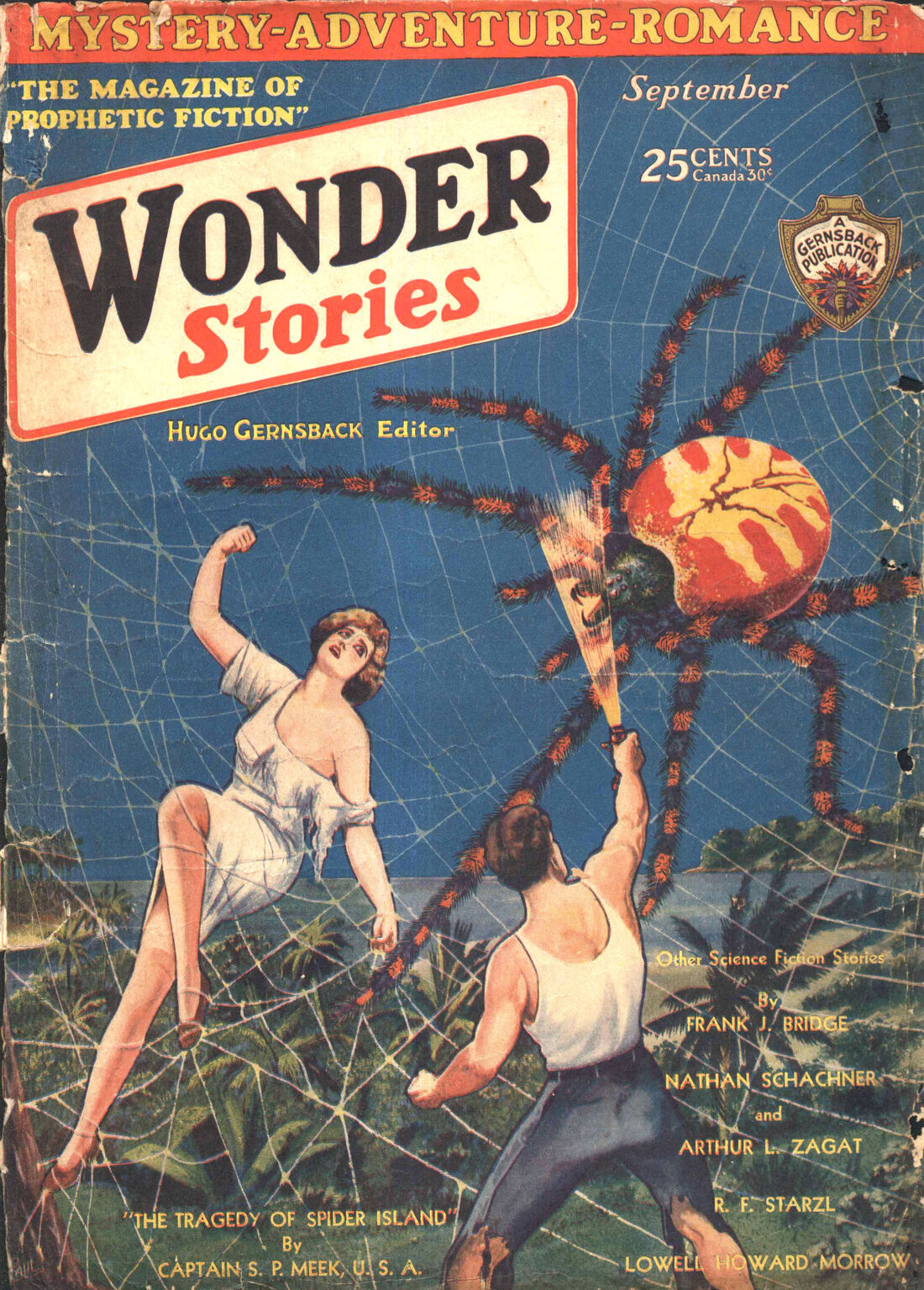
Twenty-five years before Tarantula, the giant spider was already a newsstand staple, complete with the woman in white and the man with the torch. The furniture of the fifties monster picture was all here. What the next two decades added was a mushroom cloud.
The reason
After 1945 the monster finally had its cause, and the government supplied the pictures. The United States tested in the open, in the Pacific and in the Nevada desert, and it photographed everything. These are not illustrations. They are the images the illustrators were answering.
Crossroads Baker
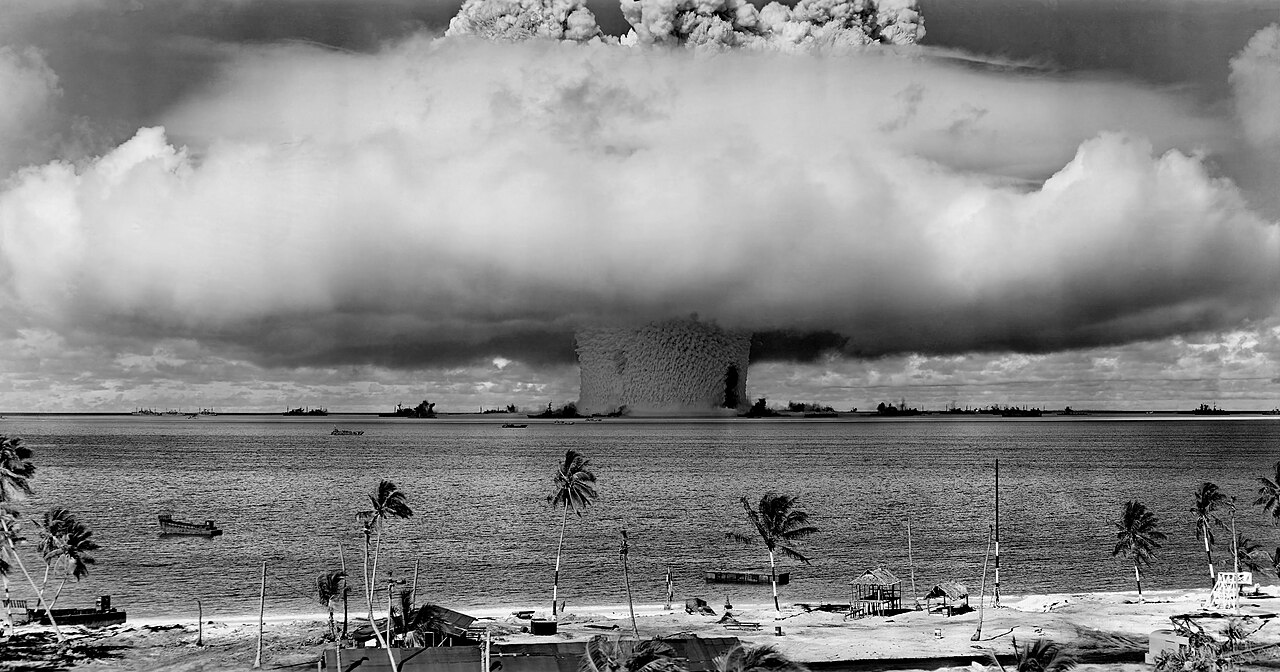
The first underwater nuclear test. The bomb was hung about ninety feet below the surface among a fleet of target ships, and the white dome is a condensation cloud that lasted only moments. If you have ever wondered why so many fifties monsters come up out of the sea, start here. The first postwar pictures of the atom showed the ocean itself standing up.
Grable
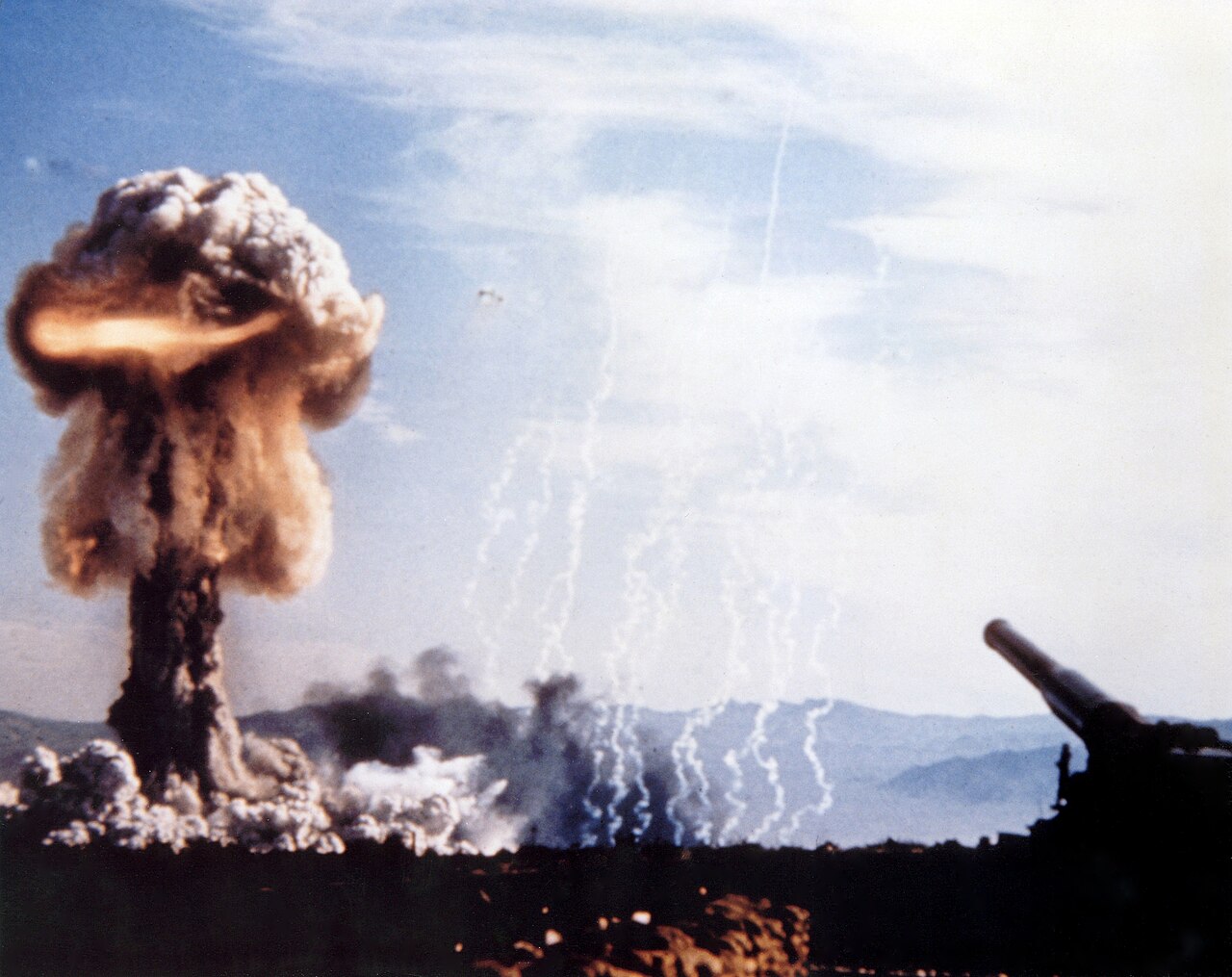
A nuclear shell fired out of a cannon nicknamed Atomic Annie, which went off nineteen seconds after it left the barrel. That is the gun in the corner of the frame. This happened less than three weeks before The Beast from 20,000 Fathoms opened in American theaters.
Castle Bravo
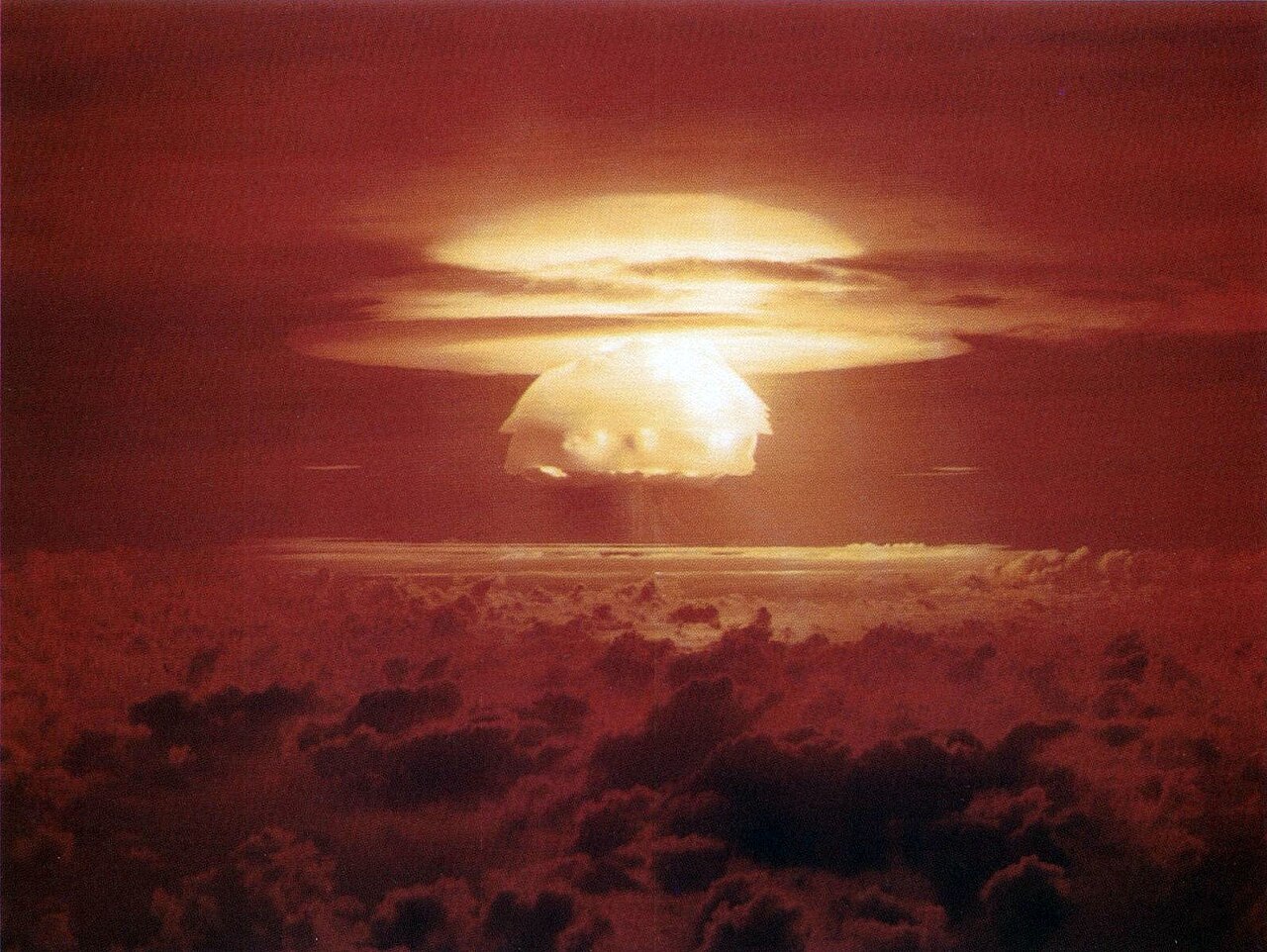
Fifteen megatons, two and a half times what its designers predicted, and still the most powerful device the United States has ever detonated. The fallout reached the Lucky Dragon and the inhabited atolls downwind, and it helped make the word “fallout” part of ordinary speech. Of every photograph on this page, this is the one that looks most like a movie poster. It is the only one that is not.
The bestiary
Eight monsters from the golden decade, in order of release. All eight images are in the public domain, which is rarer than it should be for this genre and is the main reason a few famous titles are missing. More on that at the bottom.
The Beast from 20,000 Fathoms
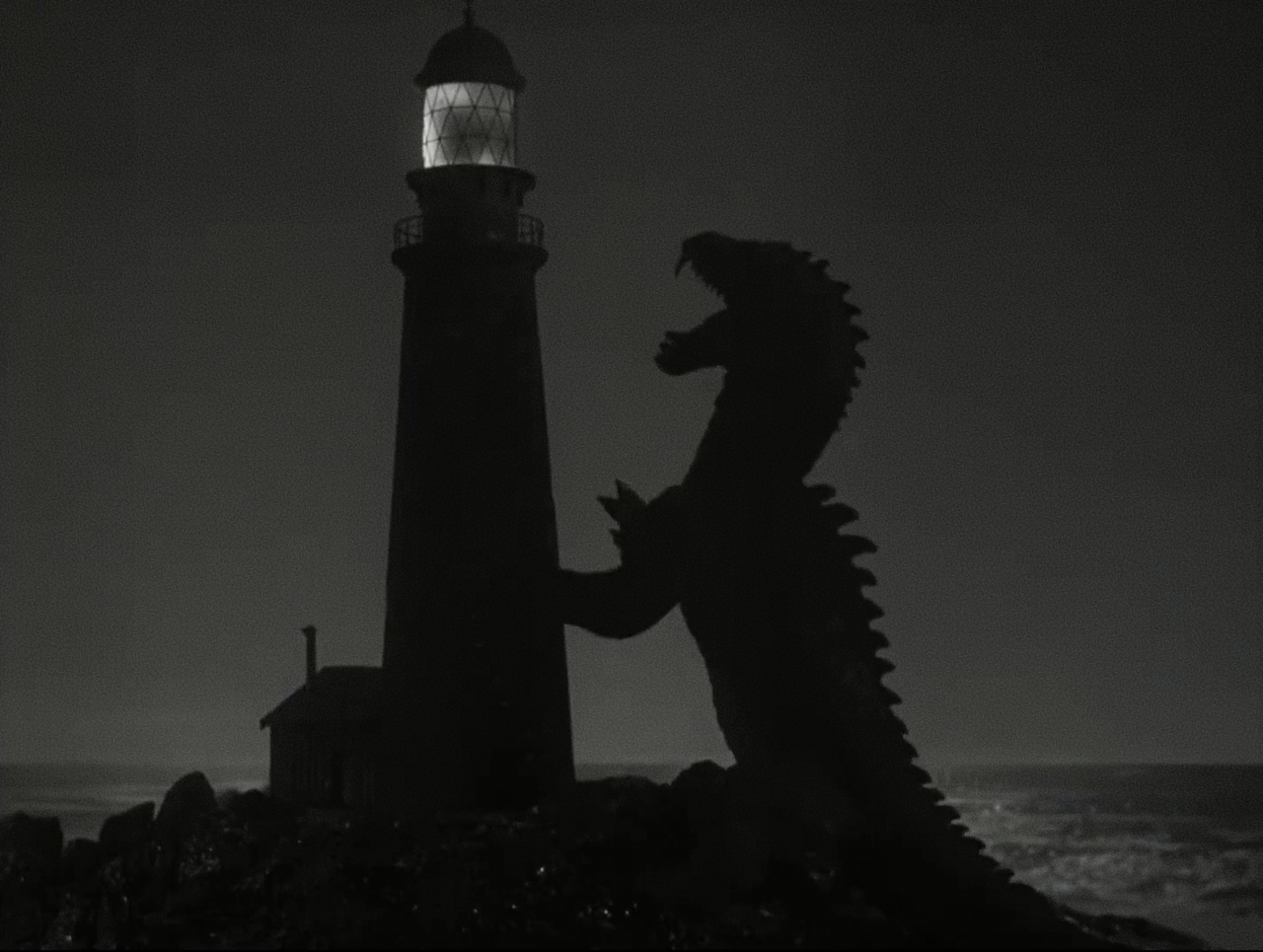
The film that started it. An atomic test in the Arctic frees the Rhedosaurus from the ice, and Harryhausen’s stop-motion beast heads south toward New York. This lighthouse scene comes from “The Fog Horn,” a Ray Bradbury story printed in The Saturday Evening Post in June 1951, in which there is no bomb at all, only a lonely sea creature answering a foghorn because it sounds like the last of its kind. Hollywood kept the loneliness and added the bomb. Made for a few hundred thousand dollars, it took in more than five million.
Them!
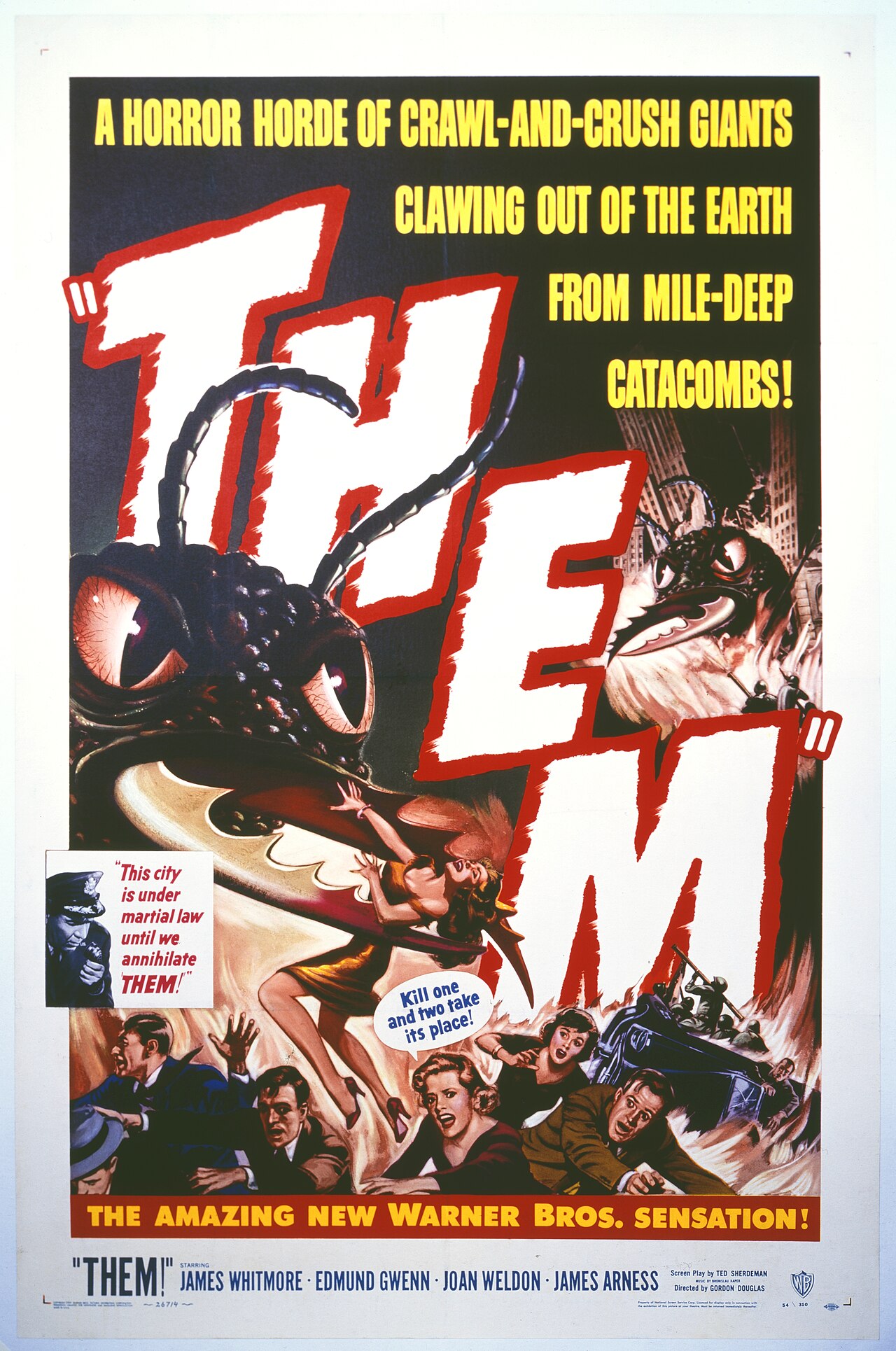
A horror horde of crawl-and-crush giants clawing out of the earth from mile-deep catacombs!
From the Them! one-sheet, 1954
Ants mutated at the first atomic test site in New Mexico end up nesting in the concrete storm drains of Los Angeles, where the Army goes in after them with flamethrowers. It was planned in color and 3D until the 3D rig failed, so the studio shot it in black and white and printed only the title in red and blue. It earned an Academy Award nomination for its effects. Look for the little sign in the corner of the poster: the city is under martial law until the ants are annihilated. That is about as calm as atomic-age advertising got!
It Came from Beneath the Sea
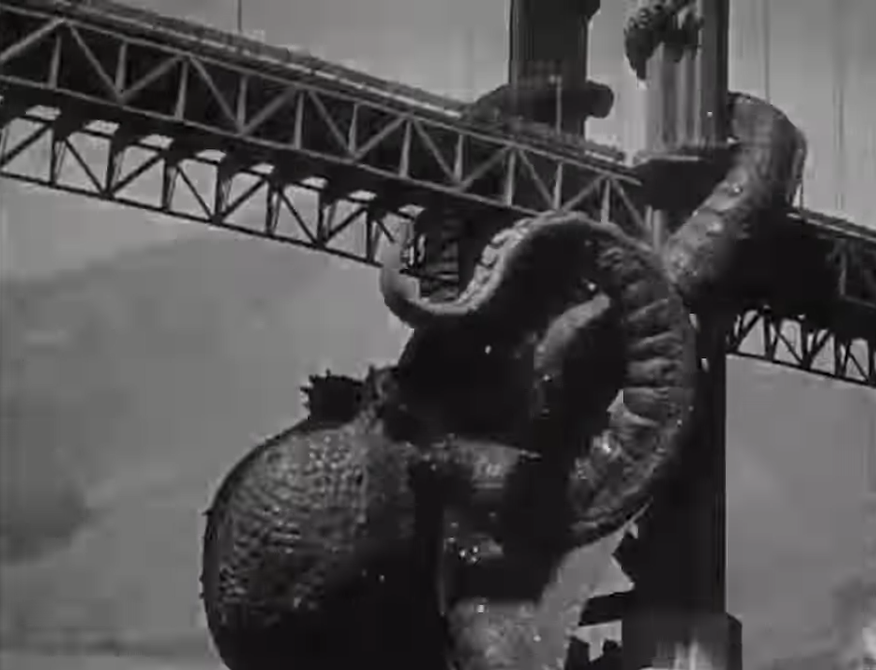
Hydrogen bomb tests in the Pacific have made a giant octopus too radioactive to find food in the deep, so it comes up and takes San Francisco apart, starting with the bridge. The producer, Sam Katzman, paid for six tentacles instead of eight. Harryhausen called the result the sixtopus, and once you know, you will count every time.
Tarantula
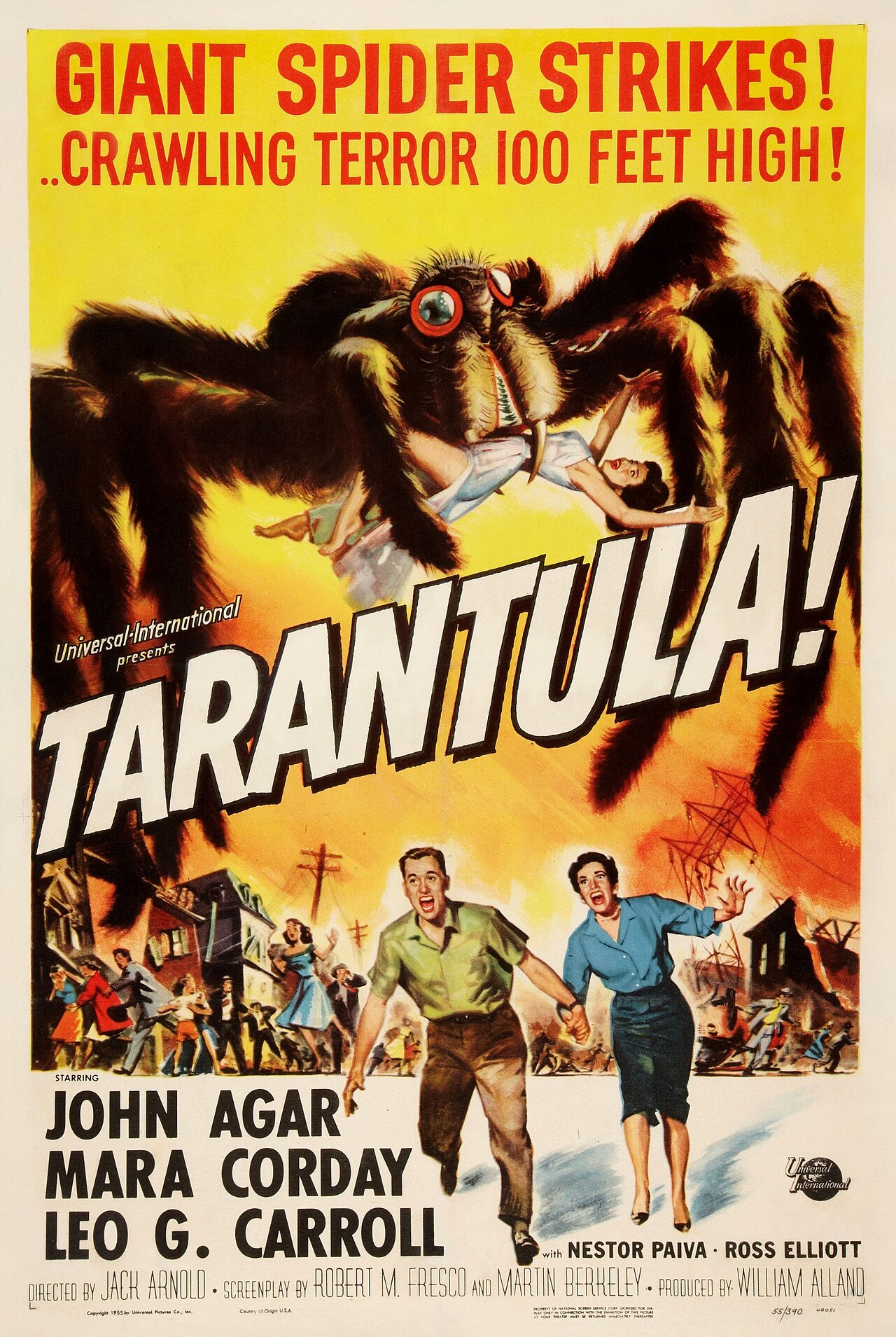
Crawling terror 100 feet high!
From the Tarantula one-sheet, 1955
A scientist in the Arizona desert, working on a nutrient to feed a hungry world, ends up with a hundred-foot spider walking across the highway. The jet squadron leader who finally napalms it is Clint Eastwood, uncredited, in one of his first screen roles. Brown’s poster is pure Saturday matinee: the red eyes, the burning town, and the couple running straight out of the frame at you.
The Deadly Mantis
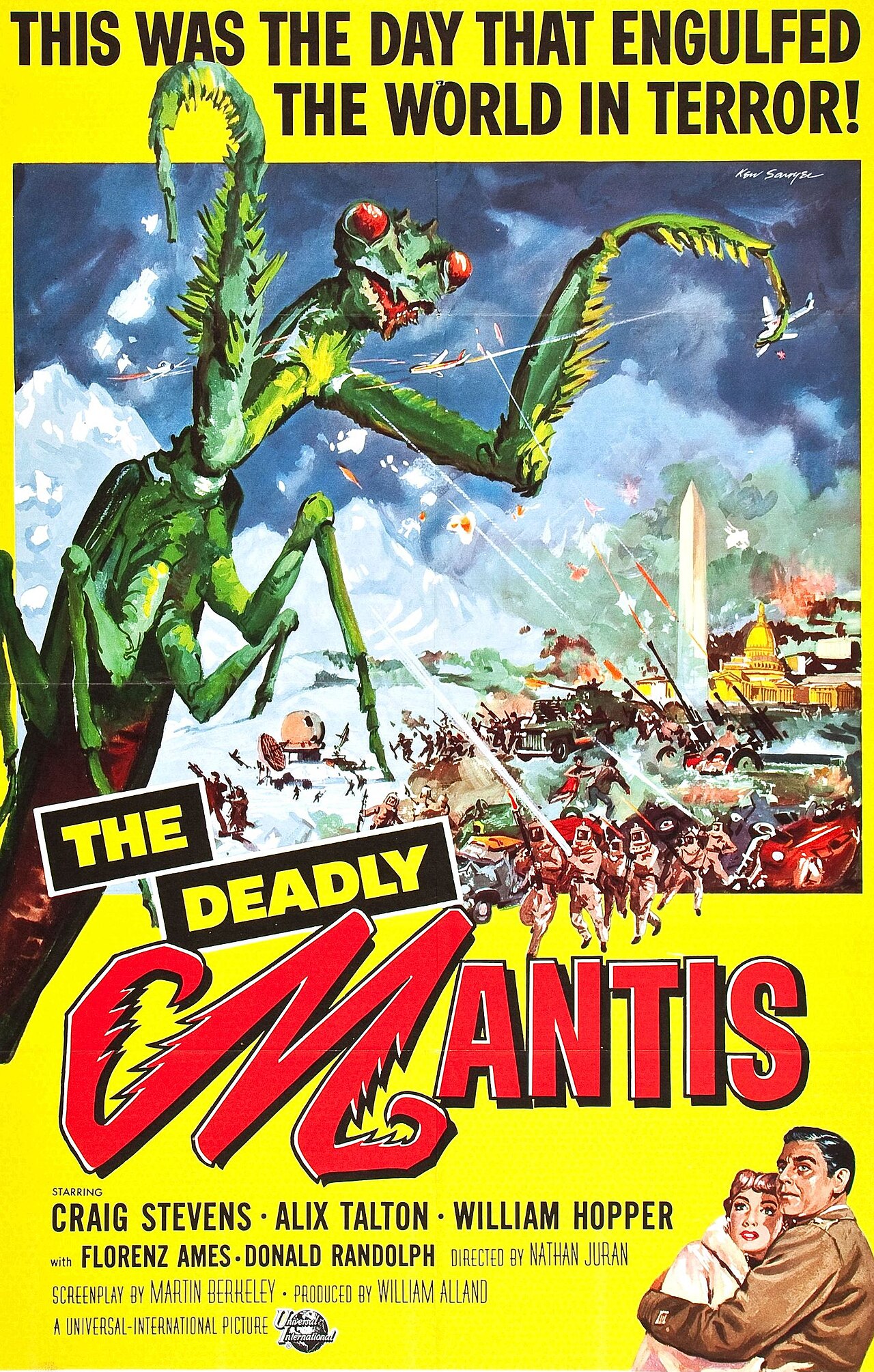
This was the day that engulfed the world in terror!
From The Deadly Mantis one-sheet, 1957
Here is the fun part. There is no bomb in this one. A volcanic eruption shifts the polar ice and frees a two-hundred-foot mantis frozen for millions of years. By 1957 the formula was so fixed that the studios no longer needed the atom to set it off. The ice, the monster, the jets, the national monument: the shape was what sold tickets, and anything could press the button.
Beginning of the End
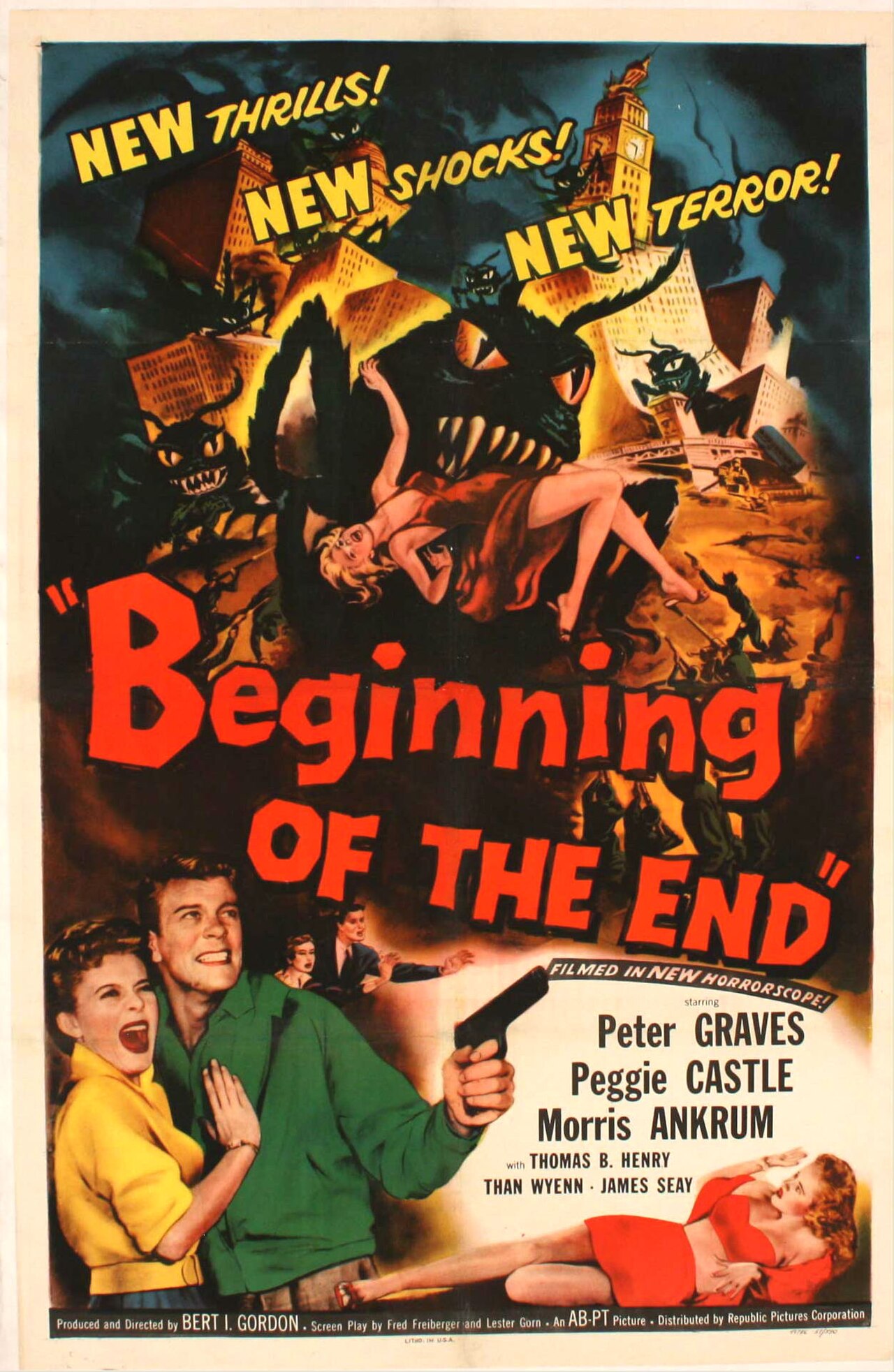
Peter Graves plays an agricultural scientist growing giant vegetables with radiation. Locusts eat the vegetables, and then Chicago. Bert I. Gordon did the effects himself, largely by letting live grasshoppers walk across still photographs of buildings, which is exactly as wonderful as it sounds. Forrest J Ackerman nicknamed him Mr. B.I.G., for his initials and for everything he ever put on screen.
Attack of the 50 Ft. Woman
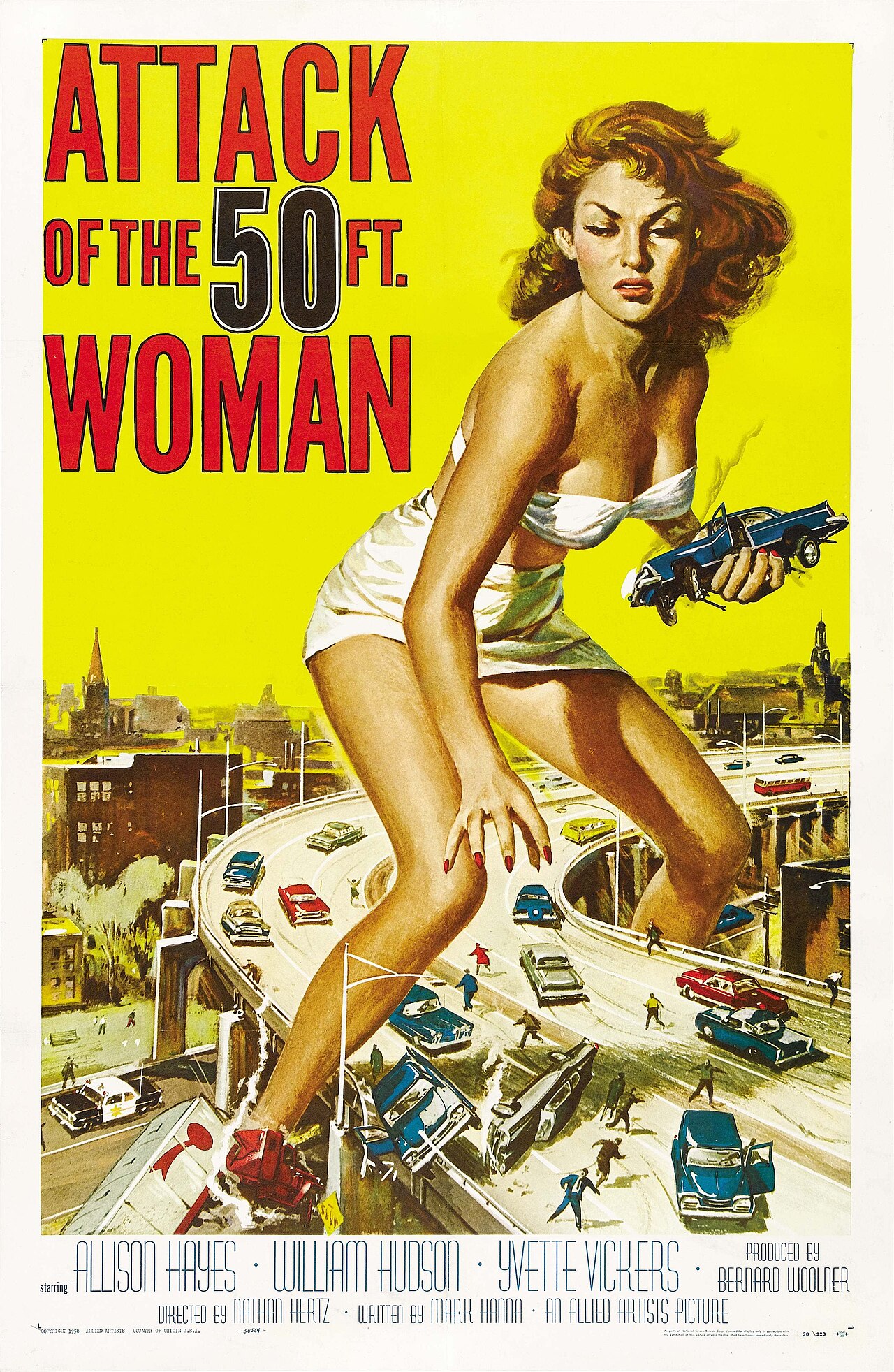
Made for about $65,000, and the owner of probably the most famous poster of the whole cycle. An encounter with an alien makes her giant, not a bomb. But look at what Brown chose to paint. The monster is no longer an ant or a dinosaur. It is one of us, standing in the middle of the brand-new interstate, holding a car.
The Giant Behemoth
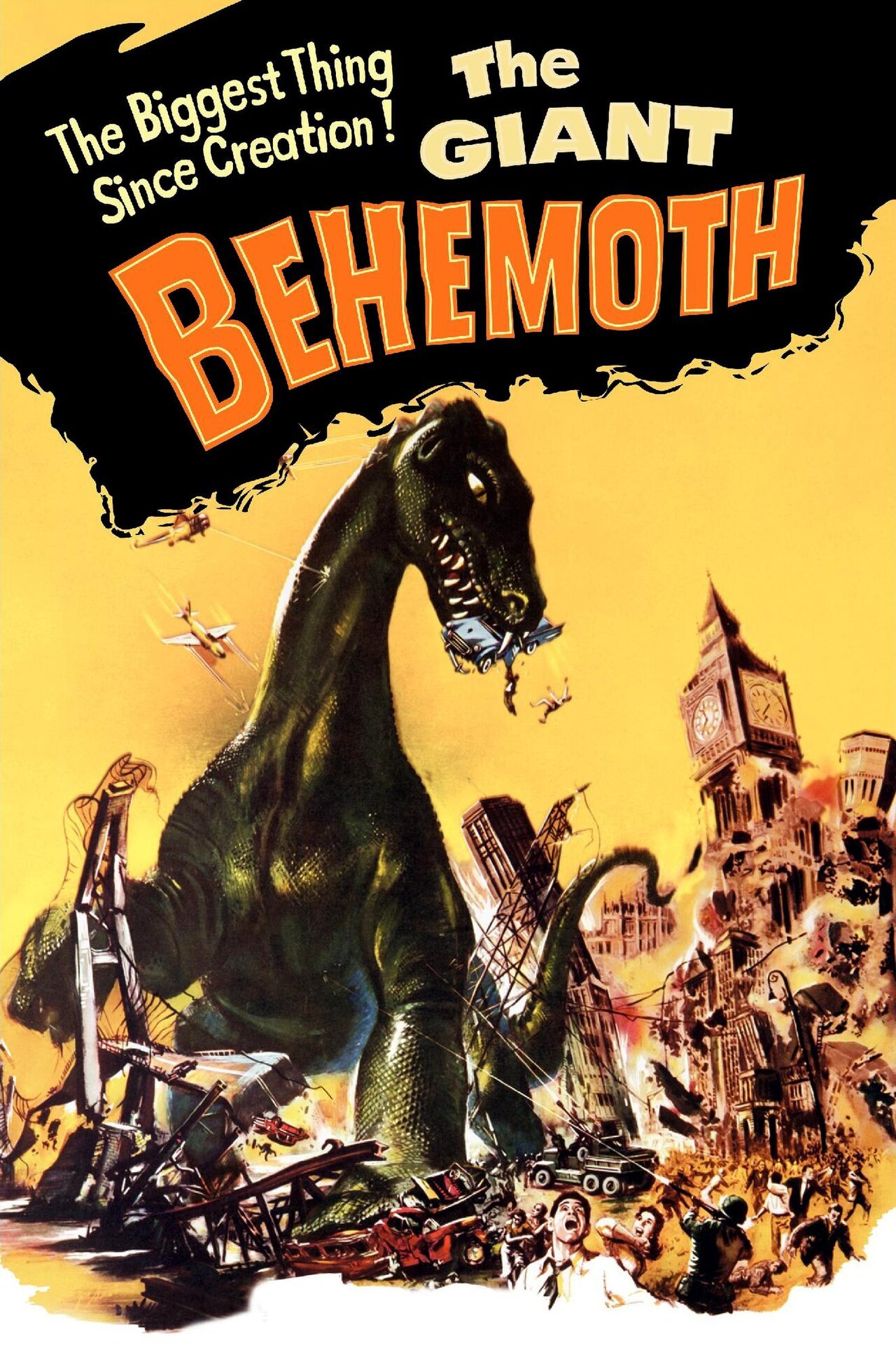
The Biggest Thing Since Creation!
From The Giant Behemoth poster, 1959
Eugène Lourié directed the first film on this list and one of the last, and this time he brought his radioactive sea beast to London. The stop-motion is by Willis O’Brien, the man who animated King Kong, and the script is by Daniel Lewis James, a blacklisted writer working under the name Daniel Hyatt. By now the cycle was eating itself, and still the poster is a beauty.
And the real answer
The films always ended the same way. Scientists explained the monster, the military found its weakness, and the city was saved by the last reel. The government’s own answer to the atom looked like this.
Family fallout shelter
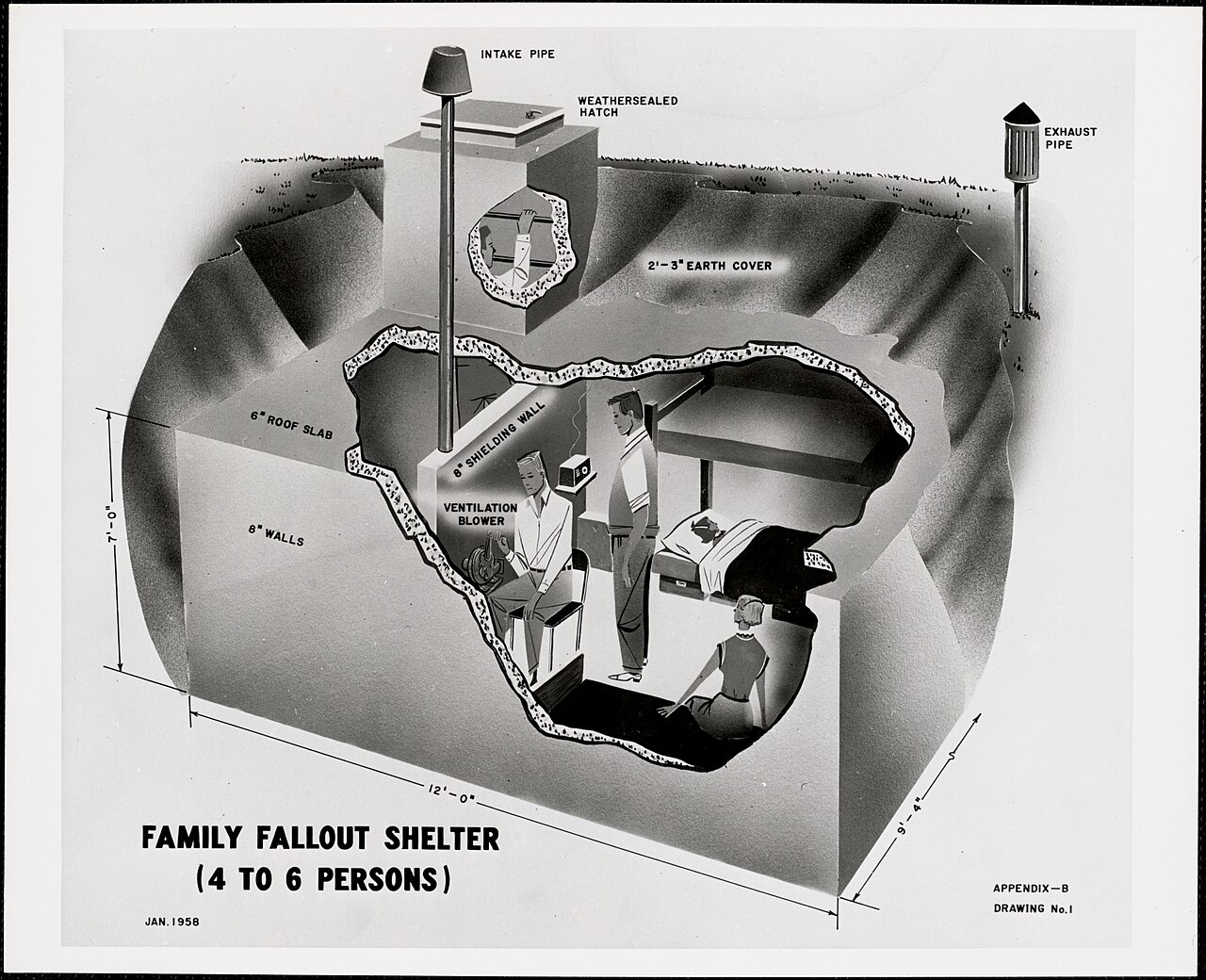
A concrete room for four to six people, with bunks, a blower you crank by hand, and a weathersealed hatch. No flamethrowers, no scientist with a plan, no final reel. Seen next to the posters, it explains a lot about why people kept buying tickets. In the movies the thing the bomb made could be found, understood and killed by Sunday night.
Where the record is uncertain
A reference that hides its doubts is worth less than one that shows them, so here are ours.
- The giant fly. The July 1926 issue of Amazing Stories does not say which story its cover illustrates. Siodmak’s tale is the only one in the issue with giant flies and a military response, which makes the match very likely rather than certain.
- Spider Island. The September 1930 Wonder Stories cover is very probably by Frank R. Paul, who painted nearly every Wonder cover of the period, but we have not confirmed the signature, so we have not credited him.
- The Deadly Mantis poster. It is often credited to Reynold Brown, including in the archive we sourced it from. The painting itself is signed Ken Sawyer, and poster dealers agree, so he gets the credit here.
- Unknown poster artists. The Them!, Beginning of the End and Giant Behemoth posters are unsigned and we have not found a reliable attribution. If you know, tell us.
- Budgets and grosses. Figures for 1950s films vary between sources. We give the ranges the record supports and no more.
- Who is missing. No Godzilla appears on this page, because Toho’s film and its imagery are still under copyright. Posters for The Amazing Colossal Man, Attack of the Crab Monsters, Kronos and The Monster That Challenged the World are left out for the same reason: we could not confirm that any version of them is in the public domain.
Rights, and where these images came from
The pulp covers were published in the United States before 1931 and are in the public domain on the date of publication alone; the scans come from the Internet Archive’s Pulp Magazine Archive. The film posters and trailer frames come from Wikimedia Commons, which records each as public domain in the United States because it was published without a copyright notice or because the copyright was never renewed. The test photographs and the shelter diagram are works of the United States government.
Reynold Brown and Ken Sawyer are credited on every poster they painted. Brown in particular spent a career making other people’s films look better than they were, and his name belongs on them.
Sources
- Internet Archive Pulp Magazine Archive, including the full text of Amazing Stories, July 1926
- ISFDB: Amazing Stories, February 1927
- Castle Bravo and Daigo Fukuryū Maru
- Operation Crossroads and Upshot-Knothole Grable
- Godzilla (1954) for release dates
- The Beast from 20,000 Fathoms and The Fog Horn
- Them!, It Came from Beneath the Sea, Tarantula, The Deadly Mantis
- eMoviePoster: The Deadly Mantis, art by Ken Sawyer
- Beginning of the End, Bert I. Gordon, Attack of the 50 Foot Woman, The Giant Behemoth
- Image records and rights tags on Wikimedia Commons
Next in The Bestiary: the thing in the swamp. Spotted an error, or know who painted one of the unsigned posters? Tell us. This is meant to be corrected.


Leave a Reply