On Screen · Ten Films · The Future in Yesterday’s Clothes
Retro-futurism is the future as somebody in the past pictured it. Chrome and tailfins, rocket packs and streamlined airships, cities of tomorrow built out of the materials of yesterday. The movies have always loved it, partly because it is gorgeous, and partly because dressing the future in old clothes lets a filmmaker say something about the present without anyone noticing. Here are ten films that do it beautifully, counted down to the one we think does it best. Some of them are blockbusters, one of them has no sets at all, and three of them come from the same director!
This list is about the look: the buildings, the cars, the costumes and the color. Every film here would be worth watching with the sound off. (Please leave the sound on for The Incredibles.)
- 10 Sky Captain and the World of Tomorrow (2004): 1939 pulp, painted in light.
- 09 Alphaville (1965): the future, shot in the Paris of the day.
- 08 The Rocketeer (1991): Art Deco Los Angeles with a jetpack.
- 07 Asteroid City (2023): a pastel desert town and a bomb on the horizon.
- 06 Tomorrowland (2015): the 1964 World’s Fair, kept running forever.
- 05 Brazil (1985): a 1940s office building the size of a country.
- 04 The Iron Giant (1999): Sputnik, Maine and a robot with a conscience.
- 03 The Incredibles (2004): the 1960s spy future, in a suburb.
- 02 Blade Runner (1982): film noir, retrofitted.
- 01 Gattaca (1997): the most elegant future ever put on film.
Every entry has its official trailer, and the photographs show the real places these films used to stand in for tomorrow. Credits and licenses are with each picture and at the bottom.
10 Sky Captain and the World of Tomorrow
The whole picture is a 1939 pulp magazine come to life. Kerry Conran shot his actors against blue screen in just 26 days, then built everything else in the computer: the airships, the flying wing, the giant robots stomping down Manhattan avenues. His brother Kevin designed that world, borrowing from Norman Bel Geddes and Hugh Ferriss, the industrial designer and the architectural renderer who taught America what tomorrow ought to look like.
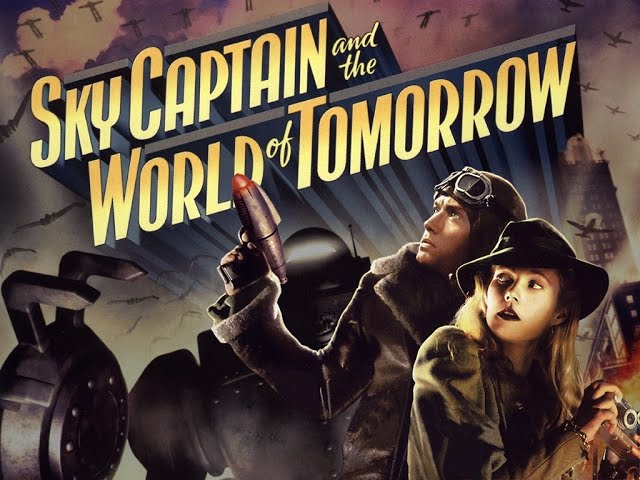
Then they did something lovely to it. The footage was drained to black and white and the color was blended back in by hand, so the film glows like a tinted postcard. Look for the robots, a nod to the 1941 Fleischer Superman short The Mechanical Monsters, and for Laurence Olivier, who plays the villain years after his death through archive footage from the BBC.
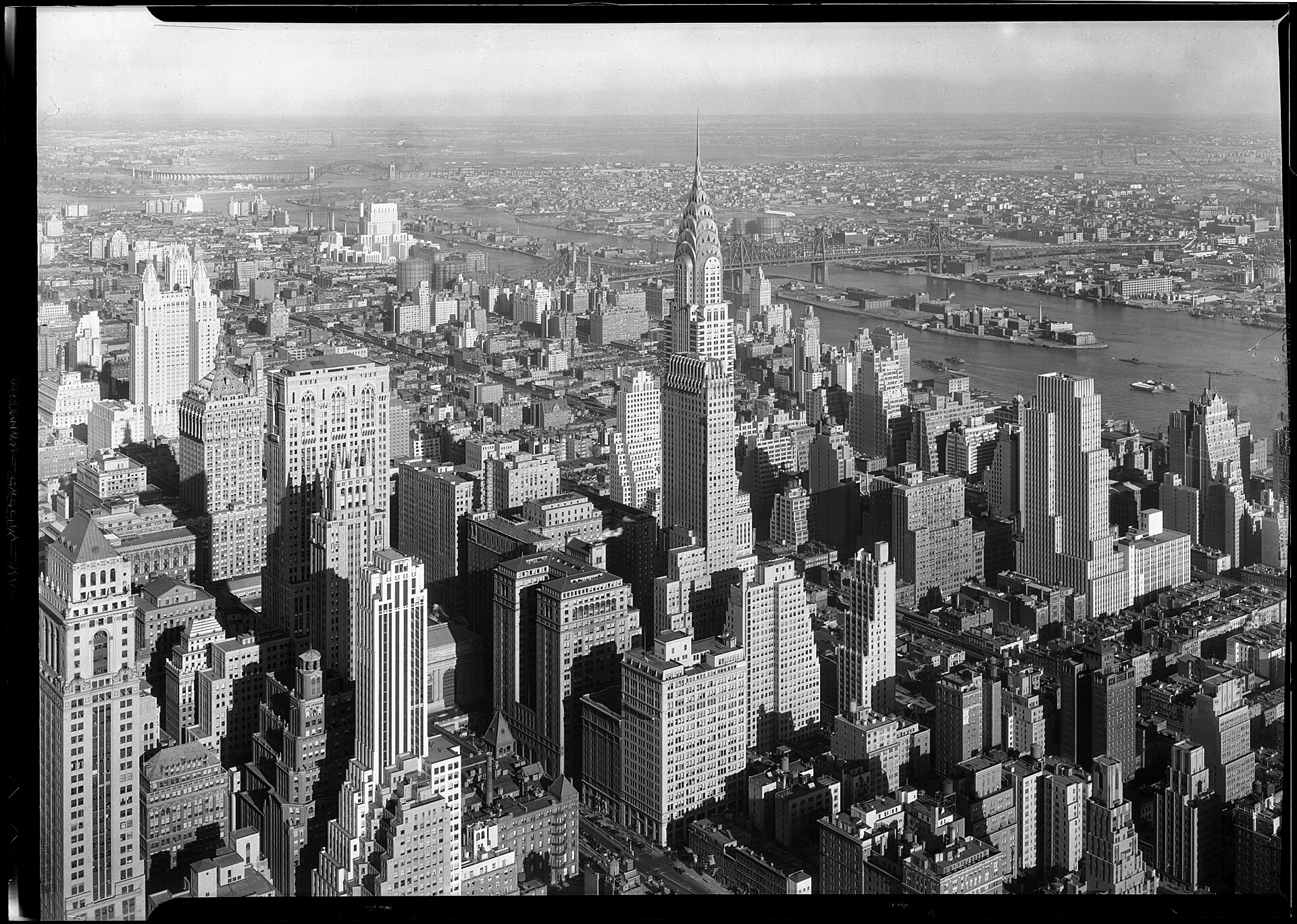
This is the real view from the top, three years before the film’s 1939. Sky Captain opens with the Hindenburg III docking at the building’s spire, which was announced as a mooring mast for airships. Regular airship service never came, so the film simply lets it happen. We love it for that!
09 Alphaville
Here is the cheapest future on the list, and maybe the cleverest. Godard built no sets at all. He sent his trench-coated private eye, Lemmy Caution, into the Paris of 1965 and simply called it a city in another galaxy. The Maison de la Radio, the vaulted CNIT hall at La Défense, the offices of the computer maker Bull: shot at night, they needed nothing added.
Raoul Coutard lit it all in hard contrasts of neon and total black, and the city’s ruling computer, Alpha 60, speaks in a rasping voice that belonged to a man talking through a mechanical voice box after throat surgery. It is still one of the creepiest machine voices in the movies.
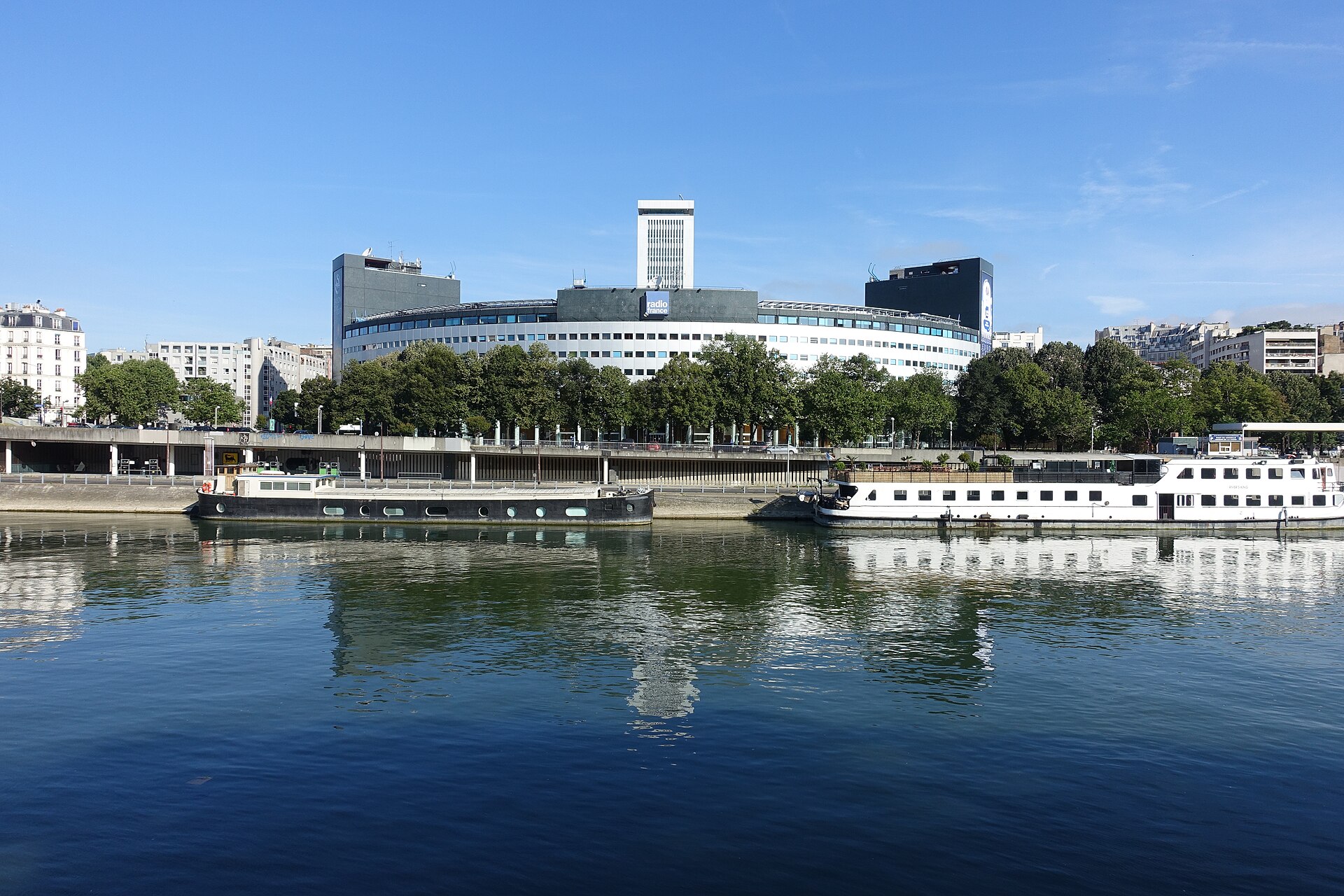
Godard used the round Maison de la Radio, opened in 1963, as part of his city of the future. The future had already arrived; it just needed the right lighting. Every 1960s glass lobby on earth became a little more sinister after this film.
08 The Rocketeer
A stunt pilot finds a rocket pack, and Los Angeles in 1938 gets a superhero in a riding jacket. This is the Art Deco future, the one with streamlined fins and rivets, and it is drawn with real affection. The pilots hang out at the Bulldog Cafe, a diner shaped like a giant bulldog, modeled on the real roadside novelty buildings of 1920s California. The racing plane is a Gee Bee Model Z replica, stretched a little to tame the original’s famously dangerous handling.
The best design story is the helmet. Disney’s Michael Eisner reportedly wanted something closer to a NASA helmet. Johnston pushed back, and Dave Stevens kept his finned, bullet-shaped original from the comic almost unchanged. Thank goodness! It is one of the great pieces of movie headgear.
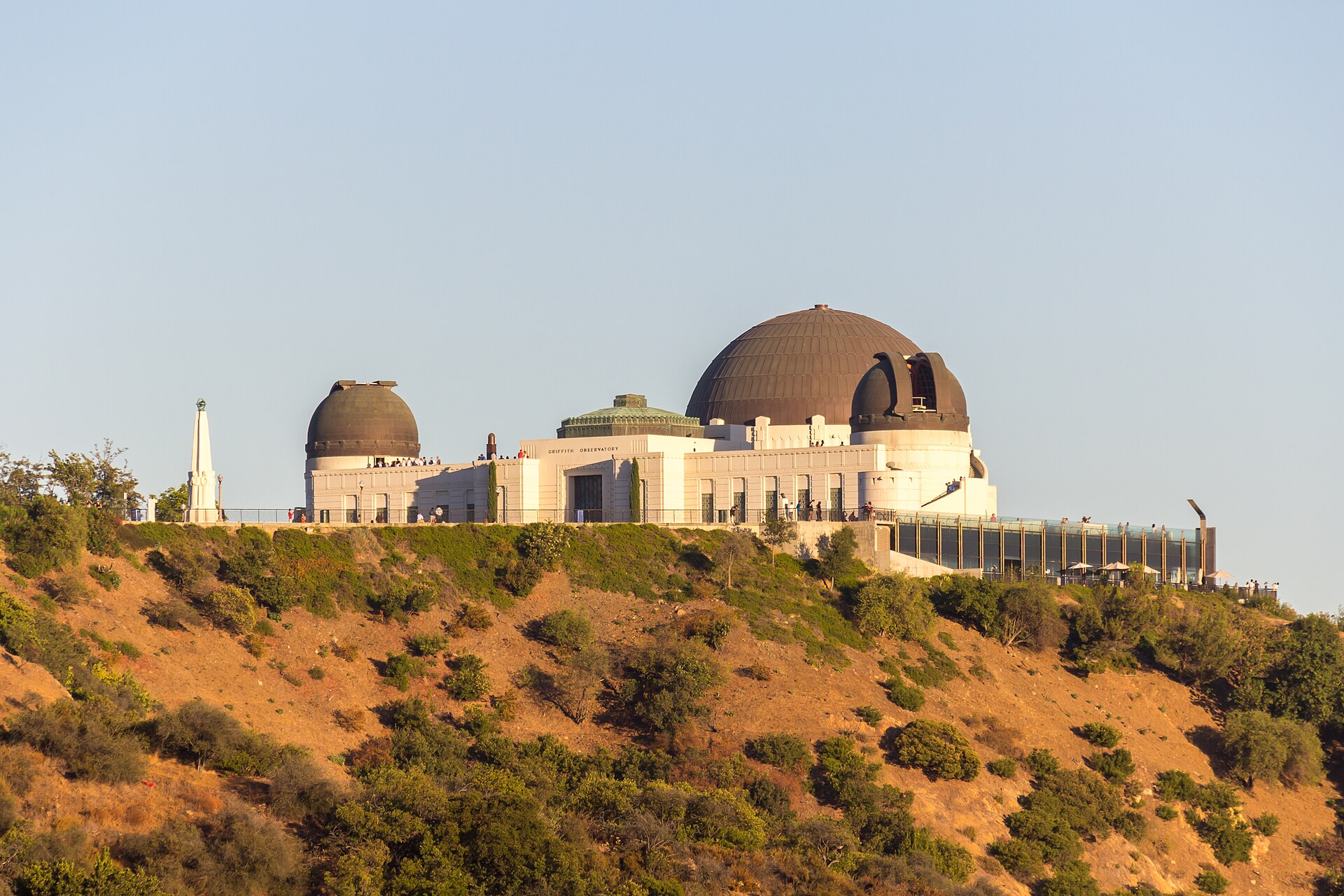
The finale plays out at Griffith Observatory, with a German zeppelin called the Luxembourg hanging over it. The observatory was finished in 1935, so it was the newest piece of the future in town in 1938.
07 Asteroid City
A junior stargazer convention, a roadside diner, a motel of identical cabins and a meteor crater. Wes Anderson’s 1955 is all pale peach and turquoise, and every so often an atomic test goes off on the horizon and nobody really looks up. Candy colors up front and the bomb in the back: you could hardly sum up the 1950s better.
The surprise is that the town was real. Stockhausen’s crew built it as a working set on farmland outside Chinchón, Spain, with its own power, plumbing and sewers, and trucked in about half a mile of red dirt from a nearby quarry so the ground would read as the American Southwest. Every shot was planned in a 3D model first. When filming wrapped, the land went back to the farmers.
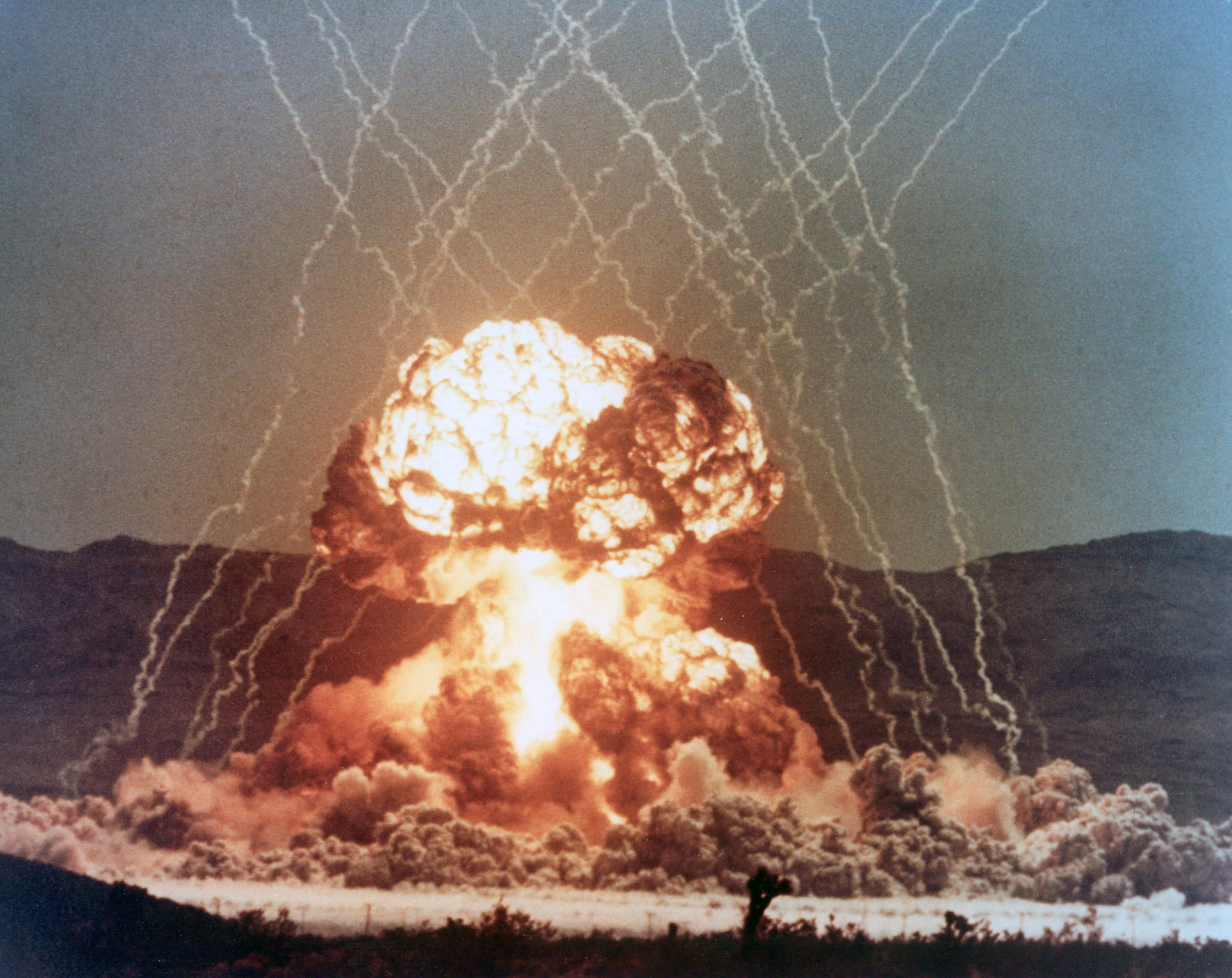
The real thing. In the 1950s the United States tested atomic bombs in the Nevada desert, close enough to Las Vegas that the flashes became a tourist attraction. We wrote about the monsters this era dreamed up in The Atomic Monster.
06 Tomorrowland
The first half hour of Tomorrowland is a love letter to the 1964 New York World’s Fair. A boy named Frank arrives with a homemade jetpack, gets handed a little pin with a T on it, and boards the It’s a Small World boat ride, which turns out to be a secret door into a city of the future.
That city is the best reason to watch. Chambliss found its look at Santiago Calatrava’s City of Arts and Sciences in Valencia, Spain, all white ribs and reflecting pools, and mixed in the skyline of Disney’s own parks, from Space Mountain to the geodesic ball of Spaceship Earth. Even the Disney logo at the start shows the Tomorrowland skyline instead of the castle.
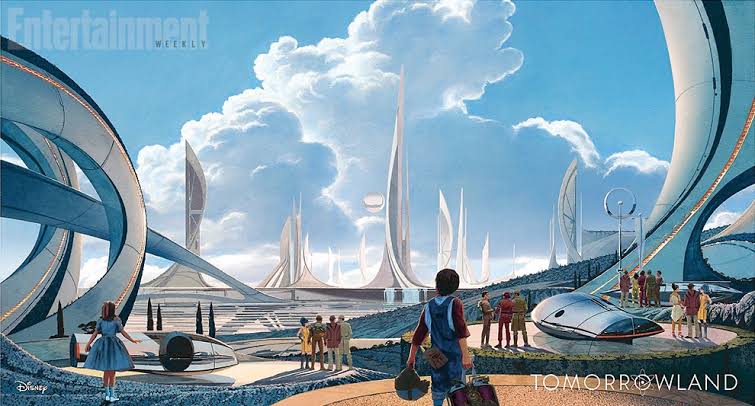
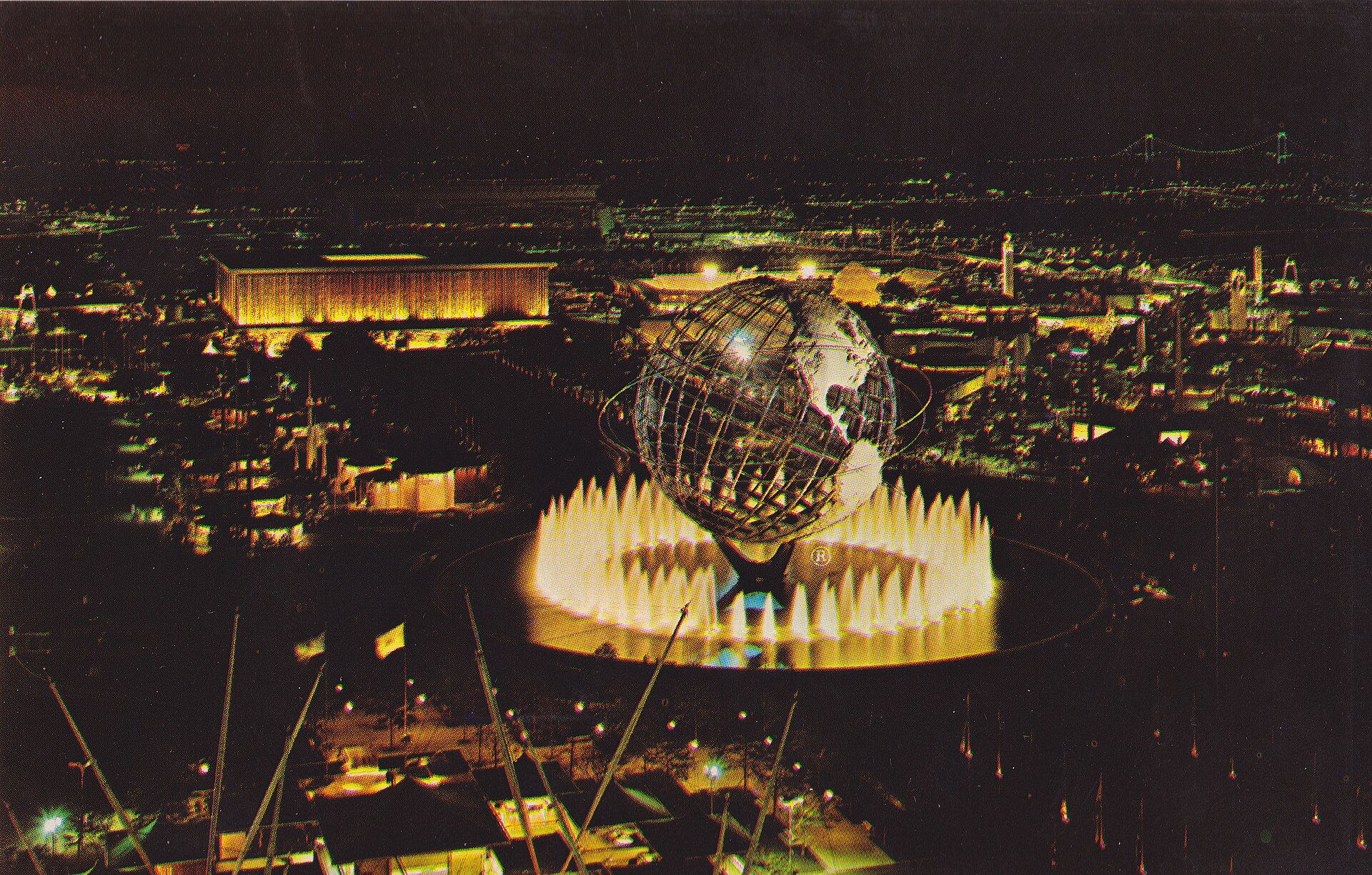
The real fair, with the Unisphere lit up at night. For the film the fair was rebuilt on a campus in Vancouver, and the Unisphere makes its appearance.
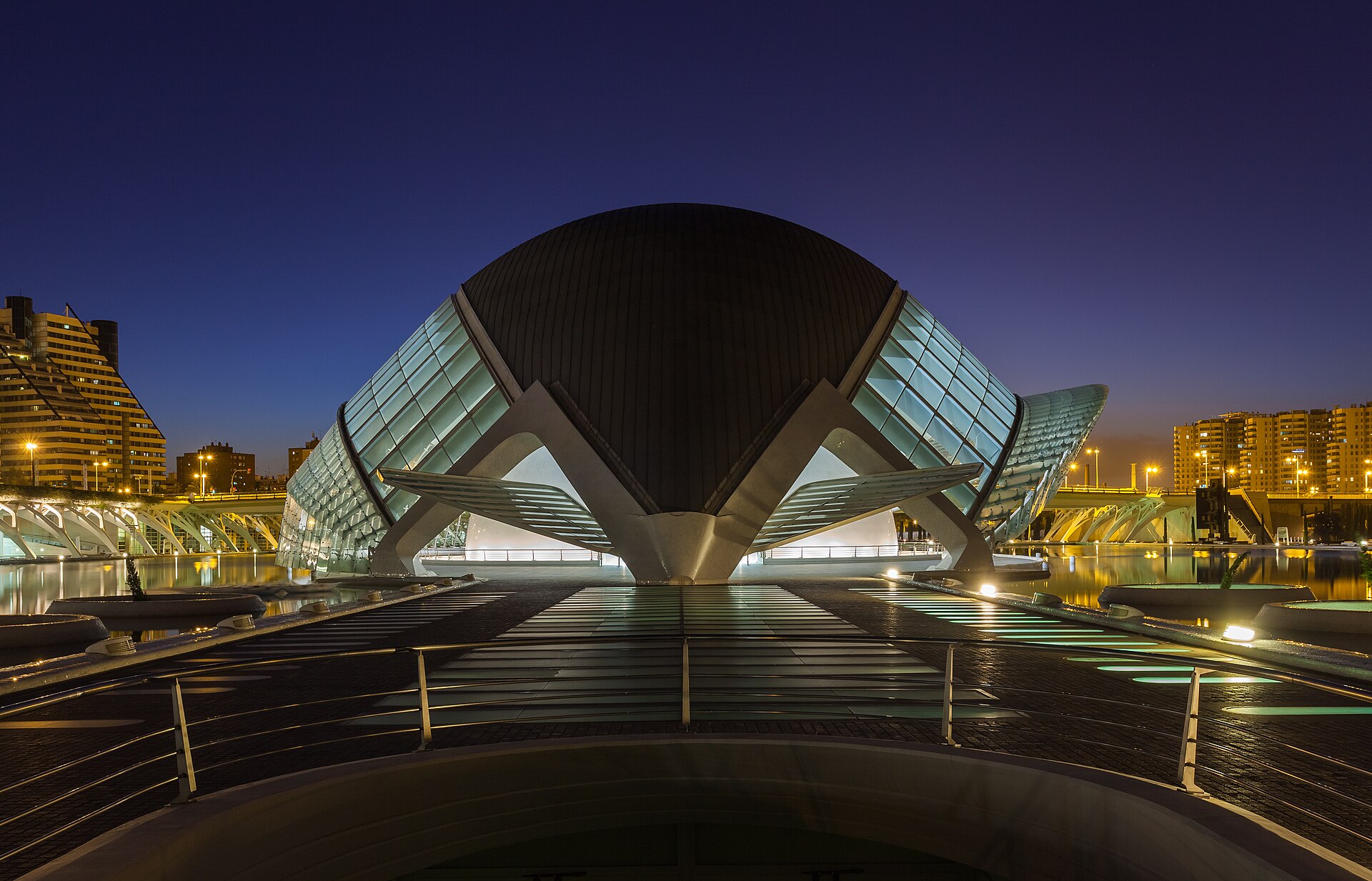
And the city of tomorrow it leads to. Calatrava’s buildings in Valencia look exactly like a 1964 fairgoer’s dream of 2015.
05 Brazil
Imagine the future as designed by a 1940s government records office. Terry Gilliam’s nightmare comedy runs on typewriter keyboards wired to tiny screens with magnifying lenses in front of them, pneumatic tubes, rotary dials and paperwork. Above all, it runs on ducts. Gilliam noticed some ducting crossing a room and asked, more or less, what if we put it everywhere? So they did. In the rich people’s apartments the ducts are dressed up with mirror balls.
Production designer Norman Garwood found his future in real buildings across Europe. Sam Lowry’s apartment block is Ricardo Bofill’s Espaces d’Abraxas outside Paris, a housing estate built like a monumental stage set. A cooling tower inside the Croydon B power station became the torture chamber, and that site is an IKEA now, which feels like something Gilliam would have written.
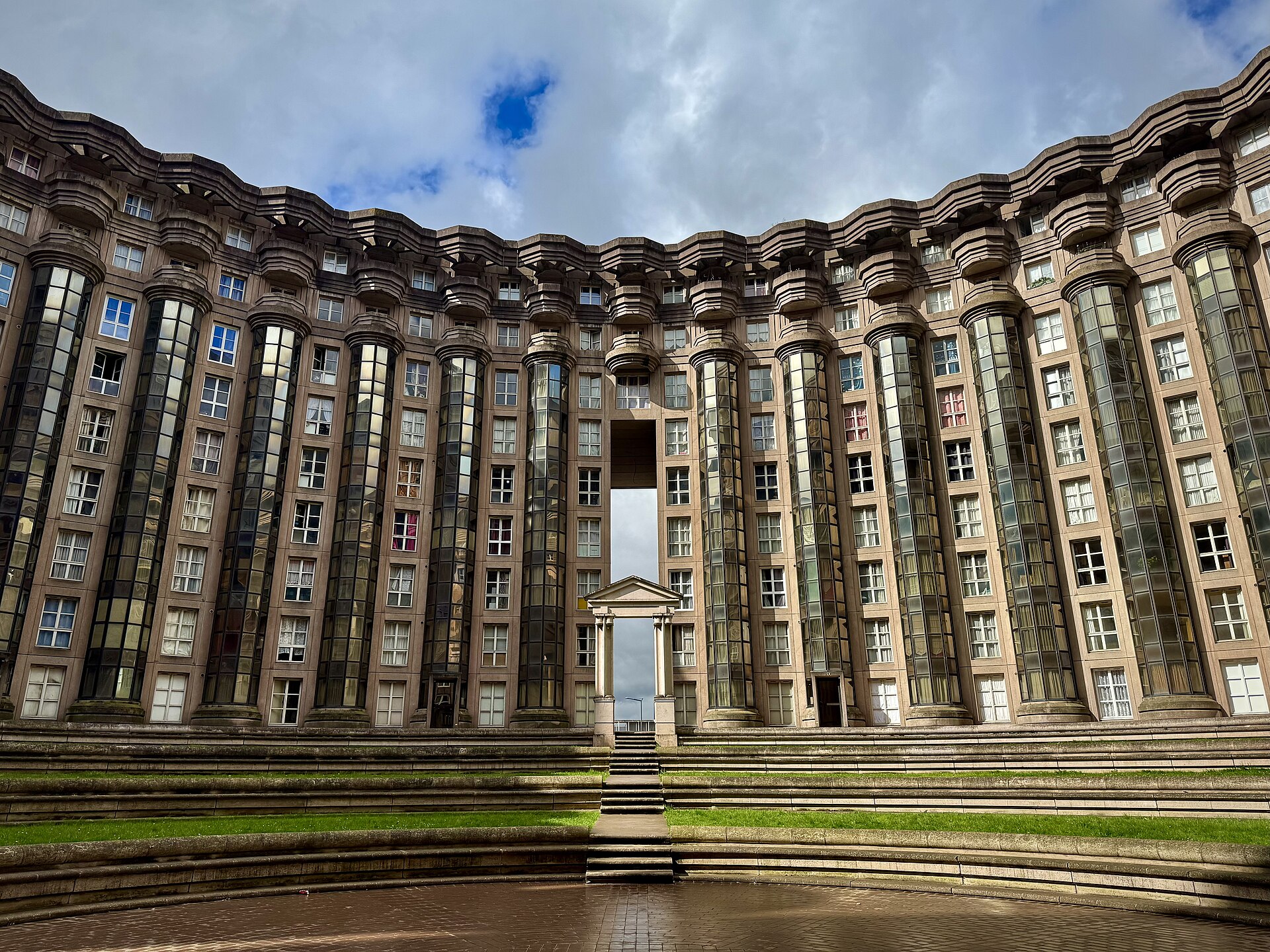
Bofill’s Espaces d’Abraxas in Noisy-le-Grand, east of Paris: a housing estate of colossal concrete columns and arches that looks like a palace for a bureaucracy.
04 The Iron Giant
It opens with Sputnik crossing a stormy night sky, and you know exactly where you are: October 1957, when the future suddenly felt like it belonged to someone else. A boy finds a 50-foot robot in the woods, and the government sends a man in a suit to find out what it is.
Everything about the period is right, from the diner and the beatnik’s junkyard to a classroom film that spoofs the 1952 civil defense short Duck and Cover. The Giant himself was designed by Joe Johnston, the same man who directed The Rocketeer, and he is a beautiful machine: a rounded, almost friendly silhouette that hides a weapon. He was built in the computer from thousands of parts, then animated on every other frame so he would move like the hand-drawn world around him.
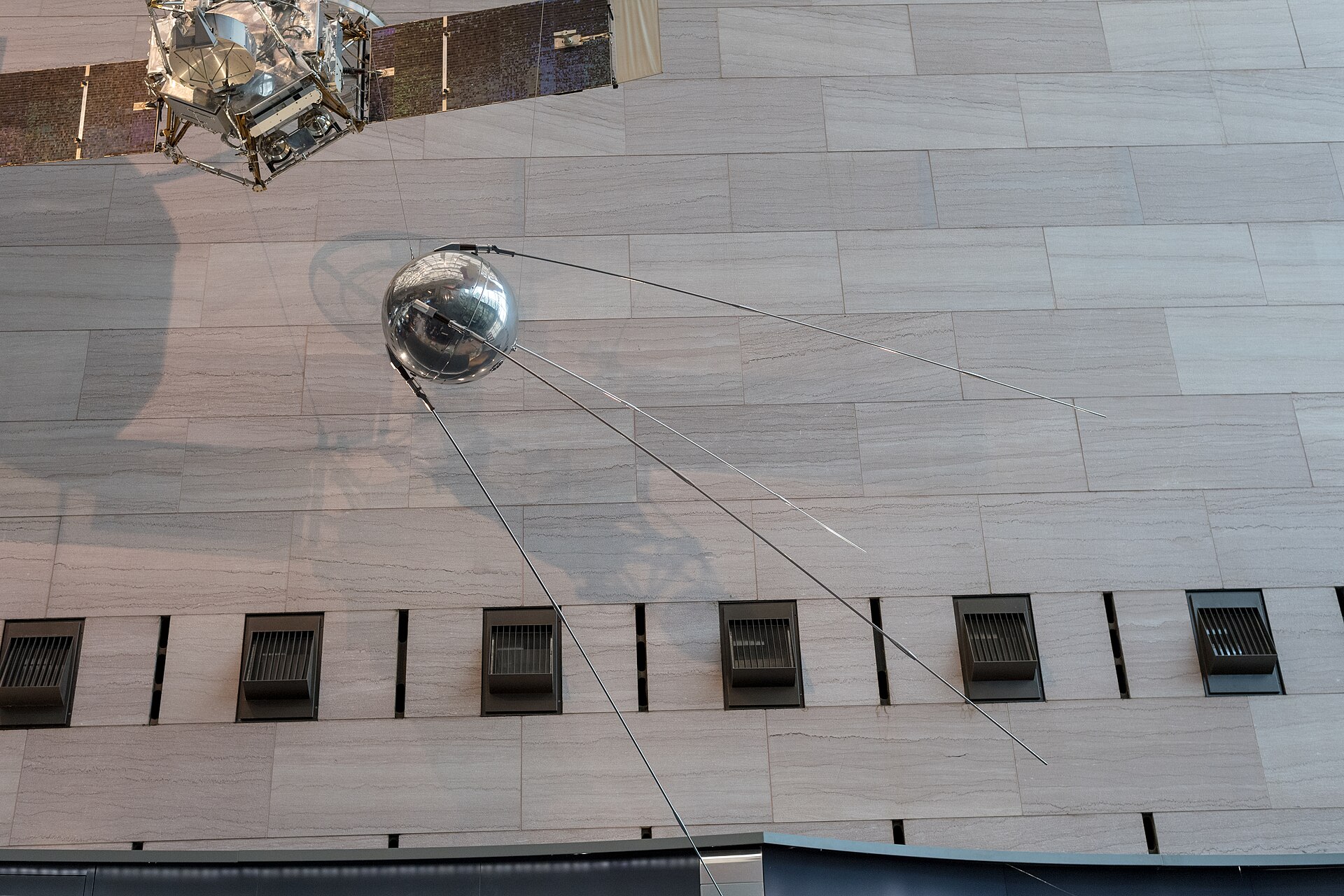
The real Sputnik 1 was a polished metal ball about 23 inches across with four long antennas. It is one of the best-looking objects of the space age, and it terrified America. The movie gets that feeling exactly right.
03 The Incredibles
No year is ever given, but you know it the moment you see the furniture. The Incredibles is set in the future as seen from the early 1960s: low, long suburban houses, boomerang shapes, a volcano island lair with a monorail and a lava-lit lounge. Brad Bird built it out of the comic books and spy films he grew up with, and Lou Romano’s production design, which won him an Annie Award, is the definitive Atomic Age look of this century.
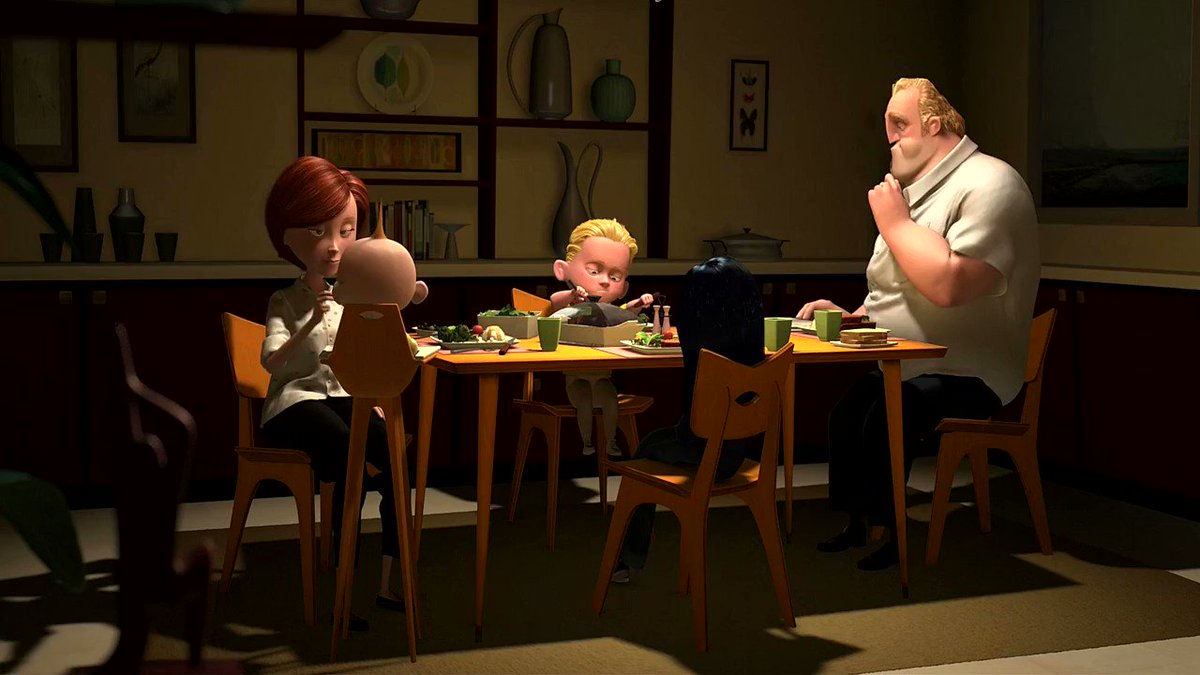
Listen as well as look. Bird’s first choice for the score was John Barry, the man behind the classic James Bond sound, who turned it down. Michael Giacchino wrote one that sounds like Barry at his brassiest and recorded it on analog tape so it would feel like a period record. Then go back and admire the costumes, and remember Edna Mode’s single rule: no capes!
Three films on this list come from one director, and we went back and forth on whether that was fair. It is. Nobody working today loves the Atomic Age future more than Brad Bird: 1957 in The Iron Giant, the early 1960s in The Incredibles, the 1964 World’s Fair in Tomorrowland. Watch them in that order and you get a whole decade of tomorrow.
02 Blade Runner
The film that changed what the future looks like did it by looking backward. Ridley Scott’s Los Angeles of 2019 is a 1940s detective story in a city that rains all the time: trench coats, venetian blinds, smoke, a femme fatale with shoulder pads. The trick was an idea the crew called retrofitting. Rebuilding a city costs too much, so its owners just keep bolting new machinery onto the outside of old buildings until the old and new are one big tangle.
Syd Mead, credited with the wonderful title of visual futurist, designed the flying police cars called Spinners, and builder Gene Winfield made 25 vehicles from his drawings. The effects were shot on 65mm film, and the Tyrell pyramid is a miniature lit by thousands of fiber-optic windows. We have now lived past the month the film is set in, and the Spinners are still on back order.
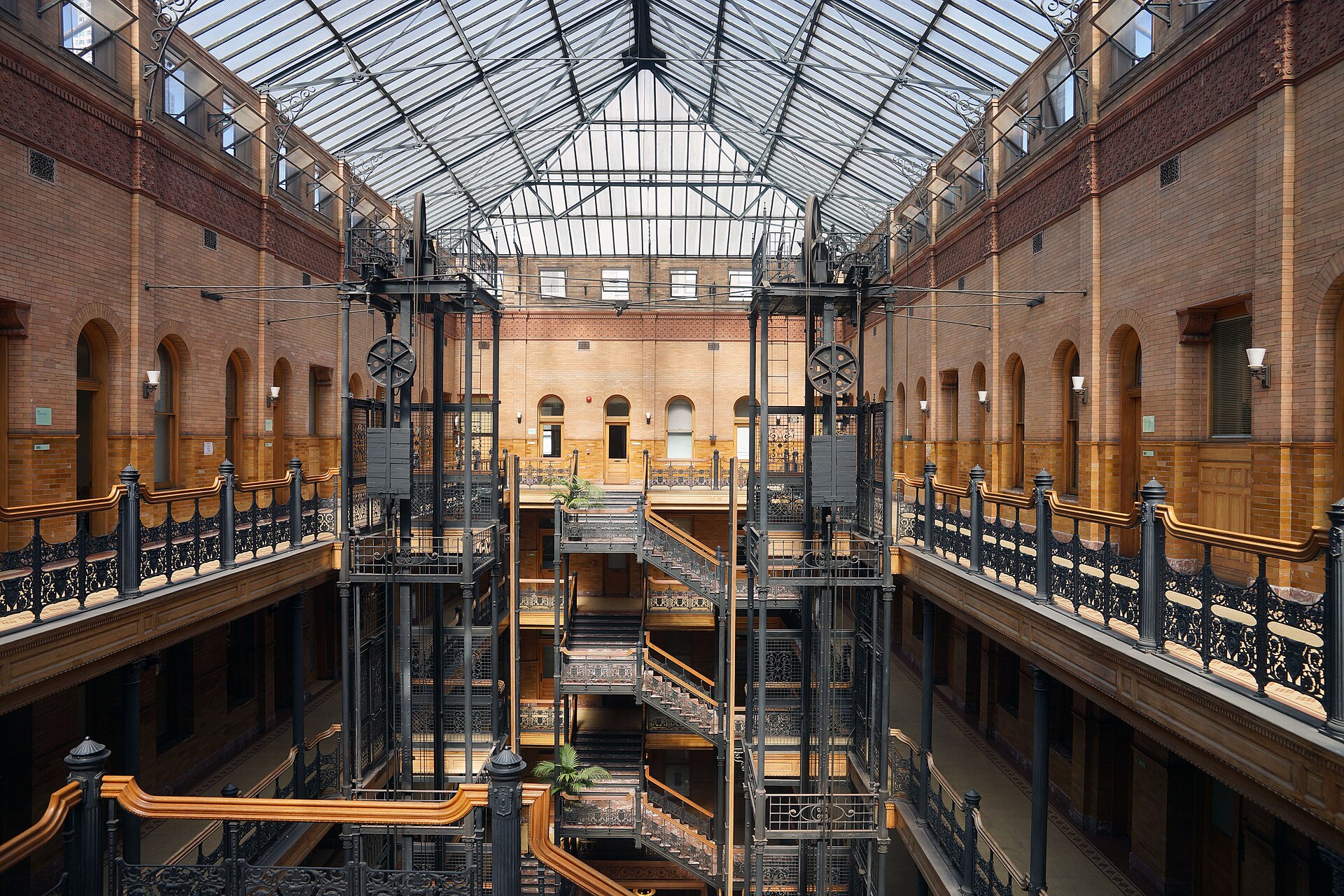
The climax was shot here, in an 1893 office building whose iron and glass atrium already looked like science fiction. It turns up again in Her, below.
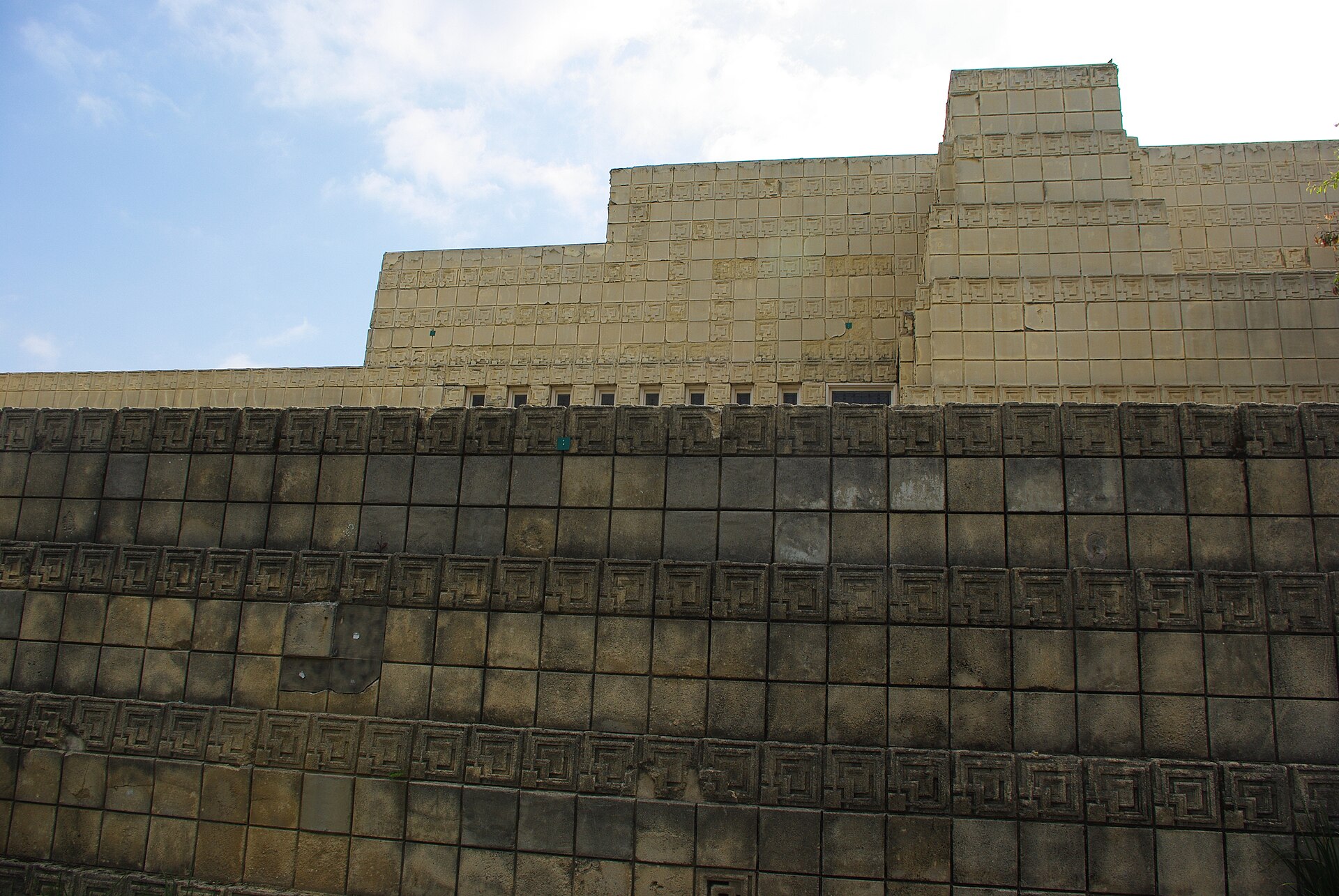
Frank Lloyd Wright’s Ennis House, with its patterned concrete blocks, appears only briefly, as the outside of Deckard’s building. His apartment was a studio set lined with plastic tiles cast from molds of Wright’s blocks. So the most famous apartment of the future is, in a sense, a 1924 house turned inside out!
01 Gattaca
Gattaca is set in the “not-too-distant future,” and it has no flying cars, no robots and almost no gadgets. What it has is restraint. In a world where your genes decide your job, everyone wears beautifully cut suits in quiet colors, drives silent cars from the 1960s and works in long, curving halls with nothing out of place. It is the most elegant future ever put on film, and it is built almost entirely from things that already existed.
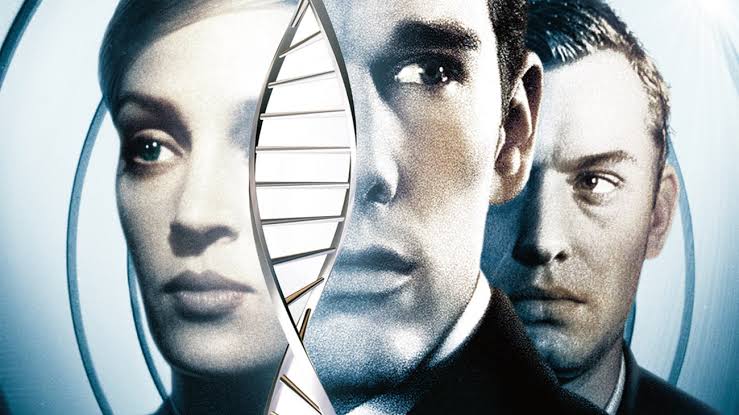
The cars are a car lover’s daydream: a Rover P6, a Citroën DS19, a Studebaker Avanti, a boattail Buick Riviera, a Lincoln Continental Mark II, a Volvo P1800. A night out happens under the mirrors of a real solar power plant in the Mojave at Kramer Junction, which reads as pure science fiction and was simply a power plant. Roelfs and Niccol chose curves over corners for a lovely reason: a world obsessed with perfection should have no corners where dust could hide.
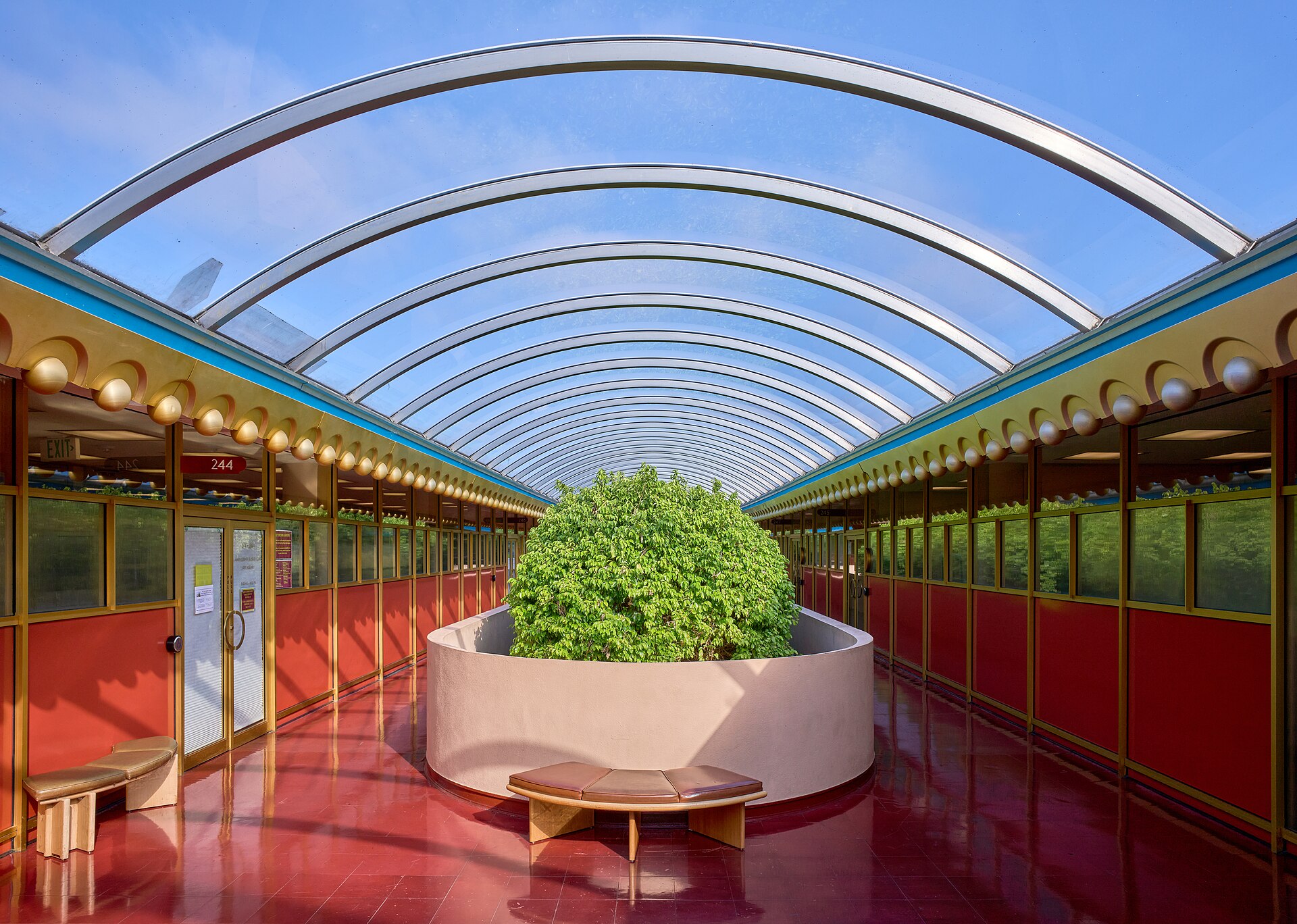
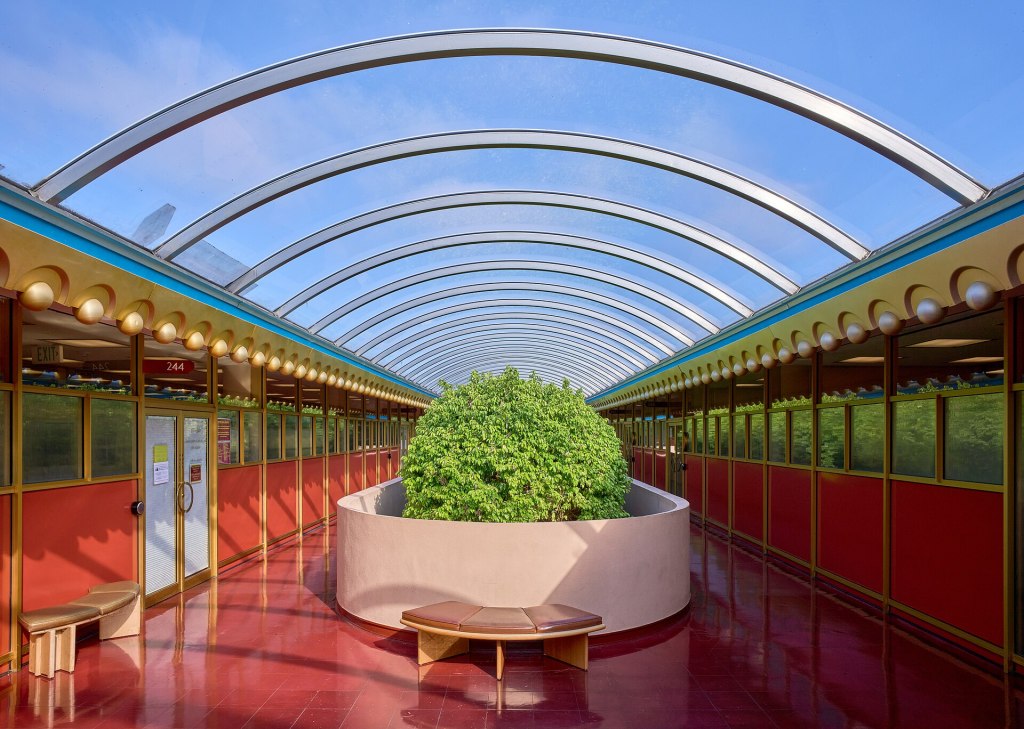
The Gattaca space center is Frank Lloyd Wright’s Marin County Civic Center in San Rafael, California, designed at the very end of Wright’s life and completed after his death. The film used its exteriors and its long, skylit halls like this one. Niccol called it Wright’s last building. It played the future once before, in George Lucas’s THX 1138, and it is a working county government building you can walk into today.
Why number one? Because Gattaca understood the secret of retro-futurism better than any film on this list. The future it imagines is not made of new things. It is made of the past’s best things, kept beautifully, and that is a future we would happily live in. Minus the genetic discrimination.
Five more for the queue
- Her (2013). Spike Jonze’s soft, warm near future, with high-waisted wool trousers by costume designer Casey Storm and a Los Angeles skyline borrowed from Shanghai. The cinematographer kept blue out of the film almost entirely. Theodore lives in the Bradbury Building, the same one from Blade Runner.
- Sleeper (1973). Woody Allen wakes up in 2173, and the future he finds is Charles Deaton’s Sculptured House, the white “flying saucer” on Genesee Mountain outside Golden, Colorado, plus I.M. Pei’s Mesa Lab in Boulder. Our flying saucer story has more houses like it.
- Playtime (1967). Jacques Tati built an entire glass-and-steel city, nicknamed Tativille, on wasteland at the edge of Paris and shot it in 70mm in shades of grey and blue. It is not quite science fiction. It is the modern world arriving, seen as the future.
- Meet the Robinsons (2007). Disney’s time-travel comedy, with a future drawn from William Joyce’s picture books, old Technicolor movies and 1940s architecture. It is a sunny, bubble-topped tomorrow that would be right at home in a 1950s Sunday supplement.
- The Fantastic Four: First Steps (2025). Marvel set its first family on a 1960s-style alternate Earth, and production designer Kasra Farahani studied the 1964 World’s Fair and the Frigidaire “Kitchen of Tomorrow” to build it. We looked at that set design when it came out.
Why it keeps working
Every film on this list is about the future, and every one is really about its own moment: Cold War dread, 1980s bureaucracy, 1990s genetics, the nostalgia of the 2010s for a time when tomorrow felt like a promise. Dressing the future in old clothes lets a filmmaker smuggle that in. It also gives designers permission to use their favorite things. Who would not rather live in a curving Frank Lloyd Wright hall than a grey box with a touchscreen?
Tell us what we missed. We already know someone is going to write in about Metropolis, which was the actual future in 1927 and only became retro later. That one deserves its own story.
Where the record is uncertain
- The Rocketeer’s helmet. The story of the studio wanting a NASA-style helmet comes from production accounts and is widely repeated; we have not seen a first-hand source from Eisner.
- Brazil’s opening. The film opens with a caption placing it “somewhere in the 20th century.” Accounts vary slightly on its exact wording.
- Gattaca’s locations. Location lists for the film disagree beyond the Civic Center and the solar plant, so we have named only those two.
- The Empire State mast. Accounts differ on how close any airship came to really docking there. What is certain is that regular airship service never happened.
Rights, and where these images came from
The trailers are embedded from the official YouTube channels of Focus Features, Rialto Pictures, Sony Pictures, Walt Disney Studios and Warner Bros., and from Rotten Tomatoes Classic Trailers. They play from YouTube and remain the property of their studios. The key art for Gattaca belongs to Columbia Pictures, the key art for Sky Captain and the World of Tomorrow to Paramount Pictures, the concept art for Tomorrowland to Walt Disney Pictures and the frame from The Incredibles to Disney/Pixar; all four appear here for review and commentary.
The 1932 view from the Empire State Building is by Samuel H. Gottscho and is held by the Library of Congress, which records no known restrictions. The 1955 Operation Teapot photograph is a work of the United States government and is in the public domain.
The other photographs are shared on Wikimedia Commons under Creative Commons licenses, and we credit them as those licenses ask: the Marin County Civic Center by Frank Schulenburg (CC BY-SA 4.0), the Bradbury Building by Stephen Weissberger (CC BY-SA 4.0), the Ennis House by geek_love13 (CC BY 2.0), Griffith Observatory by Mike Peel (CC BY-SA 4.0), the Espaces d’Abraxas by Lucasdcrk (CC BY-SA 4.0), the Unisphere by Steven Miller (CC BY 2.0), L’Hemisfèric by Diego Delso (CC BY-SA 3.0), the Sputnik replica by Mys 721tx (CC BY-SA 3.0) and the Maison de la Radio by Guilhem Vellut (CC BY 2.0). All have been resized.
Sources
- Gattaca, with The Autopian on its cars
- American Cinematographer on Blade Runner’s design and Ennis House
- The Incredibles, The Iron Giant and Tomorrowland
- Brazil and its locations
- Dezeen’s interview with Adam Stockhausen
- The Rocketeer, Alphaville and Sky Captain and the World of Tomorrow
- Marvel on Kasra Farahani’s design
More from the archive: the flying saucer and the robot. Spotted an error, or have a favorite we missed? Tell us. This list is meant to be argued with.


Leave a Reply