Bulletins From Tomorrow ✦ Moon crew home from first lunar trip since 1972 ✦ Driverless taxis now in 10+ US cities ✦ Dubai air taxis promised by year’s end ✦ First home humanoids due this winter ✦ Lunar Hilton still not taking reservations ✦ Keynes’s 15-hour week: four years left on the clock ✦ Bulletins From Tomorrow ✦ Moon crew home from first lunar trip since 1972 ✦ Driverless taxis now in 10+ US cities ✦ Dubai air taxis promised by year’s end ✦ First home humanoids due this winter ✦ Lunar Hilton still not taking reservations ✦ Keynes’s 15-hour week: four years left on the clock ✦
Founding Edition
Fourteen promises audited
Forecast: Partly Atomic
Slight Chance of Jetpacks
The Tomorrow Ledger
Every promise the future made, checked against the present
Vol. I, No. 1An Atomic Daydream PublicationNovember 2026Price 5¢ (8¢ on the Moon)
Future Arrives, Mostly Late!
For a century, the future came with a schedule. World’s fairs, magazine covers and very confident men in good suits told us what we would have, and roughly when. So we went back through the promises, checked each one against the year 2026, and stamped it. Some came true. Some came true in ways nobody ordered. Two were, thankfully, cancelled.
The Count
4Arrived!It happened, more or less as drawn.
3Running LateReal, close, and decades behind schedule.
3Arrived WeirdIt came, but not the way anyone pictured.
2CancelledTried, abandoned, and probably for the best.
2Still WaitingWe have checked. It is not here.
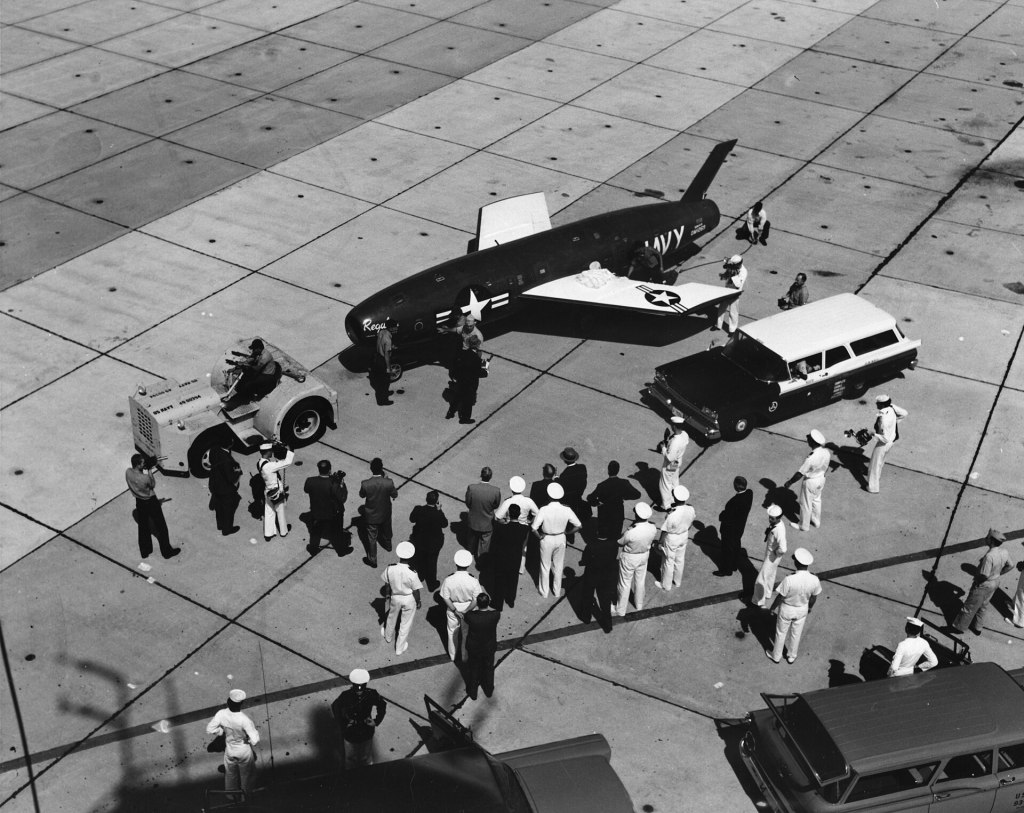
June 8, 1959 ✦ U.S. Post Office Department
Mail by Guided Missile, Coast to Coast in Hours
Cancelled
Then. The Navy submarine USS Barbero, surfaced off the coast, fired a Regulus cruise missile at Mayport, Florida, with its warhead swapped for two mail canisters holding 3,000 letters. It landed 22 minutes later. Postmaster General Arthur Summerfield was thrilled, predicting that before anyone reached the Moon, missiles would carry mail from New York to California, Britain, India or Australia within hours. “We stand on the threshold of rocket mail,” he said.
Now. It was the first and last official missile mail in the United States. Missiles cost far too much and carried far too little. Your letters travel by truck and jet, and the fastest mail of all turned out to be email, which needs no warhead whatsoever.
1952 to 1954 ✦ Collier’s Magazine
Man Will Conquer Space Soon!
Running Late
Then. Wernher von Braun and a panel of experts laid out the whole plan across a famous run of Collier’s issues: a great wheel of a space station in orbit, then a fleet of ships to the Moon, then a crew that would land and stay a while. It read like a timetable.
Four astronauts flew around the Moon this April. The first crew out that far since 1972.
Now. This year it started to look like one again. Artemis II launched on April 1, 2026, looped around the Moon and splashed down off San Diego after nine days. NASA is aiming for another crewed flight in 2027, with landings from 2028. The Moon base itself is still on the drawing board, roughly seventy years behind the timetable.
Inside Today’s Edition
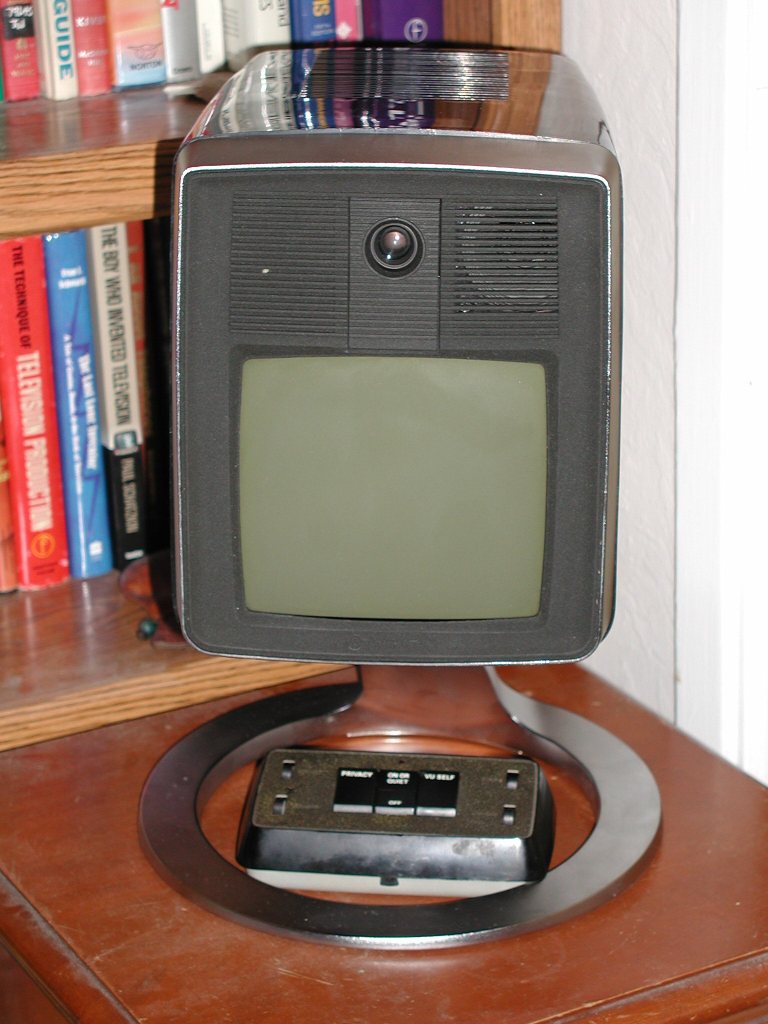
1964 ✦ New York World’s Fair
See Who You’re Calling!
Arrived!
Then. The Bell System let fairgoers try the Picturephone, a telephone with a screen about the size of a paperback, and place video calls across the country to a booth at Disneyland. AT&T later sold it as a service. Almost nobody signed up.
Now. Video calls are so ordinary we complain about them. Half the world’s meetings happen in a small glowing rectangle, which is roughly what Bell promised, plus a mute button nobody predicted.
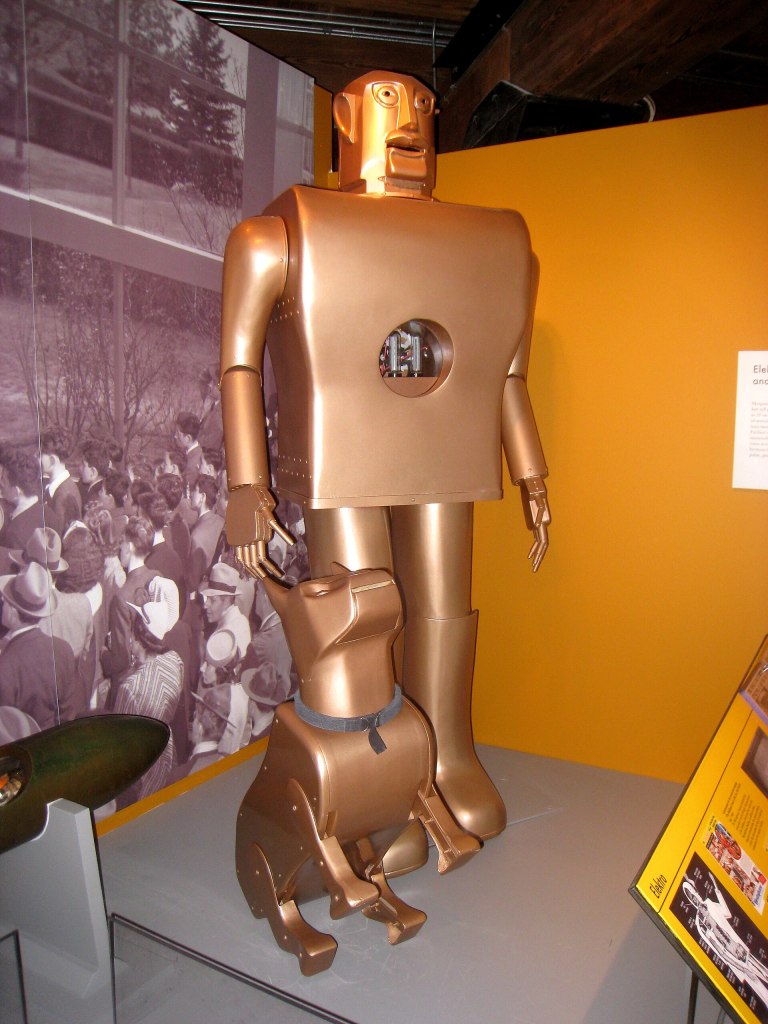
1939 ✦ Westinghouse, New York World’s Fair
Your Mechanical Butler Is Ready
Arrived Weird
Then. Elektro the Moto-Man stood seven feet tall, walked on voice command, counted on his fingers and smoked cigarettes, a party trick no robot maker would try today. A year later he got a dog, Sparko.
Now. The robots that actually moved in were short, round and devoted to vacuuming. The tall ones are finally knocking: 1X has started factory production of NEO, a $20,000 humanoid helper, and promises first deliveries to US homes by the end of this year. It can call in a remote human operator for tricky chores, which Elektro would have found very relatable.
1939 ✦ General Motors Futurama
Cars That Drive Themselves by 1960
Arrived!
Then. Norman Bel Geddes built a vast scale model of America in 1960 for the World’s Fair, and visitors glided over it in moving armchairs. On its superhighways, cars were spaced and steered automatically so drivers could sit back and enjoy the view.
Now. Sixty-six years late, but here. Waymo cars with nobody at the wheel carry paying riders in more than ten US cities, and fully driverless rides switched on in Las Vegas this July. The twist: the highway doesn’t do the driving. The car does.
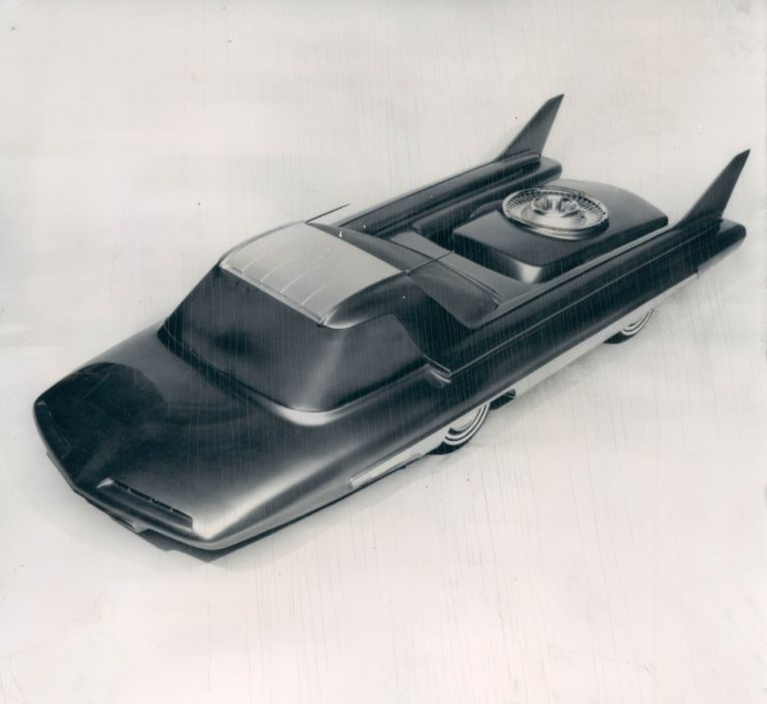
1957 ✦ Ford Motor Company
An Atomic Car That Goes 5,000 Miles
Cancelled
Then. Ford’s designers built a scale model of the Nucleon, a sleek car with a small nuclear reactor in the back. Every 5,000 miles or so you would pull into a station, swap the core and drive on.
Now. It never left the model stage, for reasons that become obvious the moment you picture a fender bender. Today’s quiet cars plug in at night instead, and the only glow under the hood comes from a touchscreen.
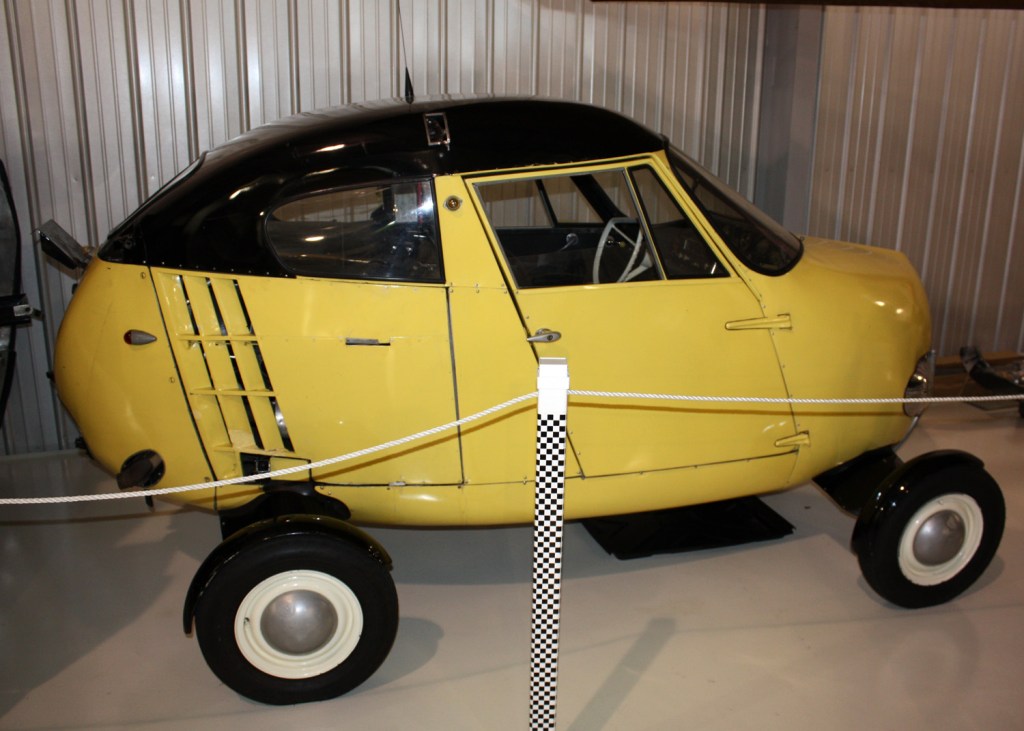
1949 ✦ Moulton Taylor, Longview, Washington
A Flying Car in Every Garage
Running Late
Then. Molt Taylor’s Aerocar drove down the road towing its own wings like a little trailer. Hitch them on and it flew. It was certified to fly in 1956, and only a handful were ever built.
Now. The modern version dropped the wheels and kept the dream. Joby Aviation has a finished vertiport at Dubai’s airport and says passenger air taxi flights will begin before the end of 2026, later than it first hoped. We will move the stamp the day someone can book a seat.
September 1954 ✦ Atomic Energy Commission
Electricity Too Cheap to Meter
Arrived Weird
Then. Speaking to science writers in New York, Atomic Energy Commission chairman Lewis Strauss said it was not too much to expect that our children would enjoy electricity “too cheap to meter” in their homes. Everybody heard one word: atoms.
Now. The atom never got there. The sun did, for part of the day. Since July 2026, households in parts of Australia can pick a power plan with three free hours every midday, because rooftop solar floods the grid. Too cheap to meter, from eleven to two, on the other side of the world!
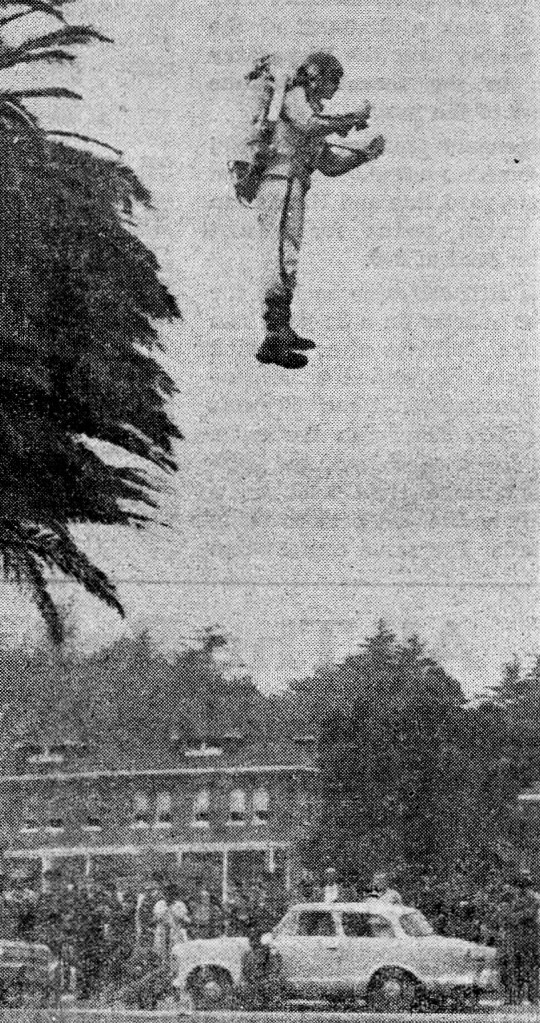
1961 ✦ Bell Aerosystems
Commute to Work by Rocket Belt
Still Waiting
Then. Engineer Harold Graham made the first free flight of the Bell Rocket Belt in April 1961: a 13-second hop of about 112 feet. It was thrilling, loud and short, because the tanks only held enough fuel for about twenty seconds of flying.
Now. Jet suits and jetpacks exist, and they fly at air shows for minutes rather than seconds. Nobody wears one to the office. Yet!
May 1967 ✦ Barron Hilton, Dallas
Reserve Your Room at the Lunar Hilton
Running Late
Then. Two years before Apollo 11, the president of Hilton Hotels told the American Astronautical Society about his plans for an Orbiter Hilton and a Lunar Hilton, cocktail lounge included. He even had a room key mocked up. Reservation requests poured in from around the world.
Now. The first private space station, Vast’s compact Haven-1, has slipped from 2026 to early 2027. Hilton signed on to design the crew quarters for Starlab, another station in the works. Check-in time remains to be announced.
1946 ✦ The Sunday Funnies
A Two-Way Radio on Your Wrist
Arrived!
Then. Cartoonist Chester Gould handed his detective Dick Tracy a 2-Way Wrist Radio, and a generation of kids spent the next few decades talking into their sleeves.
Now. Your watch makes calls, reads your texts, pays for coffee and counts your steps. Tracy never once had to charge his overnight.
1893 ✦ Mary Elizabeth Lease
Dinner in a Pill by 1993
Arrived Weird
Then. The year of Chicago’s great World’s Fair, the Kansas populist and suffragist predicted that within a century, chemists would condense the goodness of wheat, corn and fruit into tiny tablets, freeing women from the kitchen for good. The meal pill became a science fiction staple.
Now. We got meal replacement shakes and protein bars, which are basically pills with ambition. Kitchens, meanwhile, got bigger. Dinner remains stubbornly a meal.
December 1900 ✦ Ladies’ Home Journal
Photographs Telegraphed From Any Distance
Arrived!
Then. Engineer John Elfreth Watkins Jr. listed what might happen in the next hundred years. Among his calls: color pictures sent by wire from anywhere on Earth, so the news from far away would arrive with photographs the same day.
Now. You probably sent one before breakfast. The same list also promised that C, X and Q would vanish from the everyday alphabet. We are keeping a close eye on that one.
1930 ✦ John Maynard Keynes
Your Grandchildren Will Work Fifteen Hours a Week
Still Waiting
Then. Writing as the Great Depression set in, the economist predicted that a century of rising productivity would solve the struggle to get by, leaving people to fill their days with leisure. Three-hour shifts, he suggested, or a fifteen-hour week.
Now. His deadline is 2030, so technically he still has four years! Productivity grew about as fast as he hoped. The workweek did not shrink with it, and four-day-week trials are as close as most of us have come.
Corrections & Late Arrivals
This is a living ledger. When the future finally turns up, we change the stamp and note the date right here. Flying taxis and home robots are both due a recount before the year is out!
Know a promise we should audit? Send it to us through the Request a Dig form on the Archive, and it may appear in the next edition.
Sources
Smithsonian National Postal Museum on Missile Mail ✦ NASA on Artemis II ✦ Electrek on Waymo’s 2026 expansion ✦ Payload on Haven-1 ✦ Lodging Magazine on the Lunar Hilton ✦ NRC on “too cheap to meter” ✦ TaiyangNews on Australia’s Solar Sharer Offer ✦ heise on 1X NEO production ✦ The Last Word on Nothing on food pills ✦ Quote Investigator on Keynes ✦ Joby on its Dubai service
Home Delivery
Get the next edition on your doorstep
New stories from the future that never quite arrived, plus every time the Ledger moves a stamp. Free, and no missiles involved.

